
















Knesset Press Release • September 16, 2025
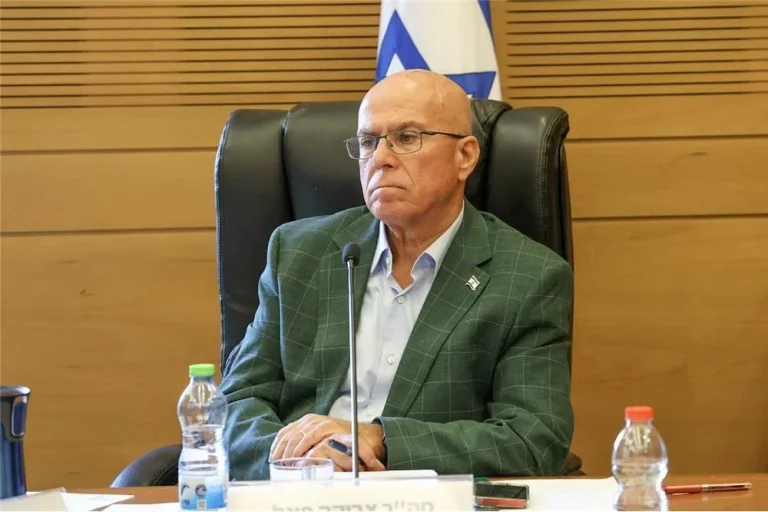
The national security Committee on Tuesday discussed the topic of preventing visits by the Red Cross to Israeli prisons. Committee Chair MK Tzvika Foghel (Otzma Yehudit) said the goal was to formulate recommendations for government ministries regarding future dealings with the organization, and the committee’s position on the matter. “The Red Cross received a special mandate to visit prisoners, in particular prisoners of war and security prisoners, but that mandate is one-sided and I don’t see any effort it is making [to pressure] Hamas with regards to our hostages, the way it pressures us. I think that is utterly wrong, and reciprocity must be preserved and the same conditions upheld. I will do everything so that the Red Cross visits our hostages, and until that happens I will stand at the gates of the prisons and prevent the Red Cross from visiting them,” he said.
MK Aida Touma Sliman (Hadash-Ta’al) said the Government has been trampling, in a very coarse way, the laws and conventions to which it is bound. “A lot is happening inside the prisons, and it is no accident that the High Court ruled regarding prisoner conditions. The Red Cross failed to convince Hamas to allow it to visit the hostages, and blaming them is a bit extreme and absurd. Both sides tell them: you will not visit until the other side allows it.”
MK Ariel Kallner (Likud) said, “There have been cases in which the Red Cross harmed the state’s security and used its ability to visit [prisoners] to pass on information. The whole asymmetric game — where the state is bound by norms while facing a barbaric terrorist organization — is exploited in such a way that our citizens pay the price. Allowing those murderers to be visited here is an outrageous request. It is unfair, unjustified and unacceptable.”
MK Limor Sonn Har Melech (Otzma Yehudit) said, “The Red Cross, which is an anti-Semitic organization, acted in an unbalanced way toward our hostages compared to the ‘prisoners,’ as it calls them, rather than terrorists who raped and murdered and committed horrific crimes. This is biased terminology that permits and cloaks anti-Semitism, hatred of Jews, and the hypocrisy of the world.”
MK Tzvi Sukkot (Religious Zionism) said, “There is a symbolic issue here — there is an international law that they mock. One must behave like the enemy; only then will they understand. We must be crueler than those who come to murder us. Only then will peace come.”
Yizhar Lifshitz, the son of Oded Lifshitz, who was abducted to Gaza on October 7 and died in Hamas captivity, said “We tried to bring food and visits to the hostages through the Red Cross and we failed; Hamas did not agree. It is a terrorist organization; we are a state. If we speak the language of a terrorist organization, then they have succeeded [harming] our value system. After 710 days and after 42 hostages were murdered, I try to think differently. Anything that will bring the hostages back here.”
Hana Cohen, aunt of Inbar Haiman, whose body is held by Hamas, said “She was abducted by those who sit in prison and request Red Cross visits. In a normal country, they should have been executed. I do not know where [Inbar] is. The law obliges the Red Cross to check where the girl is. My family is being tortured. The state is merciful and humane, and because we are such, we get all these troubles.”
Adv. Ohad Buzi, legal advisor at the Israel Prison Service (IPS), explained that there is a pending proceeding on this matter before the Supreme Court. In principle, since the start of the war, the IPS’s position has been that the Red Cross should not enter prisons, and it is based on a professional position of the IPS Intelligence Branch according to which entry of the Red Cross into prisons could be detrimental to security in Israel’s prisons and harm Prison Service personnel.”
Senior warden Netanel Shimshon said the IPS has information indicating that the Red Cross’s entry could harm prison security and possibly even state security. “There are two main issues: the security of Prison Service personnel and the increasing friction in the prisons — the intentions and accumulation of cold weapons and coordination of protest measures. Another issue is state security — I will not go into details, but the entrance of foreign elements into prisons raises the potential, deliberately, of transmitting negative messages,” he said.
Adv. David Bavli, advisor to the Minister of national security, said, “We think the decision to ban visits should remain in place. Israeli law does not obligate allowing visits except for the specific regulation concerning unlawful combatants. It should be mentioned that a lawsuit was filed against the Red Cross, which requests to visit terrorists, on the grounds that it provides aid in Gaza and does not condition that on visiting the hostages. When the IPS and others say there are weighty intelligence and security matters, those visits cannot be allowed.”
Adv. Yiska Bina of the Movement for Governability and Democracy noted that this aspect is critical in issues such as the fight against terror, separation of powers, and who has the authority to decide on these matters. “This issue came up in the past when the High Court ruled in the Dirani and Obeid case — who were held as bargaining chips for returning hostages and obtaining information about them — that humanitarian considerations outweigh security considerations – and a Red Cross visit is permitted. Unfortunately, the court is increasingly entering areas that are not [within its purview],” she said.
At the conclusion of the debate, Committee Chair MK Foghel mentioned the many humanitarian measures the State of Israel has taken over the past two years, and said, “Do not be confused — there are steps we must prevent. We must act as a state with a backbone. A cabinet decision must be made that there will be no Red Cross visits until information is received about our hostages.”