













Knesset Press Release • September 17, 2025
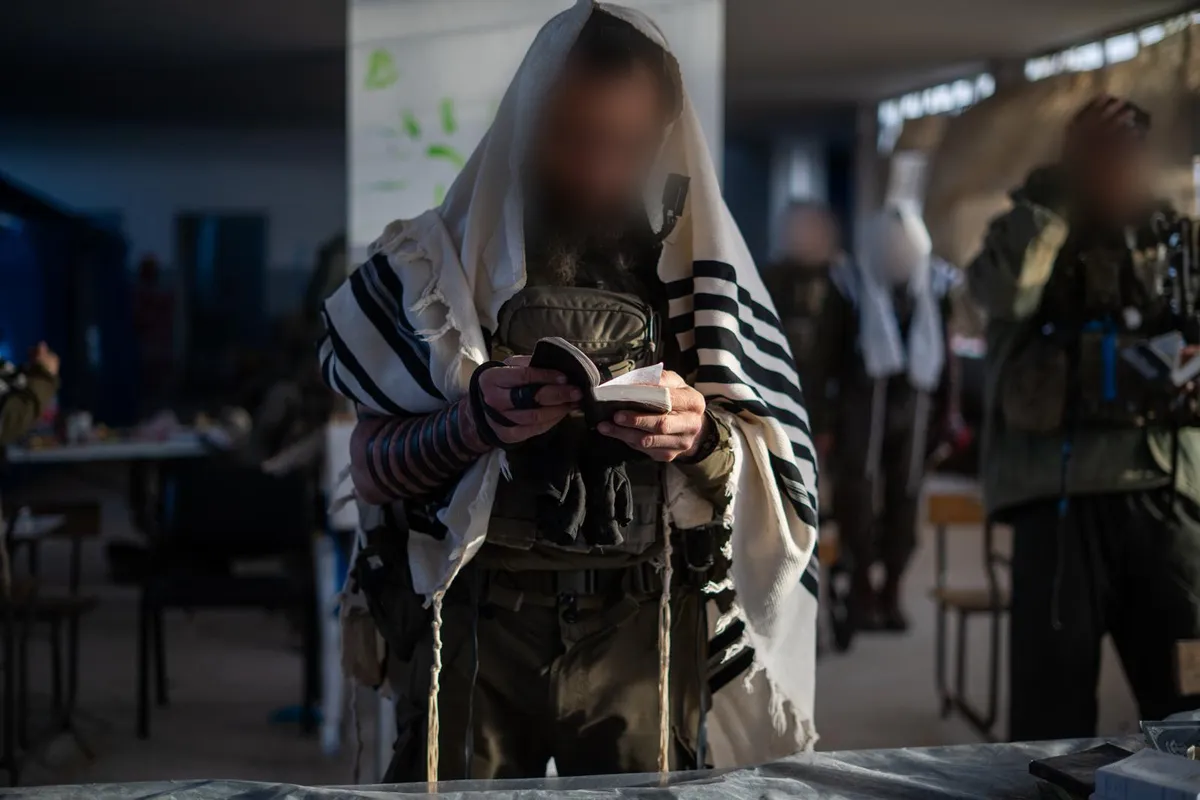
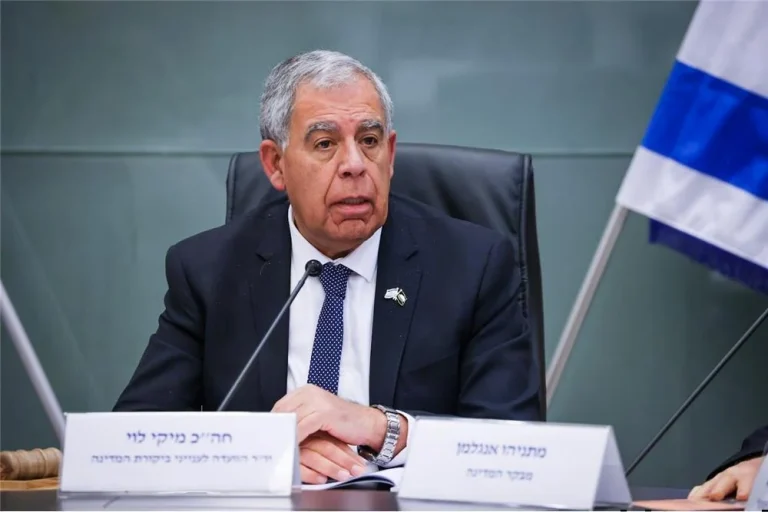
The State Control Committee, chaired by MK Mickey Levy (Yesh Atid), convened on Wednesday for a debate on the topic of Haredi service in the IDF.
committee chair MK Levy said, “The fact that we sit here again and again, trying to scrape together data on candidates for IDF service, checking who reported to [induction centers] and who didn’t, while reservists are being torn apart under the burden as the State of Israel is in the middle of a maneuver in Gaza, isolated diplomatically and with a collapsing economy — this is an unbelievable situation. The committee calls on the head of the Personnel Directorate and the entire IDF to implement the existing law — the compulsory recruitment for all law — and not to wait for new legislation. Until one of two things happens — either the State of Israel respects and implements the current law now, or a new, significant law is passed that brings real numbers connected to reality and demographics — we will continue to convene here again and again on this issue until the long-awaited solution is reached.”
Maj. Gen. Dado Bar Kalifa, head of the IDF’s Personnel Directorate, said “The operational need has risen to 12,000 additional soldiers — of whom 7,000 are combat soldiers, and the rest [in technology units] and combat support [units]. These figures require more soldiers. Already in the first year, based on existing infrastructure, we are able to absorb about 4,800 soldiers, and even grow to 5,760. From there, the IDF will prepare according to the amount determined by the conscription law.”
According to him, the IDF has the capacity to absorb additional soldiers in terms of infrastructure, training, and absorption. “As more people arrive, we can train them. But we will not be able to successfully absorb 80,000 soldiers without being negligent. In the past year, despite the existing law, only 3,000 Haredi soldiers were recruited from two full year cohorts. Therefore, I say clearly: I need more soldiers, and at the same time, many career soldiers are currently requesting to retire from the IDF, and we must be very concerned about this reality.”
Maj. Gen. Bar Kalifa emphasized that the IDF is taking steps not taken before, saying dedicated tracks have been opened, such as Hashmonaim, Netzah Yehuda, Arrow, Paratroopers, and technological tracks, with attention to providing a tailored response to the Haredi sector and gender separation where required. “Haredi is a wide spectrum of worlds and observances. We opened various tracks and will open more in the future. We also committed to creating a General Staff order and an adviser on Haredi affairs — and the Chief of Staff has already approved this.”
Regarding enforcement, Maj. Gen. Bar Kalifa said the IDF operates legally against those who refuse to enlist. “We make arrests and collect data, but arrests do not necessarily bring soldiers. Mobilization operations are more effective. In just two days of the ‘Starting Over’ operation, 110 out of 200 draft dodgers were recruited. Half were Haredim. This is a drop in the ocean, but part of a comprehensive process.”
Maj. Gen. Bar Kalifa added that alongside outreach and mobilization activities, the IDF has to deal with heavy workloads related to protests, borders, and enforcement. “We have breaches the size of cities in the fence. The police have asked us for seven Border Police companies for reinforcement. We operate at border crossings, on roads, and in homes. Enforcement alone is not enough — a full toolbox is required: service, volunteering, and sanctions,” he said, while stressing that the army is motivated “only by the interests of Israel’s security.”
Maj. Gen. Bar Kalifa asked, “Why can a person defined by law as a criminal because he dodges the draft represent lawbreakers and be a lawyer? Why can a draft dodger drive on the road?”
According to him, the IDF requires full cooperation from government ministries. “I am a man of law and wear a uniform — all 16.5-year-olds receive recruitment orders without distinction. Not all partners fulfill their part. The Ministry of Education must transfer data on educational institutions, as ordered by the Attorney General. Only then can we accurately determine the numbers of each cohort,” he said.
Regarding reservists, Maj. Gen. Bar Kalifa said, “Since the beginning of the war, the number of reservists has increased by 113,000 soldiers who were discharged and returned to active service. This is a dramatic figure that illustrates the strength of the reservists’ commitment to the country. We are not currently releasing people from the navy, border observation posts, and more — and we will continue to expand the ranks.”
Rotem Levy, founder of the Reservists’ Wives Forum, said “The promise of 70 days of reserve service per year was broken in a single moment. Reservists’ wives are left to cope alone with all daily tasks, without job prospects and with weakening remarks from the society around us. Today there are about 90,000 Haredim who are not exempt from recruitment and about 15,000 reservists who still haven’t been called up for service. In practice, they maneuver on the front line even though they were supposed to serve in [in auxiliary positions).
“After more than 700 days of service, thanks is not enough — the time has come for change. The change starts on the ground, and we feel it well. No real effort to recruit additional forces is evident from your side. At this stage, it is appropriate for the State Comptroller’s Office to intervene. We demand strict enforcement and significant sanctions on draft dodgers alongside a systemic solution that ensures expanded service. This is a necessary step — so that the entire nation of Israel bears the burden,” she said.
Yossi Levi, CEO of the Netzah Yehuda organization, said “The challenge of recruiting Haredim, even during the war, has not become easier. Rather, it has become much more complex. Successes exist only in mobilization and persuasion steps, not enforcement. Bringing Haredim to combat service is a mega-event. The solution is not cosmetic but educational — to shine a spotlight on the Haredi education system, the Haredi hesder yeshivas, and the Haredi pre-military preparatory programs. That is where the revolution must happen. We are determined to invest significant resources in building a long-term educational process that will bring more and more young Haredim to significant service in the IDF.”