
















Knesset Press Release • September 18, 2025
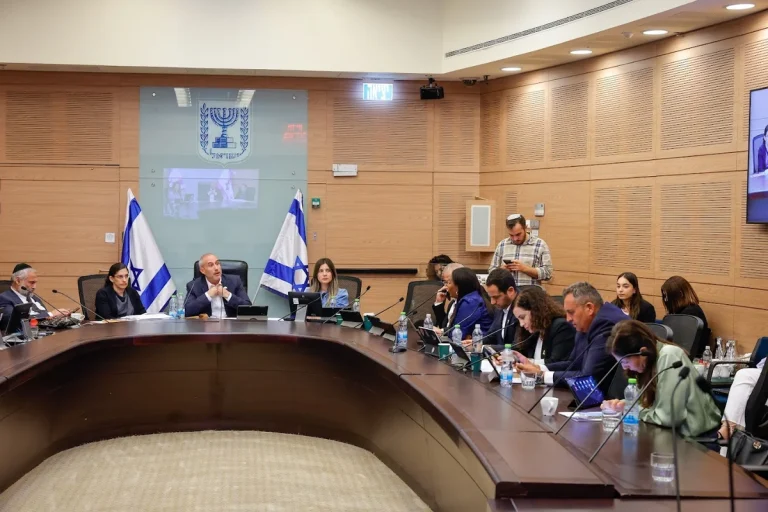
The Finance Committee, chaired by MK Hanoch Milwidsky (Likud), convened on Wednesday and voted to approve for second and third readings the additional budget for Fiscal Year 2025 Bill, 2025. The purpose of the bill is to increase the framework for government expenditures by a total of approximately NIS 30.8 billion, in order to provide a response to security and civilian needs that arose following operation rising Lion and Operation Gideon’s Chariots. After the increase, the expenditure limit for 2025 is expected to stand at approximately NIS 650.4 billion.
In the course of the deliberations, it was stated that Operation Gideon’s Chariots led to additional warfare expenditures due to mobilization of reserves that was broader than expected. It was stated further that Operation Rising Lion against Iran, which included reciprocal attacks by Israel’s security forces and counter-attacks by Iran, entailed considerable financial expenditures, both for the warfare and as a response to the victims of the hostile acts. These additional expenditures also affect the scope of government debt-raising and the interest payments required as a result.
Factoring in the budgetary increase, the permitted expenditure for 2025, including repayment of debts, has grown from about NIS 756 billion to about NIS 787 billion, as follows:
The Ministry of Defense’s general budget will increase from approximately NIS 109.8 billion to approximately NIS 135.7 billion; personnel expenditures will increase from approximately NIS 32.6 billion to approximately NIS 39 billion; security expenditures will increase from approximately NIS 54.9 billion to approximately NIS 74.5 billion.
The “Allocations for National Insurance” budget will increase from about NIS 61 billion to about NIS 63.9 billion. Transfer payments funded by the Ministry of Finance will increase from about NIS 12 billion to about NIS 14.9 billion.
The “Various defense expenditures” budget will increase from about NIS 19.9 billion to about NIS 26.1 billion.
Accordingly, the “Payment of interest and fees” budget will increase from approximately NIS 56.2 billion to approximately NIS 57.9 billion; the “Domestic loans” budget will increase from approximately NIS 43.8 billion to approximately NIS 45.3 billion; and the “Loans from abroad” budget will increase from approximately NIS 9.4 billion to approximately NIS 9.5 billion. In addition, the “Complement to yield guarantee for pension funds” budget will increase from approximately NIS 2.8 billion to approximately NIS 3 billion.
Earlier on Wednesday, the Finance Committee voted to approve for second and third readings the Deficit Reduction and Limiting Budgetary Expenditure Bill (Amendment No. 29), 2025.
The bill—which accompanies the Additional Budget for Fiscal Year 2025 Bill and increases the frameworks accordingly—proposes to raise the deficit limit for 2025 so that the total deficit rate will not exceed 5.2% of the GDP instead of 4.9%. It proposes further to increase the permitted government expenditure for 2025, as a share of the total permitted expenditure for 2024, so that it will amount to 20.4%. This includes 5.6% for funding the expenditures required for security needs due to the significant military actions, including the campaign against Iran, and 0.4% for funding the expenditures required for civilian needs stemming directly from this warfare.
committee chair MK Milwidsky said in summation of the debate, “My thanks to the committee members for mobilizing in an impressive and good way. We passed the budget following intensive work by everyone. Thanks also to the committee staff, the legal team and the Budgets Department. Shana Tova to all.”