














Knesset Press Release • September 29, 2025
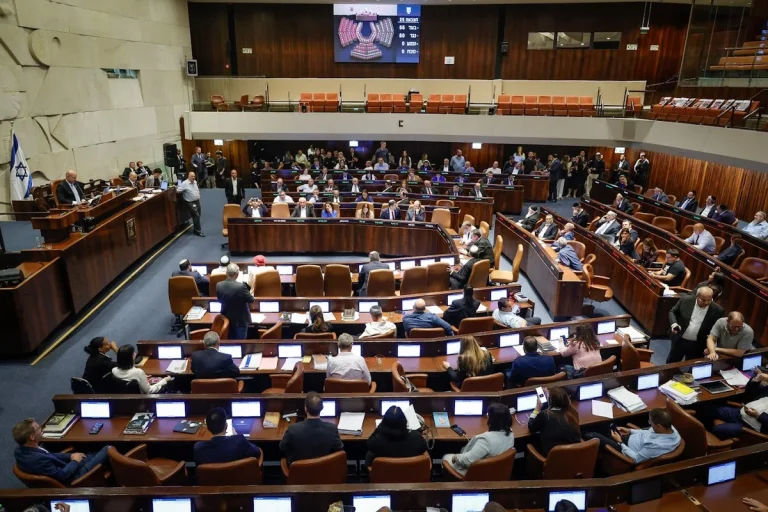
In its sitting on Monday, the Knesset Plenum voted to approve in second and third readings the additional budget for Fiscal Year 2025 Bill, 2025. In the vote, 55 Members of Knesset supported the bill, versus 50 who opposed it.
It is proposed to increase the framework for government expenditures by a total of approximately NIS 30.8 billion, in order to provide a response to security and civilian needs that arose following operation rising Lion and Operation Gideon’s Chariots. After the increase, the expenditure limit for 2025 is expected to stand at approximately NIS 650.4 billion.
Factoring in the budgetary increase, the permitted expenditure for 2025, including repayment of debts, has grown from about NIS 756 billion to about NIS 787 billion. This increase of NIS 30.8 billion will be divided among the following budget items: Ministry of Defense, allocations for National Insurance, various defense expenditures, and payment of interest and fees.
Accordingly, the Ministry of Defense’s general budget will increase from approximately NIS 109.8 billion to approximately NIS 135.7 billion; the “Allocations for National Insurance” budget will increase from about NIS 61 billion to about NIS 63.9 billion; the “Various defense expenditures” budget will increase from about NIS 19.9 billion to about NIS 26.1 billion; and the “Payment of interest and fees” budget will increase from approximately NIS 56.2 billion to approximately NIS 57.9 billion.
The explanatory notes to the bill state: “In accordance with Government Resolution No. 3326 dated August 19, 2025 with regard to the required legislative amendments in the fiscal frameworks law and in the budget for 2025; in order to adjust the expenditure limit for 2025 so as to enable an increase of NIS 30.849 billion in the permitted government expenditures for 2025, it is proposed to approve an additional budget for Fiscal Year 2025 Bill, which will amend the provisions of the Budget for Fiscal Year 2025 Law, in such a way that will reflect an increase in expenditures for security needs and civilian needs as stated.”