



















Knesset Press Release • September 8, 2025
In its meeting on Sunday, the Special committee on Young Israelis recommended the establishment of a government unit dedicated to assisting former Haredim.
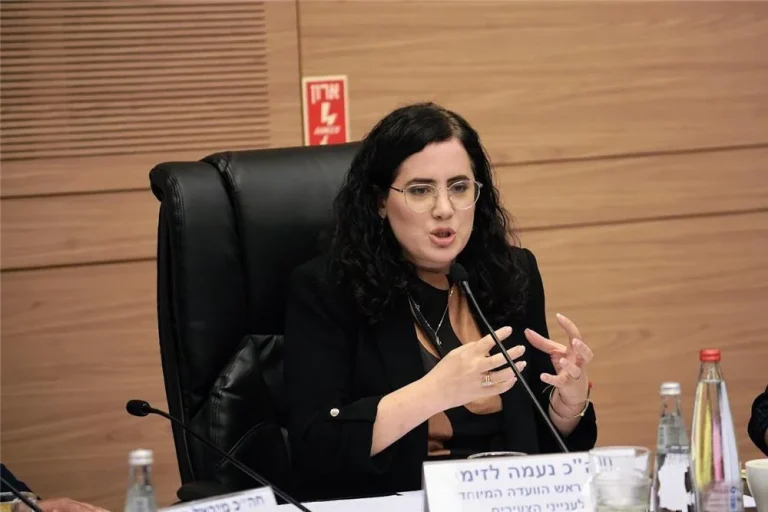
committee chair MK Naama Lazimi (Labor) said, “This is a sensitive and important topic that we have been addressing since before the war, because this is a marginalized and vulnerable population that is exposed to exploitation and harm. There is no government body coordinating the necessary assistance and support for this population.”
She criticized the Ministry for Social Equality for not participating in the discussion and for its refusal to cooperate with the committee.
According to Ben Zilberman of Out for Change, an organization for formerly ultra-Orthodox men and women, despite the rise in the number of people leaving the Haredi community, which he estimates at about 12.5% of each average cohort, they are still not recognized by government offices as a distinct population for the purpose of establishing dedicated support programs. He explained that the critical period for integration into broader society is between the ages of 17-25, with 40% of individuals citing criticism of the Haredi community as their motivation, and 30% desiring self-realization.
Zilberman further said that despite wanting to integrate into higher education institutions, only 12% of men leaving the Haredi community have an academic degree. Many who leave Haredi society experience an identity crisis that includes loss of familial and financial support, and internalization of negative stereotypes. He emphasized that while there is a change in the way this population is viewed by government offices and the IDF, a holistic approach is still required.
According to Gilad Malach and Adi Wiener of the Israel Democracy Institute, approximately 4,200 young men and women leave the Haredi community each year. They highlighted the barriers to integration into wider society, including knowledge-related barriers, as well as social, emotional, and socio-economic barriers. They also pointed out that the obstacles to providing state assistance to this population stem from the lack of a defined target population, a coordinating body, a systemic approach to the issue, proactive and targeted programs, and the absence of support for minors under 18. Therefore, they recommended the establishment of a dedicated government unit.
Neri Horowitz, a researcher at the Agora Policy Institute, expressed concern about this recommendation, noting that it hasn’t been effective in the past. He emphasized that more and more Haredi families are accepting and accommodating those who leave the community, and this changes the behavior of those who leave.
According to Aviad Schwartz, head of the Haredi Employment Department at the Ministry of Labor, there has been a continuous improvement in the response provided, also due to collaboration with organizations working on this issue. Ohad Mordechai of the Ministry of Finance’s Budget Department said approximately 13% of the Ministry for Social Equality’s budget has yet to be used. Yair Hess, director of the Hillel organization, emphasized that the budgets for dedicated programs for this population have not increased despite the growth in the population, and warned that a support program run by the organization will have to close in about three months due to lack of budget. The director of the Yated program at the Ministry of Welfare and Social Affairs confirmed that the budget for the program has not increased, but has not been cut either.