









Knesset Press Release • June 30, 2025
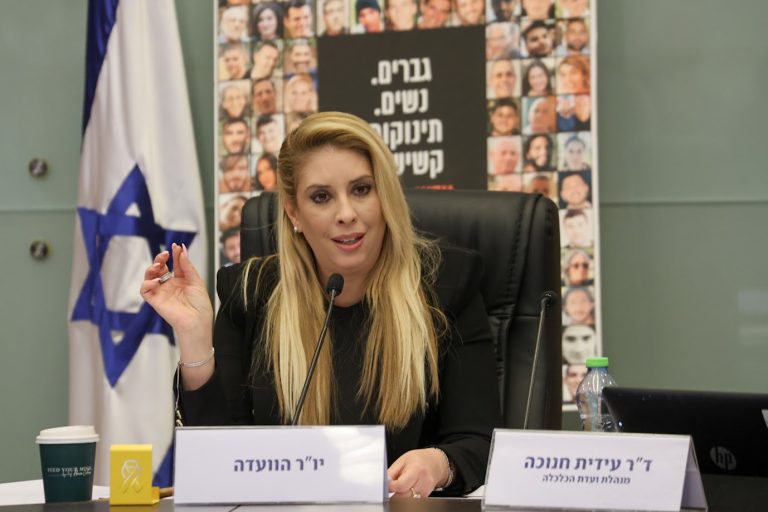
On the occasion of International Widows Day, the Committee on the Status of Women and Gender Equality convened on Monday to discuss the rights of widows and orphans.
MK Shelly Tal Meron (Yesh Atid), the acting committee chair, said “The widows and orphans should not have to fight alone. It is the responsibility of the state to be there for them. It is a mission of the entire political spectrum in the Knesset, irrespective of coalition or opposition.”
During the discussion, calls were raised to expand occupational and legal protection for widows, strengthen government support for bereaved families, and allocate dedicated resources for fertility preservation, education, and mental health support.
Representatives of the Sunflowers non-profit organization presented a new report indicating that since the beginning of the war, 946 new orphans have joined the circle of bereavement, in addition to the 30,000 orphans currently living in the country—most of them fatherless. The organization pointed to a severe economic and employment crisis among widows, discrimination against civilian bereavement, lack of legal protection, and the absence of an effective governmental support system.
Adv. Liat Klein Gantz, the organization’s director of government relations and policy advancement, said “Behind every orphaned child is a mother coping alone with the loss, the home, and the financial responsibility. There is almost no legal or employment protection. The workplace is a refuge and a means of rehabilitation for them, and it must be protected.”
Sunflowers launched a support hotline to help bereaved families exercise their rights, but emphasized that the responsibility for ongoing support lies with the state, which must increase allowances, ensure employment protection, and establish an active and institutionalized support system. Adv. Klein-Gantz also emphasized the need to support local authorities: “Local authorities rarely activate professionals to assist widows; they have no one to turn to within their own cities. A woman who lost her husband during military service receives assistance from the Ministry of Defense or the IDF, but civilian widows receive no support at all.”
Adv. Zehava Gross Meydan, chair of the IDF Widows and Orphans Organization, stressed the need to expand the rights of widows, even if not through financial compensation, and demanded that the Knesset work in cooperation with the Ministry of Defense on this matter. MK Meron pledged that “female Members of Knesset from across the political spectrum will rally behind this issue.”
The organization’s CEO, Shlomi Nahumson, called for improving the current legislation, stating that it limits the Ministry of Defense’s ability to assist widows.
MK Michal Woldiger (Religious Zionism) noted to the committee that she had initiated a bill to ease the burden on young widows. “In the current war, many young women have lost their husbands, and it takes time for them to recover and think about the future. I do not see any organization, including the Ministry of Defense, addressing fertility preservation. I submitted a bill for funding fertility preservation,” she said.
Asif Tamam, founder of the National Orphans Speak organization, shared his experience growing up as an orphan: “A small child who loses his father has no voice and cannot express himself. I was removed from my home due to my mother’s dysfunction and I am considered an ‘independent orphan’. In practice, I receive no recognition or assistance, as the support is intended for my mother. Since the age of 21, I have been erased by the State of Israel and am not entitled to anything.”
Adv. Racheli Sonego of the Israel Women’s Network said, “Women who have been widowed face profound loss, but also a bureaucratic system that does not always recognize their pain. Instead of a single accessible support network, they must struggle with forms, strict criteria, and cumbersome procedures to receive what they are entitled to. Through the hotline for exercising rights we have set up, we received inquiries from women who divorced their spouses before the war and whose rights have been significantly reduced. They too need support; their lives have also changed even though they are not married.” MK Meron responded: “This issue is no less important. The committee will hold a separate discussion on the matter.”
At the conclusion of the debate, the committee called upon local authorities to establish support mechanisms for widows, and upon the Ministry of Education to ease the burden on orphaned pupils. The committee announced that it would hold additional discussions to continue addressing the issue.