













Knesset Press Release • June 29, 2025
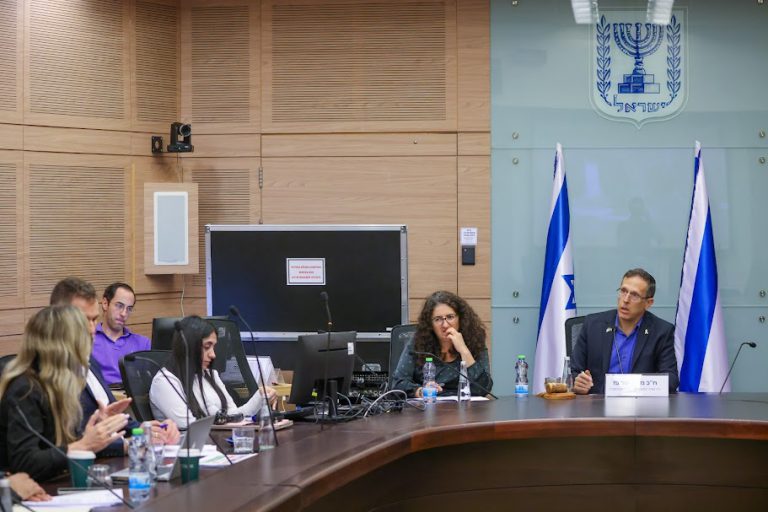
The Subcommittee for Foreign Policy and Public Diplomacy, chaired by MK Moshe Turpaz (Yesh Atid), held on Thursday a follow-up debate on public diplomacy during Operation Rising Lion.
Gal Ilan, Senior Director of Strategy and Diplomacy in the Prime Minister’s Office, reviewed the main messages of the operation, with the main one being that Israel had no choice but to remove a clear existential threat.
Jonathan Barel of the Ministry of Foreign Affairs said, “We place an emphasis on activating civil society and influencers, and this becomes a force multiplier.”
Barel added: “On the official channels of the Ministry of Foreign Affairs we reached more than a billion views in 12 days – on six platforms, in six languages, including Persian. Of the billion views, 380 million are in Persian. The ministry’s communications room operated 24/7. We monitored media outlets around the world. In Europe, the sentiment remained positive.
“Our missions gave more than 1,000 interviews. Half of them were given by official representatives, and the rest were given by representatives of civil society who were recruited by our missions for the public diplomacy effort,” he said.
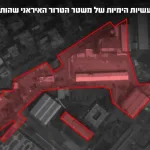
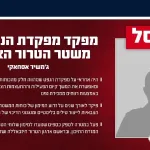
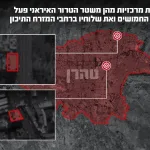
Col. Avichay Adraee, Head of the Arab media branch of the IDF Spokesperson’s Unit, said “There was a team within the IDF Spokesperson’s Unit of people who were in the know, and it prepared [for the scenario] in advance, and this could be seen from the very first second. Messages that dominated the screens, and the prioritization of target audiences in the following order — in Israel, in the U.S., and on the enemy side. Due to the sensitivity, the Spokesperson’s Unit was more closed and centralized. We didn’t activate the entire team of spokespeople, in every possible language, but rather [activated] a limited team so that the message would be focused and controlled.
“Regarding the Persian language — Kamal has been with us since October 7, and we prepared for this event and for this style of spokesperson activity. We’ve grown tremendously on the Persian platform. On digital platforms, we have 900,000 followers, with 85% of them from inside Iran itself.
“Beyond our platforms, in terms of Persian media outlets — when you know that you release a message and it immediately appears on Iran International, the ability to reach a wide audience is much greater. We had a representative from the IDF Spokesperson’s Unit in the National Security Council and in the information war room, and their representatives were with us — there was excellent cooperation among all parties.
“We are still before our internal review and may discover places where there were gaps, but overall we’re coming out of this with a very positive feeling. There have been over 361 million international digital views, 858 million in Arabic digital media, 353 million on Persian platforms, and an increase of two million followers over these 12 days. Iran was not prepared for this. They have no spokesperson who speaks in a language other than Persian. They were not on the field. When you come prepared, synchronized and coordinated, you succeed in capturing global attention,” Col. Adraee said.
Nitzan Chen, Director of the Government Press Office (GPO) said “324 journalists arrived through the land crossings — an insane number considering the skies were closed. We brought them to the impact sites. We faced a significant challenge, and there is room to improve coordination with various bodies. At Soroka, for example, the work related to public diplomacy was outstanding. They immediately set up an operations room, and there was audiovisual material that was broadcast everywhere immediately. In contrast, at other sites we encountered bureaucratic and logistical difficulties in the coordination between police, censorship, and the GPO.
“There were Al Jazeera and Turkish media outlets broadcasting live from impact sites in violation of censorship rules, and this created a major challenge. In my opinion, there should have been a civilian spokesperson figure who would be the face of the war — mainly for the domestic audience,” he said.
The first part of the discussion dealt with public diplomacy in general since October 7. According to a Harvard CAPS / Harris Poll, conducted at the committee’s request in order to assess the status of Israeli public diplomacy, identify the challenges and successes in crafting effective campaigns, and identify key target audiences in the U.S., support for Israel in the U.S. has dropped slightly since October 7 — from 80% to 75%. However, when analyzing by age group, significant gaps emerge. Among young people, support is split 50-50 between Israel and Hamas, while among those aged 65 and older, support for Israel approaches 90%. The researchers note that among younger people, there is a lack of information or misinformation.
The percentage of Americans who view Israel positively dropped from 53% to 41%, and there was an increase in the number of people who do not support Israel (from 21% to 30%) and in those who are undecided (from 25% to 29%).
Most Americans oppose Hamas and support the return of hostages as a condition for a ceasefire, but the number of people supporting Hamas has risen over the course of the war — from 16% in November 2023 to 25% in June 2025, and there is criticism regarding the number of civilian casualties during Israeli operations.
Most of the American public is not familiar with Israeli politicians other than Prime Minister MK Benjamin Netanyahu (Likud), who receives only 25% support — lower than the overall support for Israel (41%). Support for Netanyahu has dropped from 34% (October 2023) to 20% (September 2024). There is a strong correlation between support for Netanyahu and support for Israel, and between support for Trump and support for Netanyahu.
Jonathan Barel said, “There needs to be a distinction between branding and crisis management — and we’ve been in crisis management for almost two years. If we consider the volume of negative media coverage about Israel in the U.S., it would cost us a fortune to run a counter-campaign. The issue of casualties in Gaza occupies a significant space. The number that becomes fixed in global media is the one presented by Hamas, whether it is accurate or not.”
Subcommittee Chair MK Turpaz summarized: “Support for Israel during the war exists. The challenge related to young people stems from disinformation, lack of knowledge, and information sources we are not matching sufficiently — especially on social media, and this is the main challenge. A vacuum isn’t filled by a narrative — knowledge must be met with knowledge.
“Despite an improvement in the coordination between the bodies, we still don’t have a government decision. There is also the need for a national spokesperson. The State of Israel needs people to explain it, to be its voice in an official capacity — and ideally, they should be civilians,” he said.