












Knesset Press Release • June 25, 2025
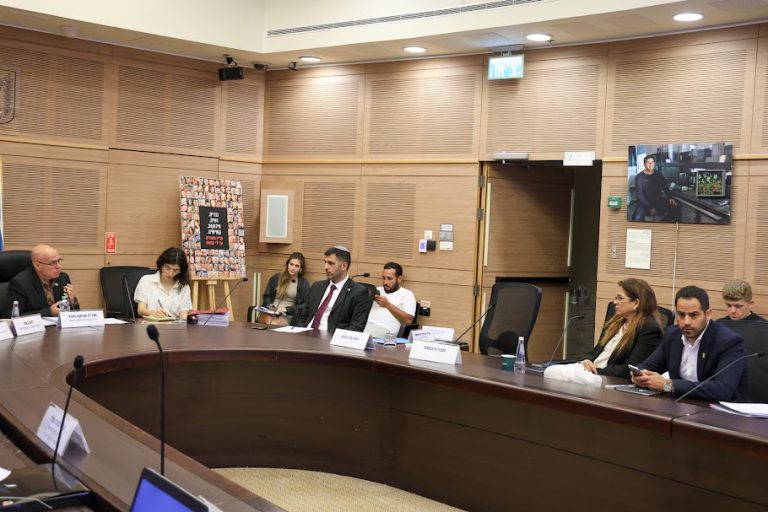
The National Security Committee, chaired by MK Tzvika Foghel (Otzma Yehudit), convened on Tuesday for a debate entitled “Monitoring foreign broadcasting organizations that cause harm to state security.” The debate was held with the participation of Minister of Communications MK Shlomo Karhi (Likud).
On October 30, 2023 the Law for Preventing a Foreign Broadcasting Organization from Harming State Security (Temporary Provision—Swords of Iron) went into effect. This was done in response to an urgent need to confront security threats stemming from the activity of foreign broadcasting organizations, which could harm state security by publishing sensitive information or broadcasting content in the service of Israel’s enemies. The law grants the Minister of Communications, in consultation with the Minister of Defense and with the authorization of the Prime Minister, unique powers, including stopping broadcasts, blocking access to sites, confiscating communications equipment and more—when there is a real concern that state security could be harmed.
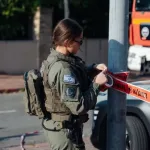
Following the warfare with Iran, and against the backdrop of large numbers of cases in which visual information was revealed that could serve hostile elements, there is a need to ensure that the authorities are familiar with the powers granted to them under the law, and that they are making effective use of the powers granted to them by force of the law. In recent days, there have been reports about the presence of foreign broadcasting and photography crews at sensitive sites and during security incidents; this raises doubts as to the implementation of the law, and suggests that legislative amendments may be required as a result of the situation.
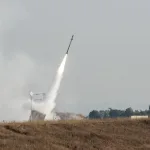
Committee Chair MK Foghel: “Our debate today is a product of the past week, but it is the continuation of a process that the Minister of Communications has launched since the start of the Swords of Iron war. We are in favor of freedom of speech, but we must not give power to broadcasting organizations that seek to harm state security. There are broadcasting organizations that climb onto building rooftops and report to terrorist elements about the locations of the [missile] hits. The censorship on the media prevents not only broadcasting locations of missile hits, but also dissemination of incitement statements in major media outlets. It’s completely clear to me that there are still ways to convey locations of [missile] hits that are not through traditional media channels. I understand that along the way there were several cases of overstepping authority. What we are doing now is [creating] a security ‘Iron Dome’ against hostile media outlets.”
Minister of Communications MK Karhi: “As of now, Al Jazeera and Al Mayadeen do not broadcast in Israel. There are still a number of gaps that allow their YouTube channel to broadcast here in Israel, and that is under legislation processes in order to block that possibility too. Israeli correspondents have a responsibility towards state security, and they are subject to the instructions of the military censor. Foreign correspondents aren’t always committed to state security, and there is no enforcement [to ensure] that they don’t broadcast the locations of [missile] hits to the enemy. The Israel Police exercises its power in accordance with regulations. The existing mechanism, in cooperation with the censor, is the most effective for preserving freedom of the press and freedom of speech along with preserving state security.”
MK Merav Ben Ari (Yesh Atid): “I completely support preventing the incitement of hostile media outlets that operate against the State of Israel. The Minister of Communications must make a firm statement against detaining and assaulting journalists. We witnessed many cases of assaults against journalists during the war, but the Minister of Communications chose to remain silent. We saw the ‘Shadow’ detaining journalists without having the authority to do so, and this creates great international damage for Israel. I expect the Minister of Communications to make a clear statement against assaults of journalists.”
Minister of Communications MK Karhi replied, “I am against violence and against harming journalists, and I say this everywhere, but that is not the topic of the debate. Ordinary journalists should not be disturbed while performing their job. The censor’s regulations are intended to prevent journalists from reaching a situation of harming state security.”
MK Karine Elharrar (Yesh Atid) said that all the Members of Knesset wanted to prevent harm to state security, but stated that this had to be done in an orderly fashion. “The Attorney General is concerned about state security no less than the ministers,” she said.
MK Naor Shiri (Yesh Atid): “Israel does not really prevent Al Jazeera from broadcasting. The broadcasts today are done through private satellite dishes and this route is still open to unauthorized broadcasting. The rationale for closing down broadcasts is no longer relevant. Today all the information passes through videos on mobile phones or slips of the tongue made on live broadcast by officers of the Home Front Command. The work of the censor as it is done today is also old-fashioned. Closing media channels is populist and doesn’t really help.”
MK Yoav Segalovitz (Yesh Atid): “There is legal power, but there is a problem in exercising it. The commander of the Tel Aviv District Police and the police commissioner have a problem in exercising the powers granted to [the police]. It’s a disgrace that there’s a person known as the ‘Shadow’ who allows himself to wear a uniform while he is only a volunteer, and exercises powers that he doesn’t hold. I am asking to dedicate a debate to this in the National Security Committee. This ‘Shadow’ should be barred from volunteering in the rapid response security team.”
MK Gilad Kariv (Labor) proposed that the enforcement of censorship in operational arenas be in the hands of the IDF rather than the Israel Police.
Ministry of Justice official Gabriela Fisman: “The existing law prevents broadcasting the locations of [missile] hits or UAVs. The police’s powers on the matter are exercised by force of the existing law, not by force of the censorship order. At the moment, no publication of a new order has been coordinated with us. The existing law gives a good and proper response, and does not distinguish between Israeli and foreign journalists. Last night we received a request from the censor, which is in a process of examination. The police can operate by force of the existing procedures and by force of its authority. As far as we are concerned, the order from 1988 gives a proper response, and there is no need for an additional order.”
Deputy Chief IDF Censor for Strategic Affairs Ron Karnieli: “Broadcasting the location of [missile] hits is a very sensitive matter, which harms state security directly. The order that was issued only bars broadcasting of the location of hits, and it doesn’t distinguish between Israeli and foreign correspondents. Most of the media outlets heed lawfully the censorship’s instructions in this context. In the closed portion of the debate, I will be able to elaborate in detail about the activity that the censor carries out, which is suited to the current technological era. The censorship works online with the correspondents, and doesn’t give authorization in advance to publish materials.”
Supt. Reut Rosenberg of the Israel Police’s Legal Department: “There is a general legal procedure that regulates the conduct of the police with media organizations. We enable, on one hand, protection of the values of democracy and freedom of the press, and along with that, protection of state security and protection of human lives and public order.”
Supt. Liora Sultan of the Israel Police’s Investigations Division: “If it becomes apparent that a violation of censorship laws was committed, the media outlets and journalists are summoned for questioning. If necessary, we can confiscate communications equipment with which the violations were committed.”