
















Knesset Press Release • September 10, 2025
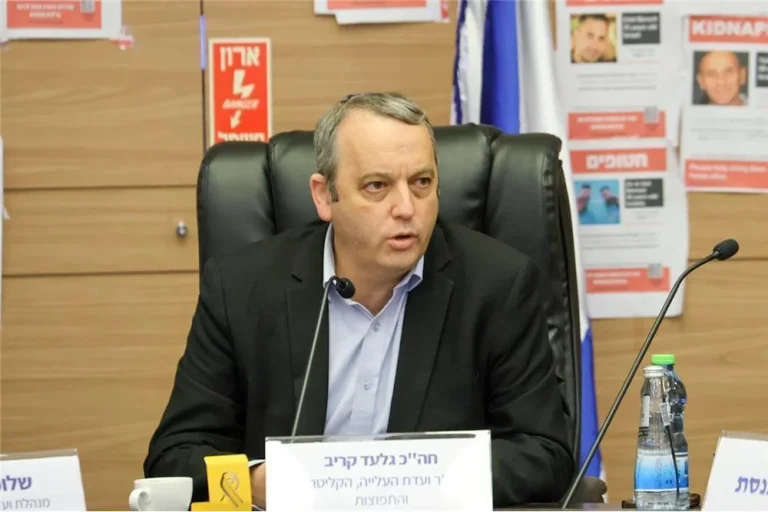
The Committee for Immigration, Absorption and Diaspora Affairs, chaired by MK Gilad Kariv (Labor), held a special debate Wednesday on the policy of encouraging immigration from post-Soviet states.
At the opening of the discussion, the committee noted the policy of the Ministry of Aliyah and Integration in recent years, according to which most of the resources for encouraging immigration have been directed solely to Western countries, while investment in encouraging immigration from the Former Soviet Union (FSU) has been significantly reduced.
A reflection of this policy was presented to the committee in a public statement by former Deputy Minister in the Prime Minister’s Office MK Avi Maoz (Noam), who was in charge of the operations of the Nativ governmental liaison organization. MK Maoz said, “The majority of immigrants from these countries are mostly gentiles,” and that for about two years he “worked on behalf of a Jewish state and made sure that as few gentiles as possible immigrated to Israel.”
Responding to these remarks, committee chair MK Kariv said “The issue of encouraging immigration from the [FSU], and our committee’s criticism of whether the current Government of Israel has de facto withdrawn from encouraging the immigration of those eligible under the Law of Return from the [FSU], will be an important and central issue for this committee in the coming weeks and months. The numbers indicate that the Government is giving up on encouraging immigration from the [FSU]. The committee will take a clear stand against this trend.”
The committee chair added, “There is no representation of the Coalition in this discussion, and the Government chose to place the responsibility for Nativ – the body in charge of eligibility for immigration – in the hands of Avi Maoz. This is the man entrusted with examining immigration eligibility, and this sends a harsh message to those eligible under the Law of Return and to the community of about one and a half million Russian-speaking Israelis, whose immigration saved the State of Israel and made an enormous contribution to the economy and security. If the person placed in charge of the system boasts of blocking the immigration of hundreds of people eligible under the Law of Return, what should those people think?”
Committee Chair MK Kariv said further, “The Government of Israel is doing blessed things in the field of immigration, and the ministry is receiving much praise here. However, with regard to the two central immigration waves of recent decades – from Ethiopia and from the [FSU] – the policy is unacceptable. There is no concern for families split between here and there, and no concern for those eligible under the Law of Return. We will expose the policy and get to its root cause.”
Ministry of Aliyah and Integration Deputy Director General Eric Michaelson said, “All the initiatives of benefits and educational programs relate to absorption processes, and there it is applied equally to every immigrant. The numbers showing an increase in investment in Western countries are the result of investment in immigration potential.”
The head of Nativ’s Consular Department noted that there are about 50,000 refugees from Ukraine in the European Union who are eligible to immigrate to Israel under the Law of Return.
Ofek Israeli CEO Aryeh Avital said, “There are very complex issues related to encouraging immigration from Ukraine. [Aliyah] fairs have to be held in basements, and only women and children can come because of the war effort. Another fair will be held there this year.”
One Million Lobby representative Mordechay Eskin said, “The best advertisement for any immigration is its absorption. Many new immigrants feel unwelcome. If those eligible under the Law of Return hear Members of Knesset calling them an ‘existential threat’ to Judaism, we cannot encourage immigration this way.”
Adv. Alex Zernopolsky, chair of the Aliyah Commission at the Israel Bar Association, said “The greatest potential for encouraging immigration is among people from the former Soviet Union. There are over one million people from the former Soviet Union in the United States. Immigration should also be encouraged among former Soviet Jews in Europe and the U.S.”