
















Knesset Press Release • September 8, 2025
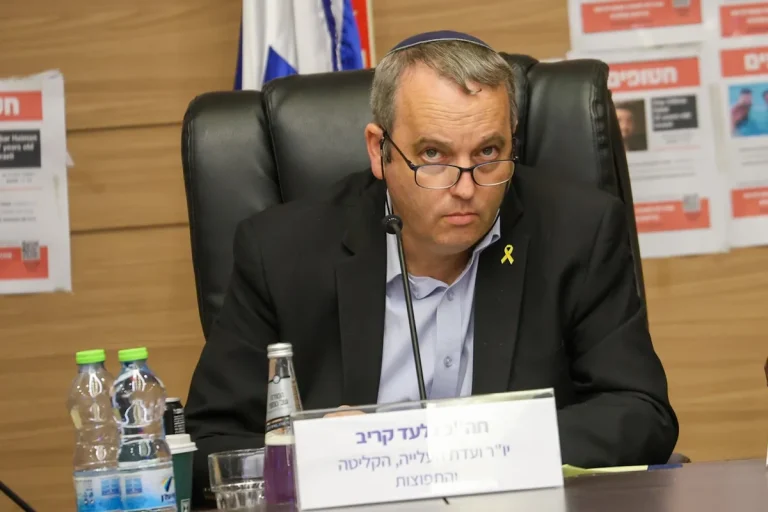
The Committee for Immigration, Absorption and Diaspora Affairs, chaired by MK Gilad Kariv (Labor), held on Monday a debate on the emotional and mental distress of children of new immigrants and the state’s response to their needs.
At the center of the discussion were the painful words of the mother of 12-year-old Milena Bobkova, who ended her life this past August by jumping from the roof of the winery in Rishon LeZion. In a trembling voice, Alina, the mother, said Milena, who was in distress, had been released from psychiatric hospitalization only two days before the tragedy. She further recounted that at the hospital she was threatened with fines for property damage that could occur if she did not agree to her daughter’s release.
“We love the country, but when we needed help and treatment from the state – we did not receive it. Milena was hospitalized in a psychiatric hospital for two weeks, and throughout the hospitalization my mother and I came there so that the girl would not feel lonely. One day, an hour and a half after everything seemed fine and I left, they told me she wanted to run away. I came back and saw my daughter in isolation with an empty look in her eyes. The next day, they called and said she wanted to run away and that they could not hold her by force. They told me I would have to pay fines if she damaged property. But this is not a summer camp. This is a hospital that understands such cases. How can I, as a mother, take full responsibility? I cannot.”
Alina leveled harsh accusations against the municipality and the police:
“When the children were first removed from the roof of the winery, no one from the municipality contacted the police and the entrance was not sealed. Why couldn’t this case have been prevented? I immediately reported to the police. I did not just say my daughter disappeared – I told them we had just been released from psychiatric hospitalization. I have a video of her being carried on a stretcher, and we were not told when she died. How did they determine she was dead without giving her first aid? They carried her by her hands and feet like a sack of potatoes.”
About the education system, she said: “Milena loved and helped many animals. One day she brought a parrot to school and was suspended. The children said she cooked the parrot and ate it. I told the teachers – why suspend her? You should encourage her to come to school. Children of immigrants are usually the ones who are humiliated. The schools, for their part, usually keep such cases inside and do not share them.”
Ministry of Health official Yonatan Amster said, “The head of the Mental Health Division conducted an initial inquiry. A broader committee of the ministry is planned. I do not know if other bodies will be involved.”
Committee Chair MK Kariv demanded not to settle for an inquiry committee of the Ministry of Health, but to establish an inter-ministerial committee. He also requested to receive from the Director General of the Ministry of Health, by Sunday, detailed information about the committee to be established, including its composition and mandate. “A month and a half after the tragic case and the committee has not yet been established. This is a matter of life and death,” he stated.
Asked by the committee chair how many of the children in the mental health system are immigrant children, Amster said “The ministry does not break down how many of them are immigrant children.”
Committee Chair MK Kariv: “This is a matter of cross-checking Excel data. The Ministry of Welfare knew how to state how many at-risk children are immigrant children – why can’t people in the mental health system provide the numbers? This is troubling.”
In the discussion, it was noted that one-third of suicides in Israel are by new immigrants. A representative of the Ministry of Aliyah and Integration said this statistic was wrong, saying “Suicides by immigrants constitute about two percent of all suicides, not one-third.”
MK Vladimir Beliak (Yesh Atid) said, “There are tens of thousands of immigrants, and it may be that hundreds of them are in a similar mental state, and it is our duty to prevent the next case.”
Maly Ben Moshe, head of the Rishon LeZion Municipality’s Welfare Administration, said “After Milena’s previous suicide attempt, we contacted the owner of the winery building, and as far as I know the windows were sealed, but apparently the girls managed to break in. The issue of suicide among immigrants has accompanied the municipal system for years. We have no tools for treating mental health – we refer cases to them and encounter long waits: an appointment with a psychiatrist can take up to six months, early releases from hospitals, and more.
“In the city center area, which is more at risk, there are programs to identify youth and involve them in various activities while recognizing signs of distress. There are clubs designated for Russian-speaking youth. One of the arenas that troubles us is Telegram. We tried to go in there and found harmful groups encouraging children to harm themselves and others, impersonating children to hurt others. Following Milena’s case, we discovered and reported to Hotline 105,” she told the committee.
A Ministry of Welfare representative provided the following data: There are 23,171 new immigrants and their children receiving services from welfare departments, of whom 9,396 are children aged birth to 17. Of all immigrant children, 5,504 are defined as at-risk children, and of these, 1,863 are placed in out-of-home and community frameworks, where they receive comprehensive services. For the treatment of these children, the Ministry of Welfare and Social Affairs has so far allocated, in 2025, a budget of NIS 44 million.
Committee Chair MK Kariv pledged to hold a follow-up debate on the matter:
“We will lead the issue of at-risk immigrant minors. MK Beliak and I will not relent on the inquiry issue. The mother and grandparents deserve answers. Our goal as a committee is to see how this case brings systemic attention, with programs and budgets – how from this terrible case a new level in the treatment of immigrant pupils can be born. We will meet again in a few weeks.”