


Knesset Press Release • June 29, 2025
(Photos: Ruby Kotter)
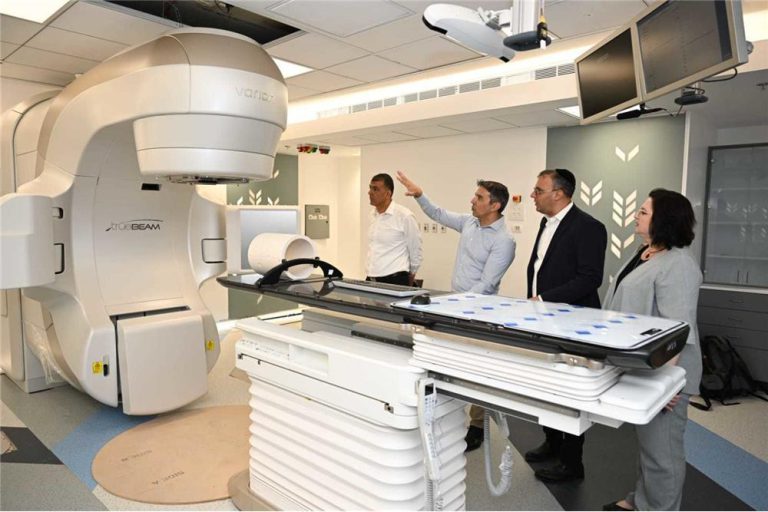
The Health Committee, chaired by MK Yonatan Mashriki (Shas), toured Emek Medical Center in Afula on Sunday. Committee Chair MK Mashriki stressed the importance of reducing healthcare gaps between the geographical periphery and the country’s center, saying that this was one of the committee’s banners. MK Mashriki also said that the committee was monitoring the issue of fortification of hospitals. He praised the activity of Emek Medical Center, and its expansion, initiative and creativity.
Eli Cohen, CEO of Clalit Health Services, said that Clalit had raised an outcry for many years over the lack of fortification, but this fell on deaf ears. “Not only Soroka Medical Center was hit in Operation [Rising Lion], other community clinics were also harmed, in Petah Tikva, Rishon Lezion, Karmiel and Tel Aviv, and we returned most of them to activity immediately from our own money,” Cohen said. He said that 98% of the clinics were fortified, and described the care of 11,273 citizens who were evacuated to hotels since their homes were hit by missiles, and spoke about the increased accessibility of digital services. Cohen said that during the 12 days of Operation Rising Lion, 987 casualties were treated at the [Clalit] HMO’s hospitals throughout Israel, including people who suffered from mental health issues. He emphasized the necessity and the urgency of fortifying psychiatric hospitals and mental health centers.
Director of Emek Medical Center Dr. Maor Maman said that the center currently included 670 beds, and had grown by 140 beds over the past five years. He said the center was the largest in northeastern Israel and one of the busiest medical centers in Israel. Dr. Maman presented the fortified infrastructure, including underground compounds and fortified operating rooms and delivery rooms. Along with this, he noted the fortification gaps at the center, including clinics and laboratories that were not fortified. Upon the outbreak of the war a year and a half ago, the fortification plans were accelerated, including buildings and equipment, along with refreshing the staff’s knowledge and competence, and maintaining the activity at the center, mainly because of a reduction of activity in other hospitals in northern Israel, and evacuation of patients from these hospitals to Emek Medical Center.
Dr. Maman said that NIS 20 million had been budgeted for an underground hospital that could house up to 300 beds, as well as building a new and fortified operations room. At the start of the operation, the patients were concentrated in just three buildings, in which an emergency hospital was operated, and actions were taken to reduce the risk of infections. He described his struggles to open a stroke and cerebral angioplasty unit, as well as activity for shortening residencies, recruiting experts, operating a center for rare diseases, expanding oncological treatments, new operating rooms, a new mental health building and more. Dr. Maman requested the committee’s help in granting a license to operate an additional MRI scanner, budgeting additional fortification for hospital departments, clinics and laboratories, and encouraging residency [at the hospital] by offering incentives.
Ministry of Health official Firas Hayek replied that the necessary costs for fortification of additional departments would be examined, and said that these issues were under discussion with the ministry.
Also participating in the tour, in addition to Committee Chair MK Mashriki, were MKs Yasir Hujeirat (Ra’am—United Arab List), Tatiana Mazarsky (Yesh Atid), and Kathrin Shitrit and Osher Shkalim (Likud).