
















Knesset Press Release • October 21, 2025
The Health Committee and the National Security Committee held a joint session Tuesday on the issue of violence against medical staff in hospitals.
In the debate, Health Committee Chair MK Yonatan Mashriki (Shas) said, “Over time, various ideas have been raised to deal with this terrible phenomenon. We will try to find practical solutions, and the issue of the budget is, of course, a key factor. We will focus on violence against medical teams in general hospitals in order to fully address the issue.”
MK Mashriki noted that he was currently promoting a bill to establish a mechanism for issuing administrative fines for verbal or physical violence against medical staff, with the goal of enabling a quick and effective response — even before the completion of criminal proceedings. “This is a necessary step that will make it possible to immediately punish attackers and create deterrence, without waiting for lengthy court proceedings,” he stated.
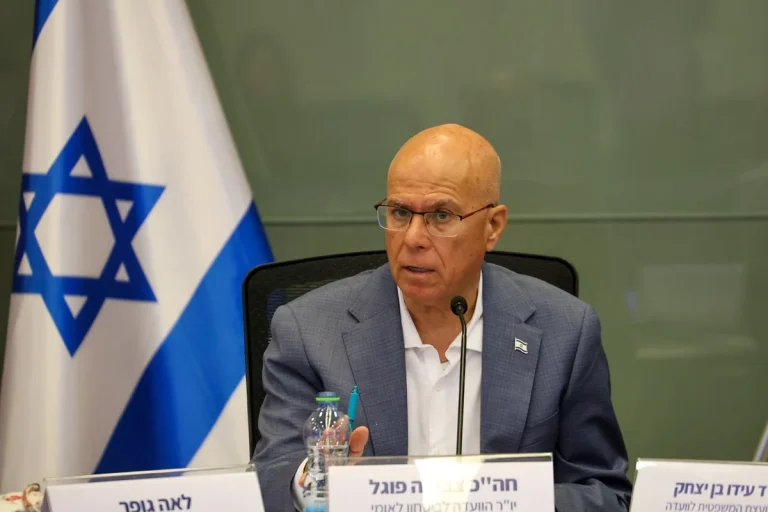
National Security Committee Chair MK Tzvika Foghel (Otzma Yehudit) said, “As if the crime organizations and the war weren’t enough — we also have to deal with violence in hospitals. This happens across a wide range of the population, and recently I’ve learned that it also involves terrorists whom staff members refuse to treat. This is something we must address. A hospital is not a battlefield.”
MK Hamad Amar (Yisrael Beitenu) said, “I receive many complaints from people. The hospital should be the safest, most isolated place, because it is meant to help people. But when enter an emergency room today, you see more security guards than doctors. Not everyone is violent — some are normative people who see their loved one suffering terribly, and because of staff and equipment shortages, no one comes to help. The problem is the shortage of physicians, not a shortage of guards.”
Ministry of Health Deputy Director-General Dr. Sefi Mendelovich replied: “In psychiatric wards, we have increased the number of security guards. In community medical facilities, a pilot program operates using mobile guards who are supposed to arrive within four to seven minutes to handle incidents. In hospitals, we have worked to create a foundation for long-term solutions: we collected data to understand how many incidents occur, when, and their breakdown. We also placed police officers in emergency rooms. We are in contact with the Ministry of Finance to secure funding to add more police officers to hospitals.”
Dr. Mendelovich acknowledged legal difficulties in increasing penalties, explaining that “the legal process is very long and almost never results in convictions,” so administrative fines are very effective. However, this initiative has not yet progressed due to legal obstacles. Another major challenge, he said, is the shortage of security guards, whose mere presence serves as a deterrent, but recruitment remains difficult.
Benny Keller, head of security at Rambam Hospital, said the violence is only worsening. “It’s difficult to deal with the average person who suddenly loses control, because he’s usually right,” he said. “But sometimes dozens or even hundreds of family members arrive, demanding to enter the operating room or reach the patient’s bed. We must increase the number of security guards, define the job as ‘preferred employment,’ add at least two more police positions in emergency rooms, and raise fines for violent individuals.”
Dr. Irit Meretyk, head of the Emergency Psychiatry Service at Rambam, noted that the number of people suffering from post-traumatic stress due to the war has increased, making it more difficult to handle such cases.
Nazareth Hospital Director Prof. Fahed Hakim argued that the presence of police officers and guards has a strong deterrent effect, and said that doctors and guards sometimes hide in the ER because of violent incidents.
Ministry of Justice official Adv. Yifat Raveh discussed the legal and evidentiary difficulty in convicting perpetrators of violence, and suggested that closing a criminal case could be conditioned on the payment of a monetary fine — not an administrative fine — in order not to diminish the severity of the offense.
Dr. Ze’ev Feldman, chair of the State Doctors’ Organization in the Israel Medical Association, said “The ‘starvation’ of the healthcare system causes long queues and heavy workloads — but that does not justify violence against medical teams. In most cases, complaints are not filed, and even security staff are reluctant to file them. We must strengthen and improve the reporting culture. I warn that we are on the verge of a mental health tsunami due to the war, and we must ensure that treatment remains respectful and professional.”
In conclusion, the ministries of Health and Finance were instructed to act to increase the number of police positions in hospitals in order to provide security around the clock. Health Committee Chair MK Mashriki said, “There is no alternative to creating a clear and immediate deterrent to cases of violence in medical institutions. Therefore, we will consider advancing a bill to allow the imposition of administrative fines for certain types of violent offenses, in coordination with the Ministry of Justice and the Israel Police. The Ministry of Health must also ensure that all incidents of violence in hospitals are documented and reported.”