









Knesset Press Release • July 17, 2025
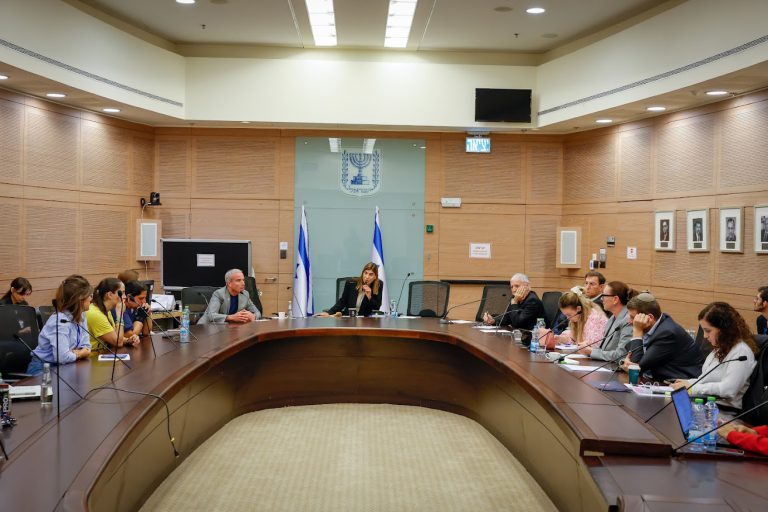
The Foreign Affairs and Defense Committee convened on Tuesday for a quick debate on the topic of “Lack of proper fortification for IDF soldiers in active warfare theaters.” The debate was held at the request of MK Sharon Nir (Yisrael Beitenu), who wrote to the committee, “Against the backdrop of the ongoing campaign in the Iranian theater and the ballistic missile attacks against the State of Israel’s home front, a troubling picture arises, in which thousands of IDF soldiers stationed in bases in the Judea and Samaria sector and in southern and northern Israel, remain without basic fortification during missile alerts.
“Soldiers report that near the military posts and in training and instructional areas, no portable shelters or protected spaces exist, and they were given instructions to lie down on the floor and put on a helmet when an alert sounds. Needless to say, the threat of ballistic missiles from Iran is deadly, and in the absence of proper fortification—this poses a real and present danger,” stated MK Nir.
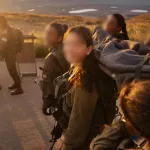
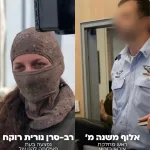
Chen Mutzafi, mother of an IDF lookout, said, “We won’t allow the disregard for our daughters’ lives anymore. They are called upon to be on the front line, and we demand that they be protected. We demand fortification for the soldiers, and for them to have personal protective gear. If a soldier is called upon to remain in the operations room and not to leave, make sure to fortify the operations room. There’s supposed to be security for the camp, but this doesn’t happen. In the case of my daughter, who serves in a base surrounded by Arab villages, the security squad was diverted to another mission. Women soldiers remained on the base without security. Our girls are expected to serve as the army’s eyes, so we expect the army to provide them with backing.”
Lt.-Col. Y. of the IDF Planning Directorate: “The IDF makes maximum efforts to protect its service personnel. The fortification issue is delegated to the units, directorates and branches. However, at the start of the Swords of Iron war and certainly during Operation Rising Lion, a very significant and unprecedented effort was made. The fortification effort became a centralized effort of the IDF General Staff, within which thousands of fortification items were purchased and distributed throughout the entire IDF, in accordance with the priorities that were defined and the intelligence assessment. If there are bases that are under threat, they are assigned priority. The distribution is carried out in accordance with the order of priorities, not according to various requests. In projects and new construction, we take the fortification into account.”
Lt.-Col. R. of the IDF Operations Directorate: “The IDF defines a policy of continuity of operations and it has different stages. There is a range of fortification solutions for every base, in accordance with the base’s level of essentiality and the essentiality of the roles. There is a fitness assessment in the fortification aspect as well. Within the defense guidelines, we conducted a focusing procedure in all bases, such as downsizing personnel to essential soldiers only, to the point of evacuating bases. This was done both in the Swords of Iron war and within Operation Rising Lion, in keeping with the progression of severity.”
Lt.-Col. D., an IDF official in charge of fortification of structures: “Within my post, I research and examine the effects of enemy weaponry, and I develop and characterize fortification systems for IDF infrastructure, and guide and recommend which solutions should be purchased. Additionally, I perform fortification surveys, examine the existing infrastructure and recommend what to do in order to improve fortification. When there are fortification gaps during warfare, the base cannot be staffed.”
MK Nir, who chaired the debate, said that the committee would reconvene for a follow-up debate, which would be held as a classified debate.