













Knesset Press Release • September 2, 2025
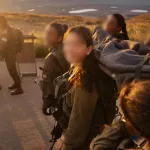
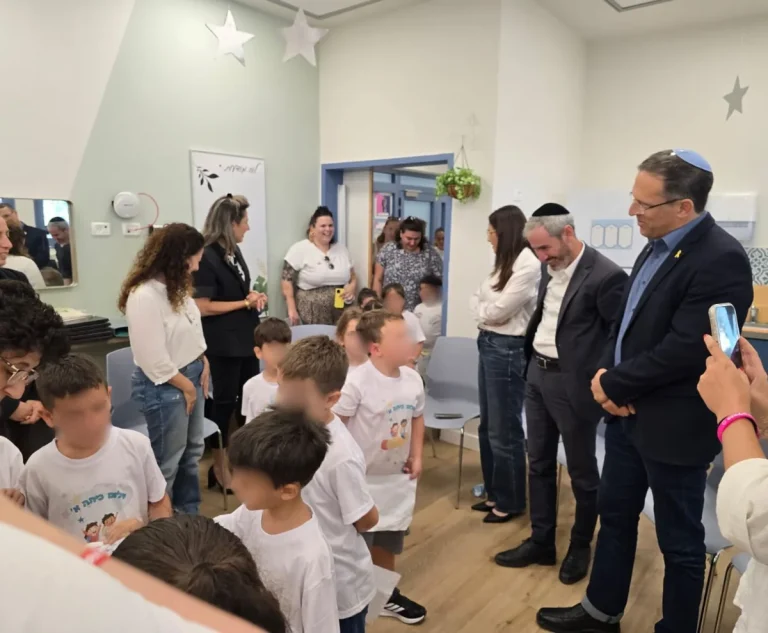
Over two and a half million schoolchildren began the 2025/26 school year on Monday. On the occasion of the start of the school year, members of the knesset Education, Culture and Sports Committee conducted a tour of educational institutions in the Eshkol Regional Council. They met excited students and teachers at the elementary school in Eshkol, at a preschool in Kerem Shalom and in the relocated school opened in Kibbutz Gvulot [at a distance from the border].
In the Eshkol Education Center, which opened on Monday after nearly two years in which it was abandoned due to the war, the Members of Knesset met Regev, a sixth grader from Re’im who changed four schools in two years. After the October 7 massacre he moved to Eilat, then to Tel Aviv, then he attended the school in Tzohar, and he is currently at the Education Center in Eshkol. Rif, from Talmei Eliyahu, who also returned to school on Monday after a series of transitions, said, “What I waited for most was to get back to my friends.” Lia from Sde Nitzan said, “It was a bit awkward at first.”
committee chair MK Yosef Taieb (Shas): “It’s our committee’s commitment that this region will be able to thrive, after the crisis that took place here. In previous visits over the past two years, we saw the destruction here, and now we see that it’s flourishing in an amazing way. The goal is to see whether [the region] succeeds in returning to a normal routine from the great crisis. We have come to strengthen the locality and the ministry’s workers. Now we have to look towards the future.”
Michal Uziyahu, head of the Eshkol Regional Council, related proudly, “We decided to invest NIS 22 million that we received from the Tkuma budget in a municipal basket [of services], for the purpose of building a neighborhood for education personnel who will come from all over Israel and will settle in Ein Habesor and become a community. We hope this will be a nationwide model, for northern Israel too.” Uziyahu expressed warm thanks for the activity of the committee and its chair, saying, “You have given us a great deal of attention during this period.”
Uziyahu asked for economic aid from the state, saying, “In the basket allocated to us by the Ministry of Education, which includes the budgets of the Tkuma Directorate for five years, there is a budgeting model that is reduced from one year to the next. The budget per child dropped from NIS 13,500 to NIS 11,000 per student in the current year. If we take Operation Protective Edge, for example, then two years afterwards, when the state withdrew the protective mechanisms, we saw extreme cases here. Don’t ask us to grovel in order to keep the hope and resilience intact.”
Margalit Rothstein, head of the education mission at the Tkuma Directorate, commented on the reduction of the budget, “The first part of rehabilitation is to come to school, to smile and to be, but we want to see the Eshkol children at Israel’s spearhead, the way they were before—veterans of elite units and technological units. The sharp drop in the sixth year will not make it possible to maintain the process that was carried out in the preceding five years.”
Inbar, a member of Kibbutz Be’eri and the daughter-in-law of Ofra Keidar, who was murdered on October 7 and whose body was returned from Gaza, came back to work on Monday as a guidance counselor at the Merhavei Eshkol school. “We are broken, but we want to stand on our feet. That’s the reason I returned to here. This is my home. We will also need a great of budgets to rehabilitate the staff, which experienced two very difficult years,” she said.
At the relocated school in Kibbutz Gvulot, which is located about 14 kilometers from the border, and was opened in February 2024, the committee members spoke with the teachers. The school recently received a temporary institution code [from the Ministry of Education], and the educational staff called to make the temporary status a permanent one. Hannah, a veteran teacher, said, “The entire Education Center should be located far from the front lines, not on the border. The uncertainty causes us great dissatisfaction. This doesn’t only trouble parents and teachers, I hear it from students too. Before every school [year], we have to build up resilience here, and the students shouldn’t have to withstand more pressures, particularly the kind of pressures that we can control, such as the question where their school will be, so that they won’t hear explosions in the background.”
“Recognition of the need should be given. I also told the Minister of Education that this school should become permanent,” said committee chair MK Taieb, and promised to follow up the issue personally.
Also participating in the tour, in addition to committee chair MK Taieb, were MKs Yasmin Fridman (Yesh Atid), Moshe Turpaz (Yesh Atid) and Etty Hava Atia (Likud).