













Knesset Press Release • August 11, 2025
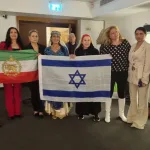
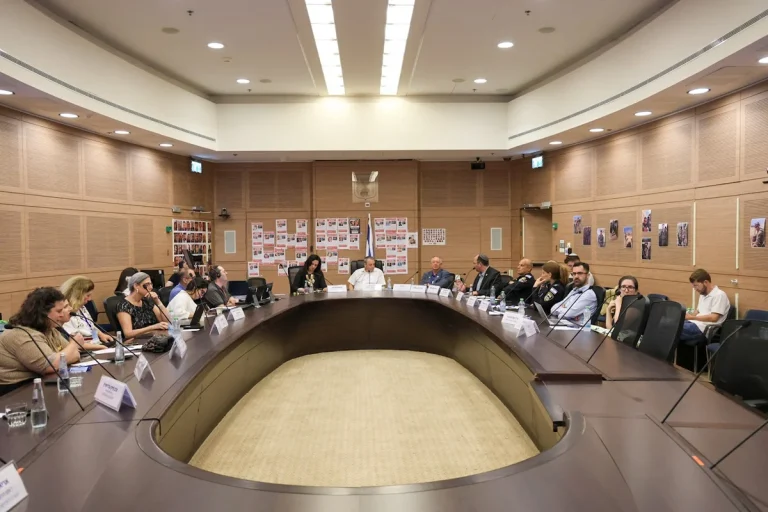
The Committee for Immigration, Absorption and Diaspora Affairs, chaired by MK Gilad Kariv (Labor), held on Sunday its third debate on the status of the Ezrat Israel section of the Western Wall, the detention of female worshippers for questioning, the issue’s impact on the freedom of worship of Jewish communities in the Diaspora when coming to Jerusalem, and its impact on Israel-Diaspora relations.
Committee Chair MK Kariv said,”“We are seeing an actual change in everything related to Jewish prayer on the Temple Mount. There is a dispute regarding the right of Jews to pray on the Temple Mount. The reality is changing through the establishment of facts on the ground by the Minister of National Security, [MK] Itamar Ben Gvir (Otzma Yehudit). I have requested an urgent discussion on this matter in the foreign affairs and defense Committee regarding the security tensions on the Temple Mount. Any deviation from the status quo on the Temple Mount can lead to increased security tension, and caution is required.
“For the past seven years, worshippers in Ezrat Israel have been prevented from touching the stones of the Western Wall, in violation of a High Court of Justice ruling. This is the third discussion we have held on the Western Wall and Ezrat Israel, yet the Prime Minister’s Office, which is the relevant ministry, refuses to send the appropriate representative. As of now, the State of Israel is violating a Supreme Court ruling on contact with the stones of the Wall in Ezrat Israel,” he said.
MK Simcha Rothman (Religious Zionism) said, “The proper committee to deal with Jewish religious services is the Constitution Committee. The involvement of the court in the matter of the Western Wall is illogical and also contrary to law. A welcome change has taken place within the boundaries of the status quo, but Jews still cannot enter the Temple Mount from anywhere or at any time they wish. The court should not intervene in every matter connected to the Temple Mount and the Western Wall. The body that should decide these issues must be the Chief Rabbinate.”
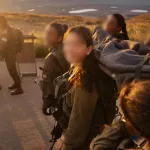
Yochi Rappeport, executive director of Women of the Wall, said “A few days after Rosh Chodesh Av, we asked to pray in the Western Wall plaza, as is our custom. When we tried to bring in a Torah scroll at the entrance to the plaza, we were not allowed in, and severe violence was used in an attempt to take the Torah scroll we had brought. Women of the Wall are women from all streams of Judaism; they all have a share in the Torah of Israel and in the Western Wall. It is unacceptable for the Israel Police and the Western Wall ushers to act violently toward us. If we had not physically protected the Torah scroll, it would have been torn to shreds by the Israel Police. We are permitted to read from the Torah at the Western Wall, and the police are not allowed to interfere.”
Women of the Wall Chair Anat Hoffman said, “I feel that neither the ushers nor the police know who is responsible for enforcing public order at the Wall, and when. The ushers of the Western Wall Heritage Foundation act as they please, and the police look the other way. It is unacceptable for a police officer to ignore the violence of the Western Wall ushers against us. I was summoned to complete a questioning session at the David Sub-District Police Station in Jerusalem on Tisha B’Av, even though I live in Haifa; the questioning took only seven minutes, yet I was not allowed to complete it at a police station near my home. Women of the Wall break no law, and we are not forbidden from bringing in a Torah scroll. The court accepted our position that there is no need to carry out a special search on Women of the Wall for a Torah scroll.”
Yaron Shavit, deputy chair of the Executive of the Jewish Agency Executive, said “Freedom of worship on the Temple Mount has a direct impact on the national security of the State of Israel. The State of Israel must explain to the broader Jewish world why Women of the Wall encounter severe violence. Videos of such violence can seriously harm Israel’s national resilience and security.”
Chief Supt. Assaf Harel, head of investigations and intelligence in the Jerusalem Police’s David Sub-District, said “The Israel Police does not deal with the issue of bringing in Torah scrolls, since this is the responsibility of the Western Wall Heritage Foundation. We ask Women of the Wall to inform the police in advance of their intention to hold prayers on Rosh Chodesh so that the police can carry out a relevant situation assessment. The requirement for the chair of Women of the Wall to arrive for questioning on Tisha B’Av will be examined.”
Adv. Yaara Lemberger, director of civil law at the Ministry of Justice, said “Security guards have the authority to conduct checks for security purposes; ushers have the authority to enforce order in matters relating to holy places, but without the authority to use force. To the best of my knowledge, no one has the authority to bring a Torah scroll into the Western Wall area.”
Committee Chair MK Kariv concluded the discussion, saying “There is a clear violation of the High Court’s ruling regarding access to the stones of the Western Wall [from the small prayer section]. The Supreme Court order was given to the state, but nothing has been done. I request that the Ministry of Justice provide a written response regarding the use of force by the Western Wall ushers. I request a written position from the district commander regarding the use of whistles during prayers in the various sections of the Wall. I request a response from the Israel Police regarding the summons of the Women of the Wall representative for a seven-minute questioning on Tisha B’Av. I suggest that Women of the Wall and the various representatives file a joint petition regarding access from the small plaza to the stones of the Western Wall.”