












Knesset Press Release • July 2, 2025
The State Control Committee, chaired by MK Mickey Levy (Yesh Atid), convened on Tuesday for a debate on the State Comptroller’s report regarding the preparations of the local authorities for emergencies, and the impact of the latest military campaign—Operation Rising Lion.
Committee Chair MK Levy: “When one delves into the State Comptroller’s reports—whether they were issued twenty years ago, ten years ago or recently—the same troubling picture recurs: Lack of integration, lack of readiness, and complete loss of responsibility. But I’m not talking about the local authorities—they’re the only ones that function. The problem is the state. I ask, who is responsible? The National Emergency Management Authority (NEMA)? The Evacuation, Relief Aid and Casualties Authority (ERCA)? The Prime Minister’s Office? The Ministry of Interior? The Ministry of Welfare and Social Affairs? There’s no one who serves as lead integrator for the event and provides housing, rehabilitation or fortification solutions. This is a state that learns nothing, not even after October 7. Israel excels in improvisation—but not in strategy. The local authorities are the heart of Israel’s resilience. The time has come for the central government to function. Not only in a military operation, but also in rehabilitation, fortification, housing and mental health. For the citizens can’t wait [any longer].”
MK Naor Shiri (Yesh Atid), one of the debate’s sponsors, said, “There is a report and a Government resolution that says—adoption of the main points of the report after earthquakes, and setting up organizational infrastructure for long-term rehabilitation after a disaster—an excellent report. But then you discover that nothing was done, nothing at all. Why is that? ‘Let’s not plan, let’s only take action on the day after, and then we’ll remember to work.’ We’re a country that is filled with disasters. But when there’s no government and no state, the local authorities always fill this vacuum.”
Shai Mizrahi of the State Comptroller’s Office stated that the report issued in 2011 was still relevant. Mizrahi said, “The basic problems—regulating areas of responsibility, setting up properly-run computer systems and coordination between NEMA, the Home Front Command and the Ministry of Interior—have not yet been solved. A follow-up audit hasn’t even been done. We are scheduled to issue a number of reports about the latest campaign in about two weeks—but it’s already clear now that that the lessons haven’t been learned.”
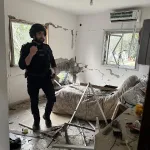
Michal Lehrer of the Knesset Research and Information Center presented data on the latest war with Iran and the heavy damage caused to Israel’s home front following the missile attacks: Between 13,000 to 19,000 residents from 17 local authorities remained without a proper roof over their heads for residence. About 11,000 of these were housed temporarily in about 100 hotels throughout Israel, while the others found housing solutions independently. Cities that suffered significant damage include Tel Aviv-Jaffa, with 2,550 residents who remained without a roof over their heads; Ramat Gan with 2,500; Bnei Brak with 2,050; Be’er Sheva with 1,700; Bat Yam with 1,300; Holon with 1,050 and Petah Tikva with 1,000. Rehovot and Rishon Lezion also suffered damage, with 370 and 350 such residents, respectively. As of June 29, 2025, a total of 45,730 compensation claims were filed with Property Tax for damage caused during the operation, the overwhelming majority of which (35,981) deal with damage to buildings.
Following the operation, on June 18, Government Resolution 3153 was drawn up. This resolution includes, among other things, financial aid of NIS 1,500 to the Ministry of Interior for every resident who required evacuation, and direct aid of NIS 500 for every evacuated resident for covering immediate needs, with an allocation of up to NIS 50 million in 2025. The development of a digital system for management and synchronization of information was also launched, at a cost of NIS 850,000.
Avi Meysharim of NEMA said that NEMA, which operates under the Ministry of Defense, did not serve as lead integrator for national events. “It is a staff body, not an operational body in the local authorities. The Prime Minister’s Office is supposed to serve as lead integrator for operations. According to the updated reference scenarios as of April 2025, about 7,000 fatalities can be expected in an earthquake. We need more significant preparations,” he said.
Ministry of Welfare and Social Affairs official Keren Ofir: “We set up hotlines and provide a response, but there is no body that serves as lead integrator. The 118 hotline works, but there is a lack of a national rehabilitation network. People in hotels don’t know what their rights are, and there’s no information. It feels like we’ve learned nothing from October 7.”
Representatives of the cities that were harmed in Operation Rising Lion all described the difficulties and the challenges they face. They said that there was significant lack of coordination and insufficient support from the central government, leaving the local authorities to cope on their own with the scope of damage and the care of thousands of residents who remained without a roof over their heads. They also emphasized the heavy economic burden of immediate and ongoing care of the displaced persons, and the urgent need for long-term alternative housing solutions, as well as the failures in meeting social and health needs during emergencies. The representatives of the cities also said that there were fundamental flaws in the existing fortification infrastructure, including the situation of the public shelters and lack of sufficient national preparations.
Committee Chair MK Levy summed up the debate by praising the [local authorities] for functioning well, and emphasized their critical role as the primary and main agency providing a response to the residents during crisis situations.