















Knesset Press Release • July 13, 2025
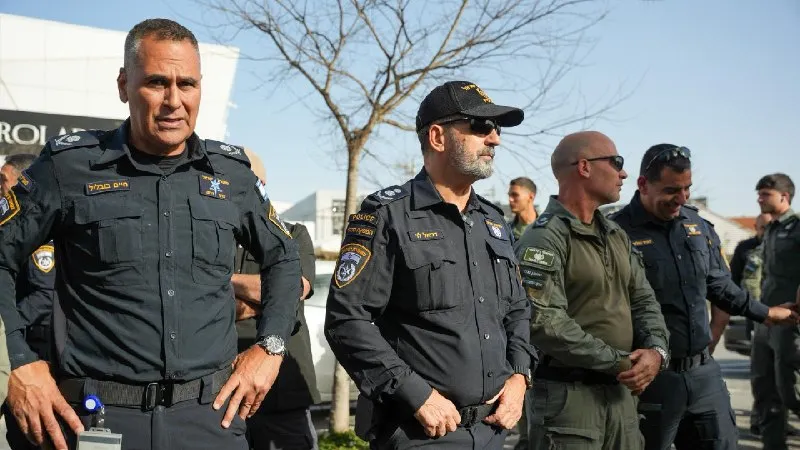
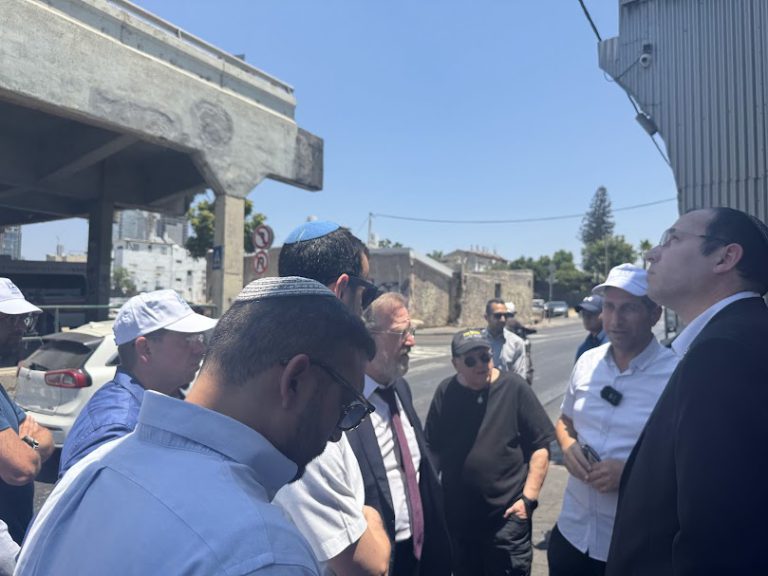
The Constitution, Law and Justice Committee, chaired by MK Simcha Rothman (Religious Zionism), held a tour of southern Tel Aviv on Thursday. The tour was held ahead of the committee’s deliberations on the proposed Basic Law: Immigration, sponsored by Committee Chair MK Rothman.
Committee Chair MK Rothman: “The tour launches the committee’s deliberations on Basic Law: Immigration, a bill that was created in 2018, and underwent transformations until the previous Knesset, when it was endorsed by all the parliamentary groups of the opposition, which are now in the coalition. This is a fundamental bill that deals with all issues related to immigration, since the conflict reaches legal channels when the infiltrator, the illegal alien, the refugee—copes as an individual with a particular procedure of the Population and Immigration Authority or the police, and questions are asked regarding the principles established in the basic laws. Israel has the obligation and the right to decide how to exercise its basic sovereignty and to verify who enters and exits its gates, and this has not been established by the basic laws. I would like to hope that when the Knesset establishes the principles in the basic laws, the law enforcement agencies will have the legal tools to do so.”
MK Yitzhak Pindrus (United Torah Judaism): “These things should be established, in principles along with exceptions. I encounter this in my committee [the Special Committee for Public Petitions]—there are many problems when the police don’t have a registry. The disorder is not good for any side. The Population Registry has been turned into a holy of holies, and they don’t give an ID number to everyone who disembarks at the airport, and then the police, the bank, the municipality—no one knows where the person is. It can be defined that this number does not bear [legal] status, but then the person will be in the registry and it will be possible to track him if he has run away from his employer and so on. All the systems work today with an ID number.”
MK Ofer Cassif (Hadash-Ta’al): “Every sovereign state has a right to establish immigration laws. One of the principles of natural justice, including in Judaism, is the just, fair and moral treatment of people in distress, and the question is how we find the balance between these two things. The veteran residents of the neighborhoods deserve a thriving, good and safe life. The argument is over how it should be done. Do we turn the foreigners into a scapegoat. Our mandate here is much less about what happens with those who are here, it’s rather about immigration policy. What troubles me is the real intention behind the law, which is to restrict and persecute people who are persecuted in any case. We’re talking about racist nationalism. There are people whose racist positions echo racist voices from the past. As far as they’re concerned, anyone who doesn’t belong to the right race shouldn’t be here. This is unconstitutional even under Israeli law, and it must not be condoned.”
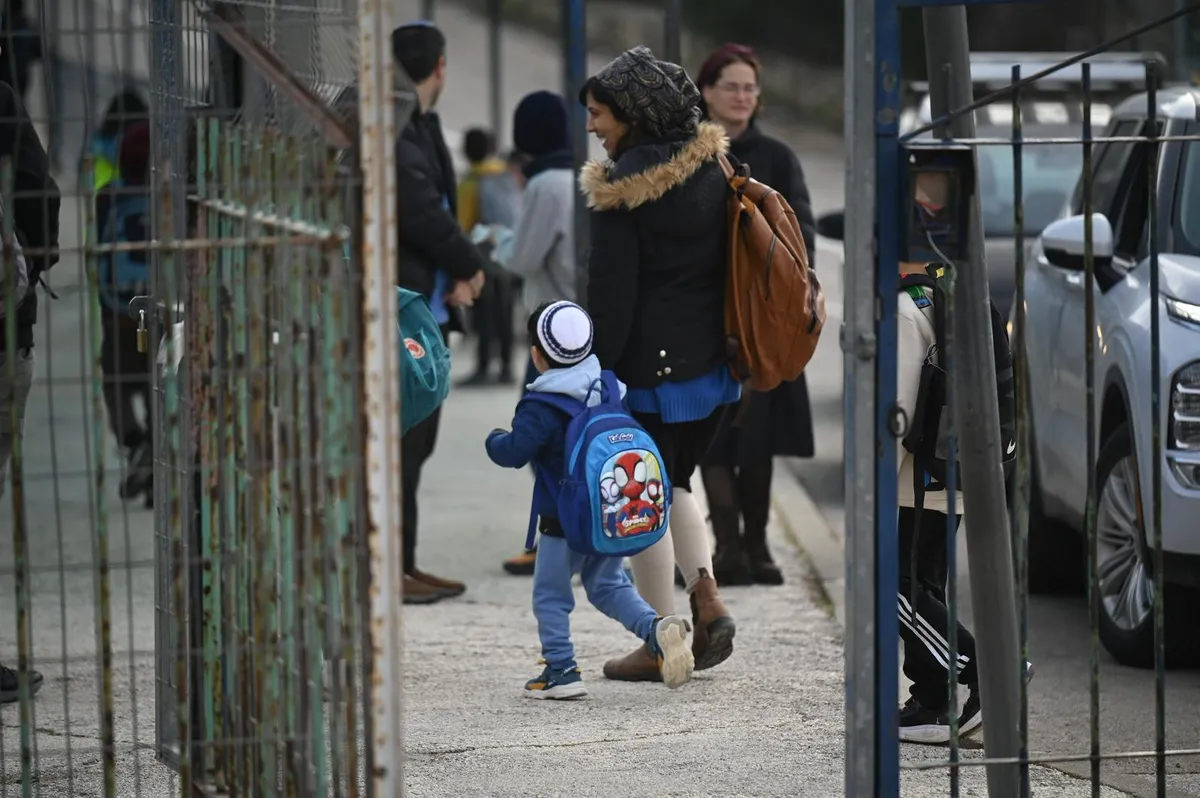
MK Eli Dallal (Likud): “I was born here, and my parents still live in the area. In terms of Judaism, attention should be paid to the stranger, widow and orphan, but there are infiltrators here who entered illegally, work migrants. The residents here cannot be forsaken, so the matter needs to be regulated. People have been here for 20 years in a situation in which they are unable to live or to leave the house, they live in fear. The residents here are the weakest population, and we cannot forsake them. People are afraid to board the train at the Haganah station. The police do a great deal, but they can’t guard every resident. We want to embrace every person who comes here legally. The Jewish people went through what it went through, and we will embrace every minority that arrives, but it has to be regulated.” MK Dallal said further, “My mother was robbed. She was blindfolded and tied to a chair. She spent a week in the hospital. She gave testimony at the Yiftah police and nothing happened. She’s 90 years ago now, and she won’t leave the house because she’s afraid. People are afraid to take the train and go to work.”
MK Ariel Kallner (Likud): “The reality in which there’s no clear policy on immigration to Israel has to be rectified. The main thing is zero tolerance towards people who enter Israel illegally.”
Chief Supt. Moshe Avital, commander of the Sharet Station: “In the past two and a half years, about 8,500 Eritreans have left. The main reason for their departure is that they lacked legal status. There were brothels here, and there were about 140 hamara drinking establishments—the pubs of the Eritreans who cause crime, and homeless persons, which is an issue in and of itself. We’re a station of about 150 police officers, and we lack several dozen police officers. […]
“There was a large operation against drug dealers in Lod, and they all moved to southern Tel Aviv. The penalties don’t deter. As for crime among foreign nationals, there is between 14%–16% involvement in crime from the total number of cases, and in the past year this dropped to 13%. There is a problem of fictitious ID numbers. An Eritrean who commits an offense is given a fictitious ID number by the police, and this is true for every system he encounters—education, healthcare and so forth. So he doesn’t exist in the systems and this creates a norm of low compliance, because they know that they won’t have to answer for the fines.
“One of the problems is a court policy that isn’t adapted to reality. When I catch Eritreans with axes and clubs in a dispute, they’re charged with a minor offense of knife possession, and they’re released the same day. In the end, they’re not registered in any system, and that hampers enforcement. Another problem is the second-generation foreigners, which is a global phenomenon, youth who are educated here from birth, their parents work from morning to night and don’t see them. They hang around on the streets and harass citizens, and they’re under the age of criminal responsibility or close to it. We in the police search for them nearly every day as missing persons, when their parents call. I understand the citizens’ distress. A greater problem is teenagers aged 15–18. When they reach age 18, they don’t want to sell vegetables like their parents, and the organized crime groups take advantage of the fact that they don’t enlist in the army. They commit robberies and serious offenses throughout the entire area and a decision has to be made if they stay, what to do with them or whether to deport them,” said Chief Supt. Avital.
Committee Chair MK Rothman: “The most important sentence said by the police is that infiltrators left because they have no legal status. That is where the solutions will be derived from. If the basic principle is ambiguous, that is what creates a mess in immigration law in Israel and in court rulings. One of the principles of the bill speaks about the obligation to expel [from Israel], and that is a fundamental issue. Under the bill, a person who enters Israel unlawfully—infiltrators or their children, will never be granted status in Israel, so they will have no future or horizon.”
Adv. Noam Kahan of the Population and Immigration Authority: “A biometric law for foreign nationals should solve the identification problem, so that anyone who connects to the biometric database will identify the person he encounters, but that takes time. As far as we’re concerned, there’s no other solution. This will prevent forgeries, contrary to the other methods and solutions that have been proposed. Biometric identification [information] is already being taken, but it will take time until the database is free of duplications. The Population Registry is a kind of ‘holy of holies’ because it is supposed to reflect the population in Israel. Making an exception for people who support the regime [in their country]—the enforcement policy is not relevant for them. There’s a problem on the matter of expulsion with regard to foreign nationals who have families, the court has high demands for minors.”
A Population and Immigration Authority official in charge of expulsion said, “The cooperation with the police is excellent and it shows results on the issue of voluntary departure. The populations of foreign nationals are very diverse. The Enforcement and Foreign Affairs Administration has 130 incarceration spots for all enforcement areas—51 women and 79 men. This is a fact that guides many of our actions and our thinking. We have reached out to the Minister of National Security to see how the problem can be resolved. There are populations that have protection from expulsion, such as Ethiopians, Ukrainians, Sudanese and Eritreans. In keeping with amendment 41 of the Entry into Israel Law on Eritreans who are supporters of the regime [in their country], 44 people were arrested for various criminal offenses and turned over to us for handling. It became evident that they were supporters of the regime, and this was turned over for the minister’s authorization according to procedure, in an orderly fashion. In addition, we have considerable difficulties with the court on the matter of the good of the child, and all the actions that are done are unsuccessful. In specific cases with the courts, the minister issued a letter and nothing was done. We are subject to the law, and the matter of the good of the child hampers the decisions.”
Committee Chair MK Rothman: “There is no agency in Israel that has made such a decision of protection from expulsion, so there are no explanations, reasons or staff work. In order to overcome such a decision, which no one made, the Knesset tried to enact a bill on the matter of regime supporters.”
Dotan Smith, head of the Voluntary Departure Unit at the Population and Immigration Authority: “The unit allows every foreign national, who is staying in Israel illegally or holds a residence permit, to leave with its assistance to his country or to a country that is willing to receive him. Until today, the unit has assisted over 48,000 people to leave Israel voluntarily, the absolute majority of which are from various African countries. There is an African country that has an arrangement with Israel that every Eritrean can go there and stay there, if he so chooses. The large majority of people departing voluntarily go to North America, mainly to Canada. As for children and families, we have assisted over 5,000 Eritrean children to leave Israel, mainly to Canada, but also to the African country under the arrangement. We are compelled to incentivize the foreign nationals to leave with airline tickets and a financial grant, and this is accepted in many countries. In recent years we have fully utilized the budget and made use of government resolutions. This year we utilized the budget and have seen a decrease in departures. Many people leave because they don’t have legal status in Israel. As for the population of Sudanese that received temporary status on the basis of a judicial ruling, almost none of them come to us for voluntary departure.”
Deputy Mayor of Tel Aviv Haim Goren: “The population that is located in the city unlawfully creates a heavy burden for the municipality, and this issue needs to be resolved from the roots. I have a position paper we wrote nine years ago, and we hope that this time we will be able to reach a law that enshrines immigration policy in Israel. […]”
Committee Chair MK Rothman: “The bill is designed to give a response to this reality—a framework bill that will lay the groundwork and not specific arrangements. The great problem is not that there is bad policy, but rather that there is policy set by people who have no idea how to set policy, and they adjudicate cases. No policy has been set for many years, and the bill will lay the groundwork for this, and we’ll do everything to ensure that it is enacted in a good and rapid fashion.”