








Knesset Press Release • October 27, 2025
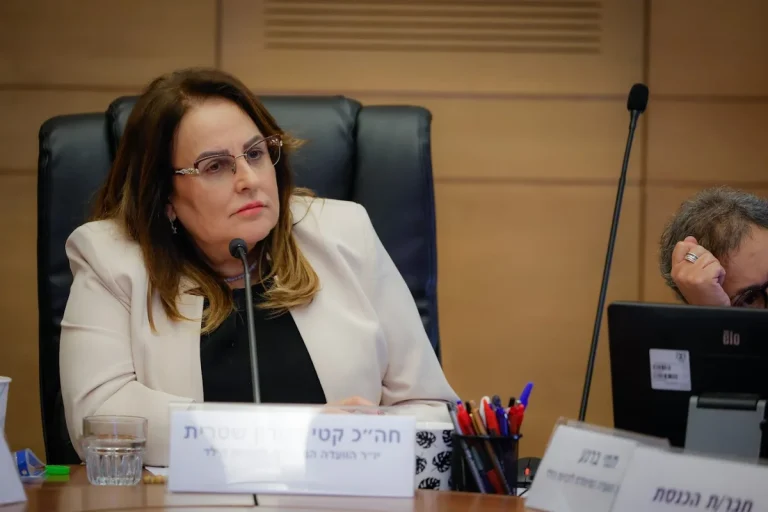
The Special committee for the Rights of the Child, chaired by MK Kathrin Shitrit (Likud), convened on Monday for a debate on the topic of emotional and psychological responses for children in the Arab sector.
Committee Chair MK Shitrit said, “From a comprehensive discussion held previously in the committee, a difficult picture emerges. The systems are not providing the necessary responses for minors in Arab society, alongside a severe shortage of professionals and the absence of a comprehensive plan to ensure equal treatment — it seems nothing is advancing.”
Nur Ibrahim, Arab Community Coordinator at the National Council for the Child, presented data indicating that, since January 2025, there have been 213 victims of violence and crime in the Arab sector, nine of whom are children and teenagers under the age of 18. According to a survey conducted by the Goshen non-profit organization, 88% of parents in the Arab sector reported emotional distress among their children (ages 2-12) due to the war. Surveys conducted by the Council show that 37% of Arab parents reported a significant deterioration in their children’s emotional state due to the war. Additionally, 28% of parents reported their children experiencing daily stress or fear because of the conflict.
The Council noted a shortage of therapists within the Arab community, with only 12% of those completing educational psychology internships coming from the Arab sector. According to the Council, 4% of child and youth psychiatrists come from the Arab sector, and just 11% of social workers come from this sector.
The Council recommended creating an inter-ministerial government program to promote the mental health of children and youth, addressing the expansion of services and strengthening the workforce in the Arab community. It suggested implementing measures to encourage academic studies in therapeutic professions among the Arab population through dedicated incentive programs. Additionally, it recommended developing tailored services for children of victims of violence and crime in the Arab sector and expanding the definition of “crime victims” — creating a mechanism and service package for treating children and youth who have experienced traumatic violence due to the violence and crime in the Arab sector.
Representatives of the Ministry of Education detailed emotional support measures for students, parents, and educational staff in the Arab sector, including adding 1,200 hours of counseling, establishing serenity rooms in 250 schools, and treating around 5,000 pupils, among other psychological interventions.
The Ministry of Welfare and Social Affairs established a regional resilience center in Umm al-Fahm that provides a response to the repercussions of violence in the Arab community.
Ibrahim El Atauna, director of the Bedouin Society Resilience Center, said, “This is our collective trauma, and I want to believe that a child who develops trauma will receive the support he or she needs. My main concern is the community, which is exposed to traumatic events that we have seemingly grown accustomed to. Resilience centers provide multi-layered support, and we need to bring mental health into the community and make it accessible. Since October 7, we received additional funding and doubled our activities.”
Committee Chair MK Shitrit concluded: “There is no doubt that an inter-ministerial program is needed to integrate [the activity of] the Ministry of Education, the Ministry of Health, and the Ministry of Welfare, and increase the number of positions for educational psychologists and Arabic-speaking counselors. These recommendations have already been made – regarding the integration of content pertaining to mental resilience and emotional awareness into the Arab education system. It is time to ensure the implementation of these recommendations rather than settle for empty declarations.”