
Chairman of the Committee MK Gilad Kariv: “An increase in the budget is welcome, but the outcome test reveals a failure in the distribution of support”
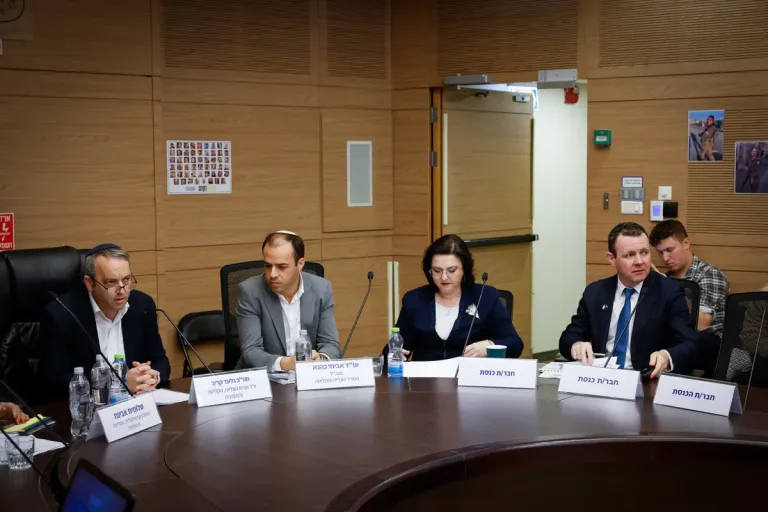
The Knesset Committee on Immigration, Absorption, and diaspora affairs, chaired by MK Gilad Kariv, held a discussion today on the Ministry of Aliyah and Integration’s budget support policy for organizations and associations in 2025.
The discussion was held at the request of MKs Sova, Beliak, and Mazaraki, following publications stating that most of the support distributed in 2025 was awarded to Haredi and religious bodies, while most of the applications submitted by immigrant organizations from former Soviet Union countries were rejected. During the discussion, data from the Ministry of Aliyah and Integration was presented, according to which approximately NIS 8 million were distributed as support to associations in 2025, compared to only approximately NIS 3 million in 2024 – an increase of almost threefold in the support budget between the years.
MK Gilad Kariv, Chairman of the Committee on Immigration, Absorption, and Diaspora Affairs:
“The increase in the budget should be welcomed, but its actual results must be examined. The central question in the area of support is the question of the outcome. When examining the criteria for 2025 and their implementation, it becomes clear that in certain areas, a malfunction has occurred. It is important that all sectors of Israeli society be involved in the absorption of immigrants, but a situation where approximately 50% of the support is channeled to associations with a specific religious-sectoral character does not faithfully reflect the distribution of efforts by civil society and indicates a mistaken bias in the formulation of the criteria. It is unacceptable that in the outcome test, the representative organizations of immigrant communities were significantly harmed in the transition between the 2024 criteria and those of 2025. Representative organizations of immigrants should be a separate category in the support. Furthermore, the proportions must be re-examined: the main part of the budget should be directed to individual assistance for immigrants, such as maximizing rights, guidance, and solving concrete problems, not to identity-based activities, however important they may be.”
Director-General of the Ministry of Aliyah and Integration, Adv. Avichai Kahana:
“A change in the support policy has been made in the Ministry. This is a change that is continuously examined. There is a very professional and principled discussion on how to distribute a limited budget. All data is transparent and presented to the committee: the number of supported associations increased from about 40 to 58, the areas of activity expanded from 78 to 166, and an increase in activity was recorded among Russian, French, and Amharic speakers. There is no and has never been any policy that discriminates against immigrants from the Commonwealth of Independent States or from other communities. On the contrary, this is a correction of accumulated distortions over years. In a broad survey we conducted, with the participation of about 25,000 immigrants, 52% indicated dissatisfaction with social connections in the community, and 34% said their children do not have sufficient social connections. These data necessitate investment in community connection and social resilience, alongside continued close dialogue with representative organizations.”
MK Tatiana Mazaraki (Yesh Atid): “From my personal experience as an oleh who was placed at a Seder night in a religious place where we did not understand the meaning of it all and were only told what to do, only after a few years did I understand that integration into Israeli society also depends on familiarity with history and tradition. Such a process is important for new immigrants, but it must be done in an accessible, respectful, and effective way that creates a real connection and a sense of belonging.”
MK Evgeny Sova (Yisrael Beiteinu): “I demand a re-examination of the criteria. Immigration and absorption budgets are intended to help immigrants, not to fund agendas of religion and state. I am not willing for a new immigrant to receive a message that he is ‘not Jewish enough’ and needs to be brought closer. The money must go to welfare, language, housing, and employment. The current scoring mechanism primarily rewards the strong bodies, while Zionist associations operating in the field are not funded. There are immigrants who receive food baskets. During the Corona period, I arranged food vouchers for immigrants who did not receive assistance due to language and address problems. Before distributing political budgets, ensure that people live with dignity. I will continue to monitor the issue and demand transparency and equitable criteria in the distribution of public funds.”
Alex Rif from the ‘Million Lobby’ organization noted during the discussion that 85% of the organizations that received support deal with Jewish identity, and no response is given to organizations dealing with Jewish documentation and heroism stories. In addition, representatives of other organizations present at the discussion claimed that the support test does not allow for double support – receiving support from two government ministries even if the amounts are small.
The Chairman of the Committee, MK Gilad Kariv, concluded the discussion by requesting a re-examination of the criteria. The Chairman of the Committee noted that he intends to hold a follow-up meeting on this issue in about two weeks and stated that there must be a balance between maximizing rights and individual treatment and community activity. In addition, MK Kariv requested that representative immigrant organizations of communities and associations be included in separate criteria and asked the Ministry of Aliyah and Integration to add a criterion for associations dealing with documentation, commemoration, and the heroic stories of new immigrants, and to emphasize the activity of youth movements working with new immigrants and their children.
Call for a renewed examination of the Ministry of Aliyah and Integration’s support policies
Knesset Press Release • Invalid Date
Related Topics