











Knesset Press Release • November 4, 2025
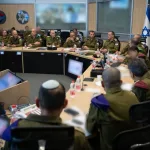
The Special committee for Eastern Border Localities, chaired by MK Mishel Buskila (New Hope—The United Right), convened on Monday for a debate on cases of smuggling from Israel’s eastern border, and measures taken by the defense establishment to cope with the drone threat on the borders. The debate was attended by representatives of the IDF, the police, government ministries and representatives of the localities situated along the border. The representatives of all security agencies participating in the debate pointed at the need to expand the forces and measures for coping with the challenges in the region.
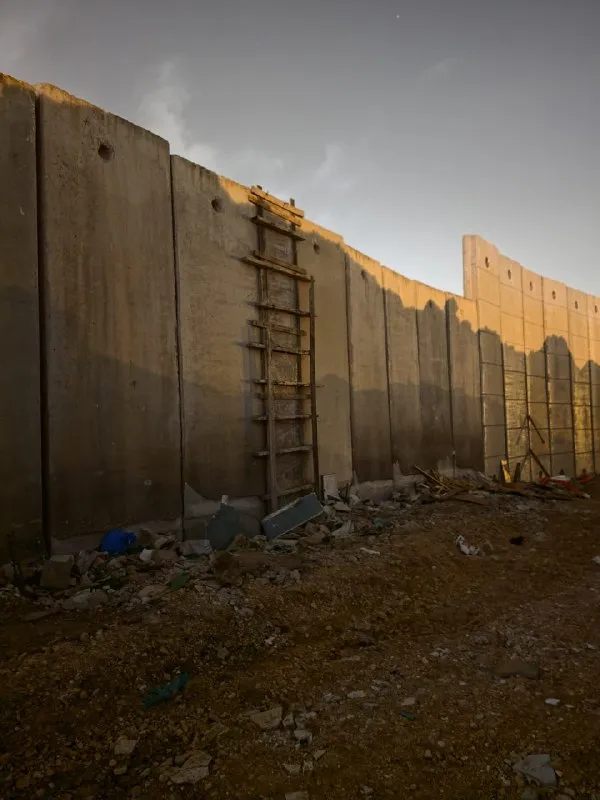
Last week, the Ministry of Defense announced that it had completed the first series of tenders and would start work for building the barrier in the coming weeks; at the first stage, the work will focus on two segments in the Valleys region [which includes areas such as the Jezreel Valley and the Beit Shean Valley].
Committee Chair MK Buskila called not to neglect the work being done in the southern [portion of the eastern border], saying, “At the same time, we should advance construction of the barrier in the Eilat and Arava region. The security of the residents of southern Israel cannot wait. Along with the physical protection by means of the barrier, the state should continue investing [resources] in strengthening the localities themselves, with protective measures, emergency infrastructure and budgets for community development, so that the residents of the region will feel security and strong backing from the State of Israel.”
Idan Grinbaum, head of the Jordan Valley Regional Council: “We’re troubled. We are located just a few hundred meters from the border with Jordan, and there’s still no budget for a barrier that will cover all of Emek Hama’ayanot.”
Eilat Mayor Eli Lankri: “Today, the need to implement the plans for the barrier is highlighted. I have heard that the first tenders refer to the northern portion of the border, and I’m asking that the southern portion not be neglected. If there is a crisis here, it could stop the economy and finish off this city.”
Supt. Elad Ben Lulu of the Northern District police: “The infiltrators are a problem that is parallel to the types of smuggling. In the end, for every infiltrator that is caught, there’s a revolving door back to Jordan. It’s important to reinforce with equipment and personnel that knows how to provide a response in the event of a mass influx.”
MK Ram Ben Barak (Yesh Atid): “The eastern border is one of the greatest challenges to the state, and we are witnessing Iranian attempts to smuggle huge amounts of arms through it in order to create chaos here. Technology is very important, but it can’t be the only solution. We have to enlarge the army by tens of thousands of people. It’s unacceptable for entire sectors not to bear the burden. The technological solution is important, but the solution of [additional] soldiers is critical.”
Ministry of Justice official Adv. Lilach Wagner updated on the legislative processes related to the issue, saying, “There are legislative amendments on the issue of smuggling. As for the arms issue, since March there has been a bill waiting for first reading that imposes a stricter penalty on importing and exporting arms.” Wagner said that [the ministry] was examining the option of a smuggling offense that did not relate to drugs, arms or human trafficking.
Liat Eisner of Kibbutz Eilot: “In August there was a drill [sponsored by] the IDF Chief of Staff that simulated infiltration—and the army failed and did not manage to reach the localities in time. That means we have to defend ourselves. For that purpose, we have to be given the tools so that we don’t fight with our hands tied behind our back. The classification of the localities has to be changed and we should be regarded as a first line of defense; an autonomous weapon system should be placed here, and a border [fence] should be built that can’t be crossed on a child’s bicycle. If terrorists take over the Arava road—we’ll be cut off. On the eastern side, we have a school with 600 students. How can we protect our children? In the past two years, I have been warning and nothing happens. They started with the barrier in the north, and what will happen now is that all the smuggling will be channeled into our side in the south.”
MK Gilad Kariv (Labor) called to form a joint committee that would deal with protection of all the localities against infiltrations and attacks, saying, “The discussion on this issue is split up between three or four committees, and this House has failed in performing its duty. This will also cause the army and the police to improve the communication between them.” For the transition period until construction of the barrier, MK Kariv proposed to define the eastern border localities as forward core localities, “like communities in Judea and Samaria.”
Committee Chair MK Buskila said about the drone threat on the borders, “This is a phenomenon that requires advanced technological and intelligence deployment. I demand that the Ministries of Defense, Agriculture and Interior work in close cooperation, increase enforcement and develop new measures to locate and thwart such attempts.” A police official said, “The phenomenon is increasing. They’re always a few steps ahead of us. By the time we catch up, they manage to get away from us.”