





















By Pesach Benson • September 2, 2025
Jerusalem, 2 September, 2025 (TPS-IL) — Archaeologists in central Israel have uncovered a remarkable 1,600-year-old agricultural estate in the city of Kafr Qasim, shedding new light on the life and culture of an ancient Samaritan community, the Israel Antiquities Authority announced on Tuesday.
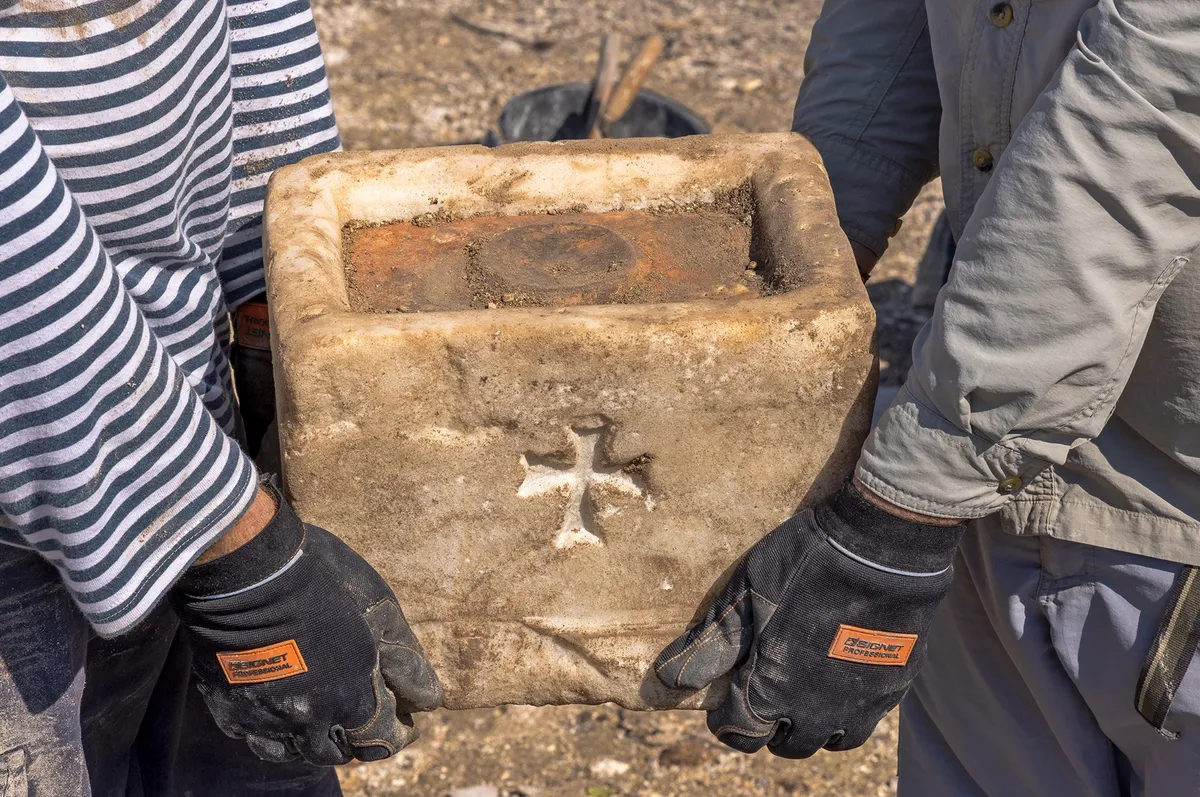
The excavation, conducted ahead of a new residential development, revealed buildings decorated with colorful mosaics, ritual baths, and an olive oil press.
“The size and splendor of the buildings discovered, the quality of their mosaic floors, and the sophisticated agricultural installations all point to the wealth and influence of the local Samaritan community,” said Alla Nagorsky and Dr. Daniel Leahy Griswold, directors of the excavation.
The site, located within the archaeological area known as Khirbet Kafr Ḥatta, is historically significant. Ancient sources describe it as the birthplace of Menander, a Samaritan magician and successor of Simon Magus, who is recognized in Christian tradition as one of the religion’s earliest converts. The estate was in use for roughly 400 years, from the end of the Roman period through the Byzantine period (fourth–seventh centuries CE), and provides a rare glimpse into the prosperity of Samaritan life during that time.
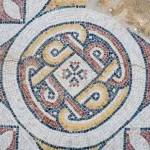
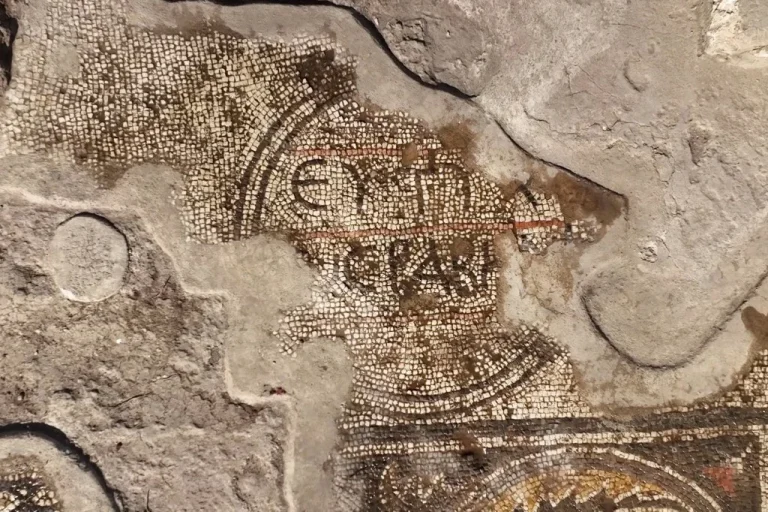
Among the most striking finds is a mosaic floor preserved in exceptional condition, featuring a dense geometric pattern alongside images of plants and vegetables. The central medallion is surrounded by acanthus leaves and rare depictions of grapes, dates, watermelons, artichokes, and asparagus. Near the entrance, archaeologists uncovered a partially preserved Greek inscription wishing the building’s owner good luck; the name inscribed was common among Samaritans.
The northern part of the estate contained an olive press, a large warehouse, and a public ritual bath, known as a mikvah. The bath’s proximity to the olive press suggests that the community produced olive oil according to religious purity laws.
“This type of olive press is more typical of the Jerusalem region and the Judean foothills and is less common in Samaria,” Nagorsky explained. The press included two wings: the northern wing contained the main production areas with two screw presses and a large crushing basin, while auxiliary rooms were located in the southern wing.
Over the centuries, the estate underwent significant changes. “The luxury of the buildings was replaced by practical agricultural production. New walls were added over mosaic floors, and ornate columns and capitals were reused in construction,” Nagorsky said. She suggested these changes may be linked to the Samaritan revolts during Byzantine rule, a series of fifth- and sixth-century uprisings against restrictive imperial laws.
“What makes this site particularly fascinating is that, unlike many other Samaritan settlements destroyed during these revolts, the Kafr Qasim estate remained in use and preserved its Samaritan identity, as shown by the ceramic oil lamps we found,” Nagorsky added.
Israel’s Minister of Heritage, Rabbi Amichai Eliyahu, said the discovery highlights the shared history of the land’s ancient peoples. “The estate illuminates another chapter in the story of Jews and Samaritans in this region. These communities shared common roots and religious traditions, and both faced hardships under hostile rule. The wealth and sophistication of this estate show that Samaritans lived in the Land of Israel for many centuries, leaving behind a rich and multi-faceted heritage.”
The Samaritans broke with mainstream Judaism sometime between the eighth and fifth centuries BCE amid differences over Judaism’s Oral Tradition and the centrality of Jerusalem. Samaritans consider Mount Gerizim, near Shechem (Nablus), to be the holiest place on earth.
Today, around 800 Samaritans live in Israel.