
















Jerusalem, 4 February, 2026 (TPS-IL) — Israelis are increasingly reluctant to express their political views in public, with a majority now choosing to remain silent around strangers, according to a major annual survey released by the Israel Democracy Institute.
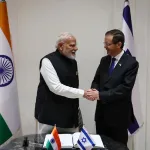
The 2025 Israeli Democracy Index, presented to President Isaac Herzog on Monday, reveals a nation grappling with profound political polarization, even as assessments of the country’s overall security situation have improved following a ceasefire with Hamas and a military confrontation with Iran.
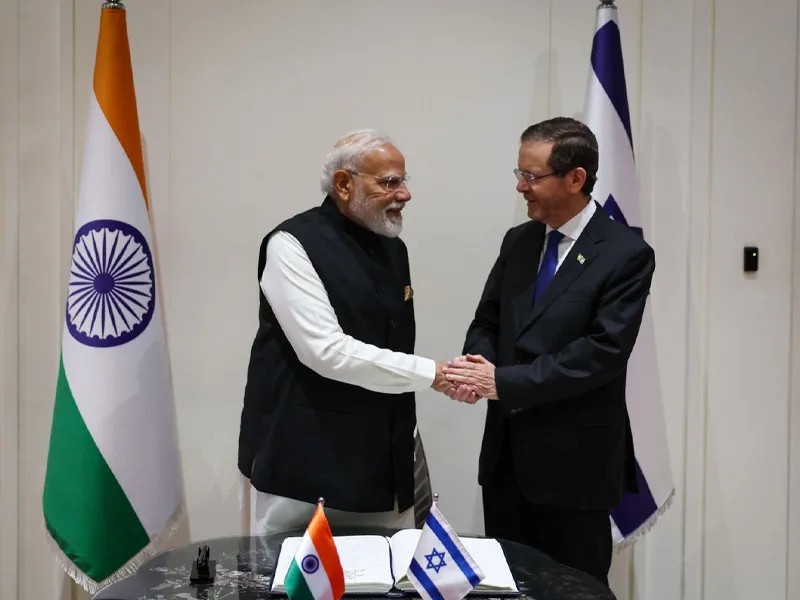
“This fear is not accidental — a culture of shaming and silencing has emerged toward those who hold a different opinion, when each camp, within its echo chamber, is convinced that only they alone hold the truth,” Herzog warned. “This is a real danger to our democracy, which in the past allowed for open discourse, honest debate, and free expression without fear.”
More than half of Jewish respondents and 70 percent of Arab citizens reported they prefer to keep quiet about their political opinions when around people they don’t know. “The fact that everyone — both the right and the left, both secular and religious, both Jews and Arabs equally — are afraid to express their opinion is a remarkable and worrying statistic,” Herzog said.
The survey found nearly half of Israelis identify right-left tension as the most acute social division, a shift from 2022, when Jewish-Arab friction topped the list. Among Jewish respondents, more than half rated right-left tension as most severe, while Arab citizens viewed Jewish-Arab tensions as the greatest concern.
Despite political anxiety, Israelis expressed more optimistic views about their country’s security situation. As of November, respondents were almost evenly split in their assessment, marking substantial improvement from 2024, when approximately half characterized circumstances as poor. The outlook appears linked to the October ceasefire that returned all living hostages and a 12-day war with Iran in June.
However, confidence in democratic institutions remained troublingly low. Only about a quarter of Jewish respondents rated Israeli democracy as good or excellent, while just 12 percent of Arab citizens gave positive assessments. Trust in government has eroded across categories. Nearly half agreed that “it would be best to dismantle all the country’s political institutions and start over from scratch.”
The israeli military emerged as the most trusted institution among Jewish citizens, while Arab respondents placed the Supreme Court first. Political representation appears fractured, with 67.5 percent of Jews and 76 percent of Arabs reporting that no party closely represents their views. Yet 65.5 percent believe the upcoming 2026 elections will be fair.
The survey revealed stark divisions on fundamental questions about Israel’s character. Among Jewish respondents, 44 percent believe the Jewish component is too dominant, while 24 percent think the democratic component holds too much sway. Views split sharply along religious lines, with secular Jews seeing the Jewish component as too strong and ultra-Orthodox Jews believing the democratic element dominates excessively.
Despite political turmoil, more than 70 percent of both Jewish and Arab citizens said they would prefer to remain in Israel even if offered the opportunity to relocate to a Western country.
Herzog called freedom of expression “a supreme value that touches the very heart of Israeli democracy” and urged citizens to maintain “the ability to argue while at the same time listening to one another, and to remain partners in the same shared space, out of respect and responsibility.”
The Democracy Index was produced by a team of researchers led by Professor Tamar Hermann, a senior research fellow at the Israel Democracy Institute. The findings were based on interviews with 1,205 Jewish and 364 Arab respondents conducted between May and November.
Related Topics