












Already with the surprise attack of ‘Lion’s Roar’, a name that was probably not familiar to many Israelis came to the headlines and the crosshairs – the Ministry. During the initial attacks, the IDF eliminated two senior officials of the Iranian Ministry of Intelligence, behind which stands a complex organization, which constitutes a key body of the regime for the persecution and silencing of the Iranian people, and its commander is directly subordinate to the leader.

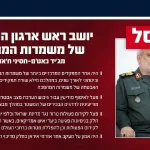
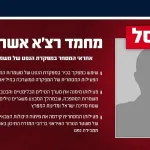
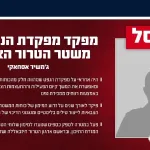
This refers to Said Yahya Hamidi – who was the Deputy Minister of Intelligence for Israel affairs and the leader of the organization, and the man who for years issued many terror plots against Jews, Western elements, and regime opponents in Iran and abroad, and Jalal Pour Hussein, head of the intelligence department in the intelligence body. Alongside them, several other senior officials who worked to promote terror operations were eliminated.
The evolution of the central intelligence body of the terror regime began in 1979, when Ayatollah Ruhollah Khomeini established what would later be called the Ministry, and it was subordinate to him. Its initial purpose was to gather internal information for the enforcement of the laws of the young theocratic republic, as well as to investigate its neighbor – Iraq.
Four years later, all Iranian intelligence organizations and units merged, and thus the Ministry was established for the first time. The unified organization’s new mission focused on handling all intelligence-related matters, including carrying out proactive terror operations: most of them against Israelis in Israel and abroad.

The Ministry incorporated various bodies, each with a different mission: from internal surveillance and control of Iranian citizens, to the elimination of regime opponents and the suppression of protests.
As mentioned, the body is directly subordinate to the Supreme Leader of Iran, which makes it a quite versatile tool for him. Therefore, after Khamenei took office upon Khomeini’s death, he began to systematically promote those close to him within the Ministry – and thus, most efforts were concentrated on the assassination and capture of opponents of the new ruler.
The change came in 2017: then the Ministry’s powers within Iran were expanded, and at the same time, more and more operations outside the Republic were integrated into its activities. From this stage, many collaborations with the Hezbollah and Quds Force terror organizations began to be recorded. These were made possible by the Ministry’s proximity to other government offices in Iran.

In most cases, agents were stationed in consulates in those countries under the guise of diplomats: their involvement was evident in terror attacks, or in the cover provided by embassies in the country to perpetrators of terror operations.
In addition, the organization is responsible for communication with Iran’s proxies, for their terror plots in the Middle East, and for monitoring foreign intelligence – as well as preventing the collection of intelligence on the Iranian regime by external agencies.

Illustration
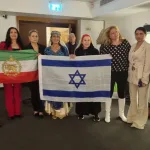
Even within the country itself, the Ministry operates a representative in each of the provinces, whose role is to monitor the residents’ activities. They ‘hunt’ political opponents, religious minorities, and ethnic minorities. This activity crosses the country’s borders and is expressed in building profiles on organizations and groups, such as the Persian people outside of Iran.
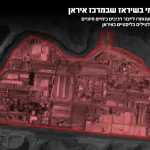
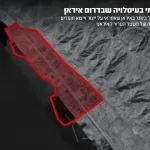
And regarding the significant assassinations carried out in the opening salvo of Operation ‘Lion’s Roar’, alongside the attack on the Ministry’s headquarters: these constitute a severe blow to the regime’s ability to continue promoting terror plots, and to its ability to threaten those who dare to raise their heads – and oppose it.
Related Topics