









In recent months, most of the missile corvettes have held unit-level training exercises, designed to maintain the crews’ readiness. This also helps to identify gaps that need to be filled in the ‘super exercise’ held last week. After all, to deploy so many vessels at sea, to train the male and female combatants simultaneously and with each other, you have to start small.

“Already two months ago, we began a series of training exercises for the missile ships,” says Captain A’, the Naval Operations Officer of Flotilla 3, which led the exercise. “In the first instances, each missile corvette trained on its own, then we held company-level exercises with several ships, after that the entire flotilla – and finally, a multi-flotilla exercise, like this one.”
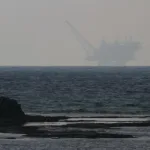
And so, in the early morning hours, most of the missile corvettes in Haifa Port transitioned from routine to emergency status. A command ship sailed with the command post of Flotilla Commander 3, which deployed, directed, and engaged the other participating vessels. These included Dabur-class patrol boats, Super Dvora Mk III fast attack craft, and a submarine.
“From the moment we went to sea, we began to inject scenarios: threats, engagements, and a simulated enemy. We saw it all with our own eyes, because there were actual vessels and aircraft at sea that represented the ‘red team’ in the exercise,” recounts Captain A’.
The forces also dealt with damage to a vessel: which naturally required damage control, troubleshooting and repair, and mutual assistance from ships in the port. “The crews must also know how to activate all the elements in the command center to provide a complete response to such a situation, which could cost lives,” explains the officer.

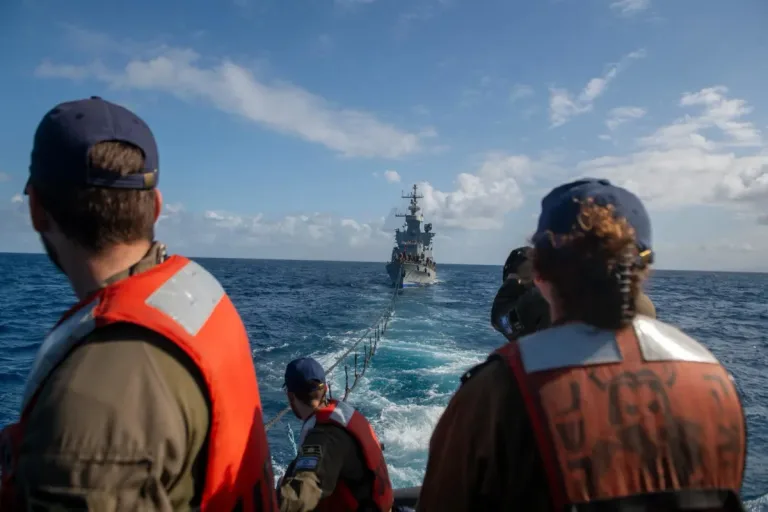
The officer calls the next part of the exercise ‘high pulse’. “We continuously moved between seamanship drills on deck: firing at air and surface targets, towing and being towed, refueling the various vessels, and casualty evacuation scenarios.”
The missile corvettes performed this with the Submarine Flotilla, Flotilla 13, and the Patrol and Guard Unit, which was intended to strengthen the cooperation muscle between the parties in an efficient and continuous manner.

And as you have surely understood by now, the force composition that took part in all of this was larger than usual: hundreds of male and female combatants from the Naval Arm trained in the multi-flotilla exercise. This was alongside control and monitoring personnel who led the scenarios at the command center.
This naturally requires close synchronization between the various units, and planning that goes back months, before the vessels are deployed at sea. “From the moment the previous exercise ended, we began preparations for this exercise,” testifies Captain A’.

These also connect to the unit-level training exercises, which we mentioned earlier. “We are testing the ship’s readiness: which drills it performed in the unit-level exercise, and which it has not yet. For example, a crew that has not practiced cooperation with the Patrol and Guard Unit for a long time will be prioritized for it in the exercise.”
The combatants worked hard on deck and in the control rooms thanks to the element of surprise, and also thanks to the simulated enemy vessels. “Some of them even enjoyed practicing tactical thinking and planning how to operate the ship,” said A’ when I asked what reactions he received after surprising hundreds of combatants and commanders.

This exercise, as he states with satisfaction, is a good example of the comprehensive effort required to meet the many missions ahead. “At headquarters, we plan every detail down to very small resolutions. And those who reap the rewards are the ships at sea – facing all the objectives and overcoming the challenges. It’s a tremendous satisfaction, especially in the face of the various arenas of conflict and threats.”
Related Topics