





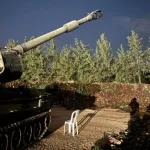








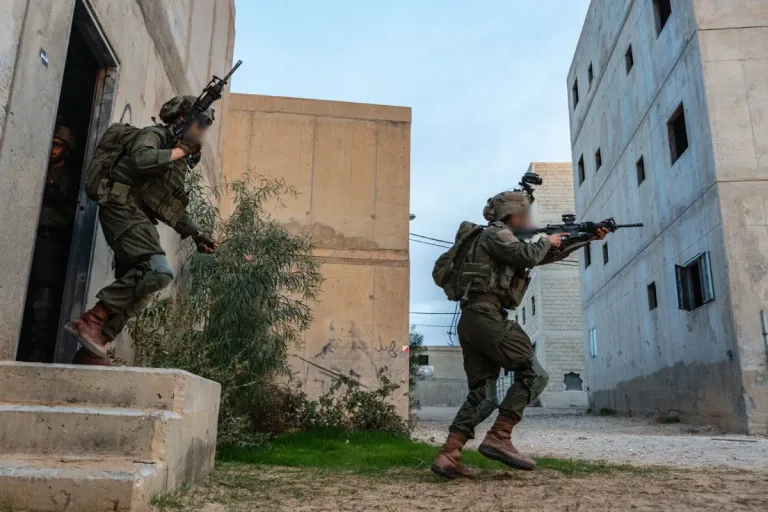
Dozens of combat soldiers are deployed in the darkness among the dense neighborhoods of M.L.I. (Ground Training Center), which is currently simulating enemy structures in the northern sector. Although difficult to discern from the outside, this ‘attack’ involves infantry, engineering, and armored forces side-by-side – demonstrating admirably the principle of ‘combined arms’ proven in war. As soon as the sun rises, everyone will move to the second part: defense.
Unlike many exercises, the goal of the ‘Fire Series’ conducted last week in Tze’elim is not only to practice maneuver and control capabilities in an area, but also the next step – when the soldiers are already deep in enemy territory, and need to know how to hold it safely for an extended period.
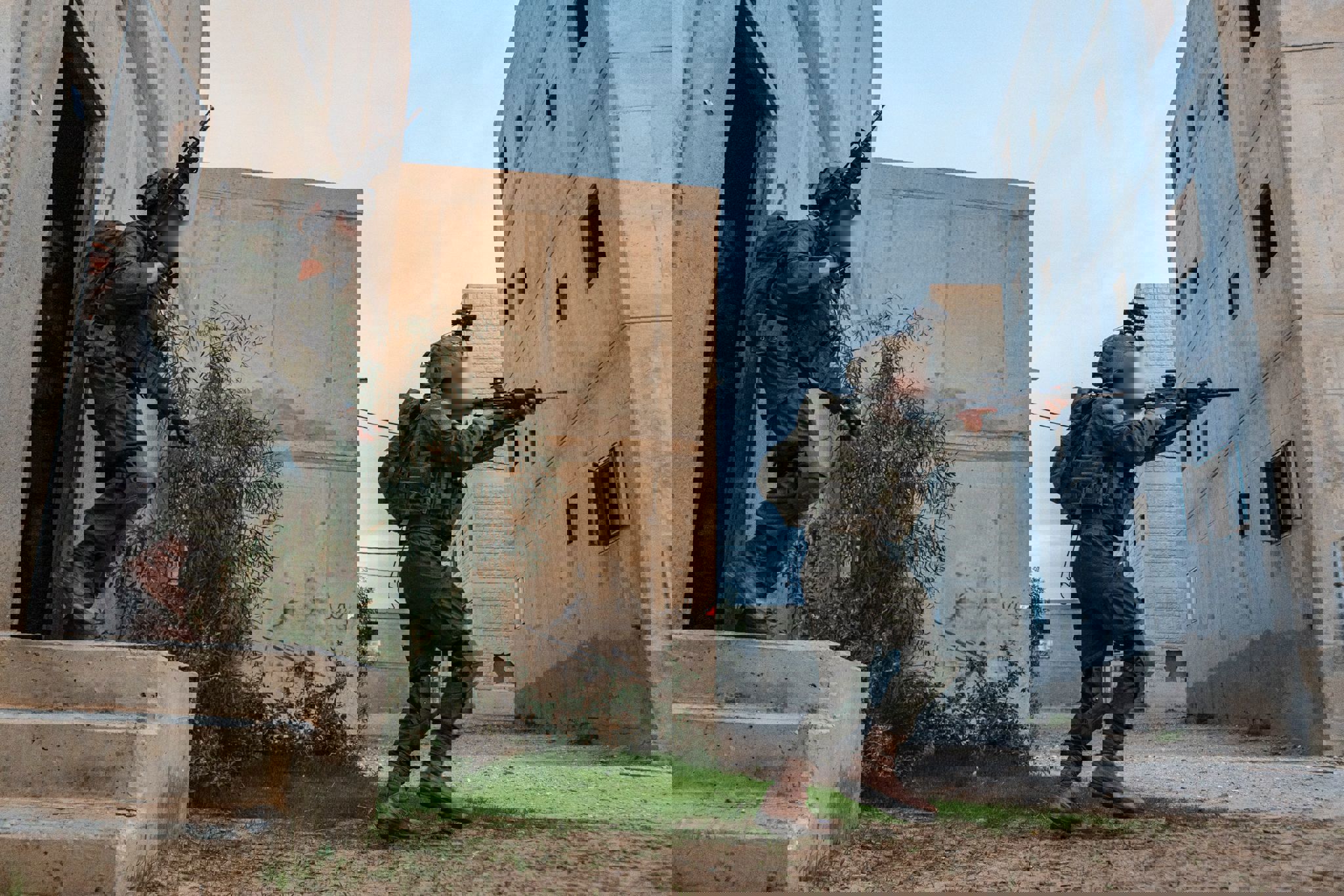
The mission was led by soldiers from the Company Commanders and Battalion Commanders course of the Ground Arm, for whom this was the ‘final round’ and the most decisive of the 3 months of training. Their soldiers came from diverse backgrounds: the Givati Reconnaissance Unit, Bahad 1, the NCO course in the Engineering Corps, and the Armor Officers course. The mixed composition was an advantage in itself – an additional factor bringing the night’s events closer to the realistic situation.
And as usual, communication in the chain of command was sharp and defined. “The battalion commander receives an order from above,” explained Colonel N., head of a department at M.L.I. who was observing the scenario attentively. “He passes it to the company commander, who is required to act quickly and simply: break down the directive into sub-tasks and send the force out to execute.”
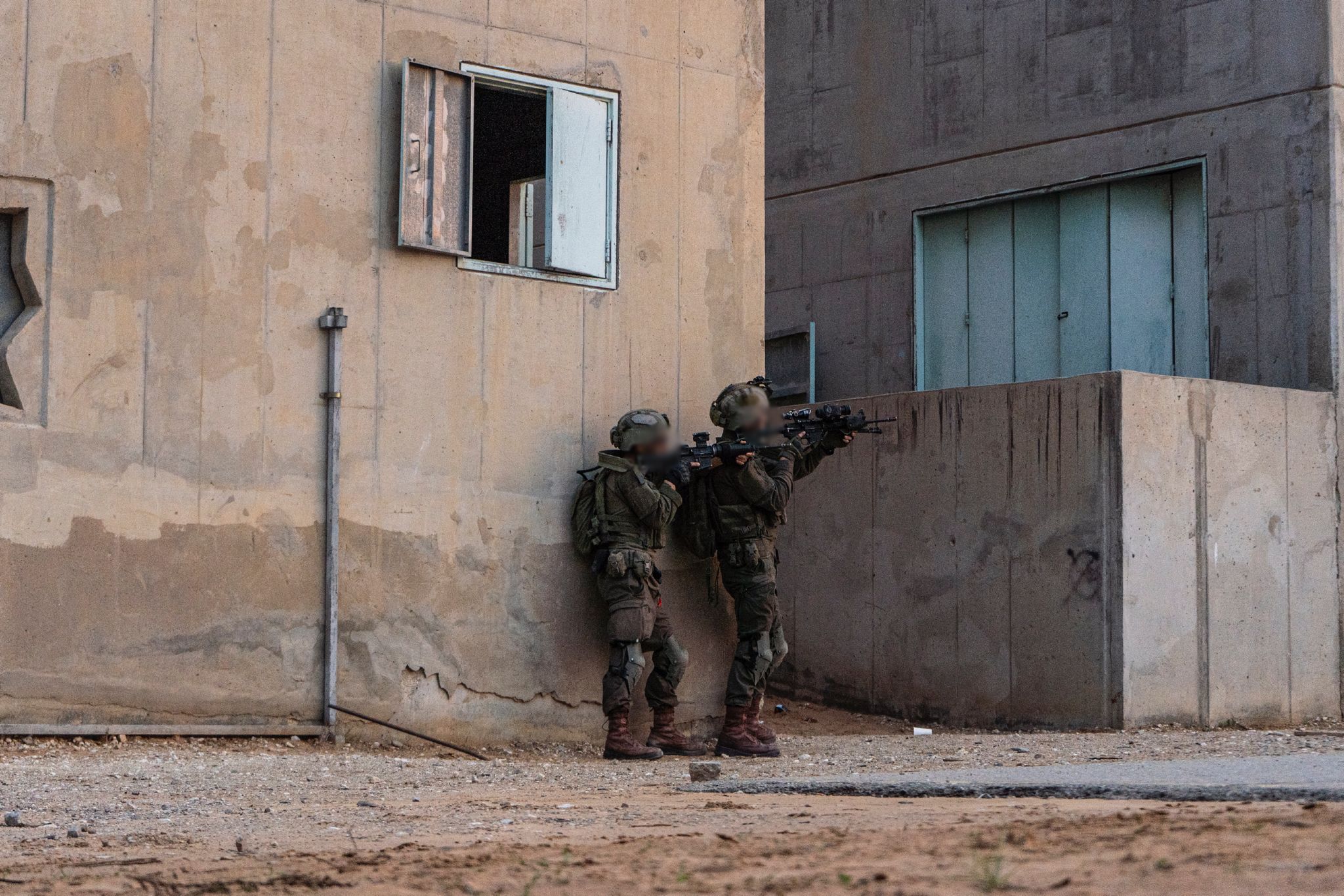
This involves a series of ‘tactical’ exercises – where they work with equipment of the same type found on the battlefield. On this night, the soldiers practiced multi-corps integration precisely when the armored vehicles and physical platforms were not nearby.
“We focused a lot on how to generate offensiveness in defense,” the department head continued. “Meaning – you are defending, but you are not waiting for anything to happen, but rather creating reality yourself. This is exactly the stage where the future company commander’s ability to hold two ends together is tested – to guard and defend the place and what was entrusted to him, while simultaneously remaining active in offense and setting the pace himself.”
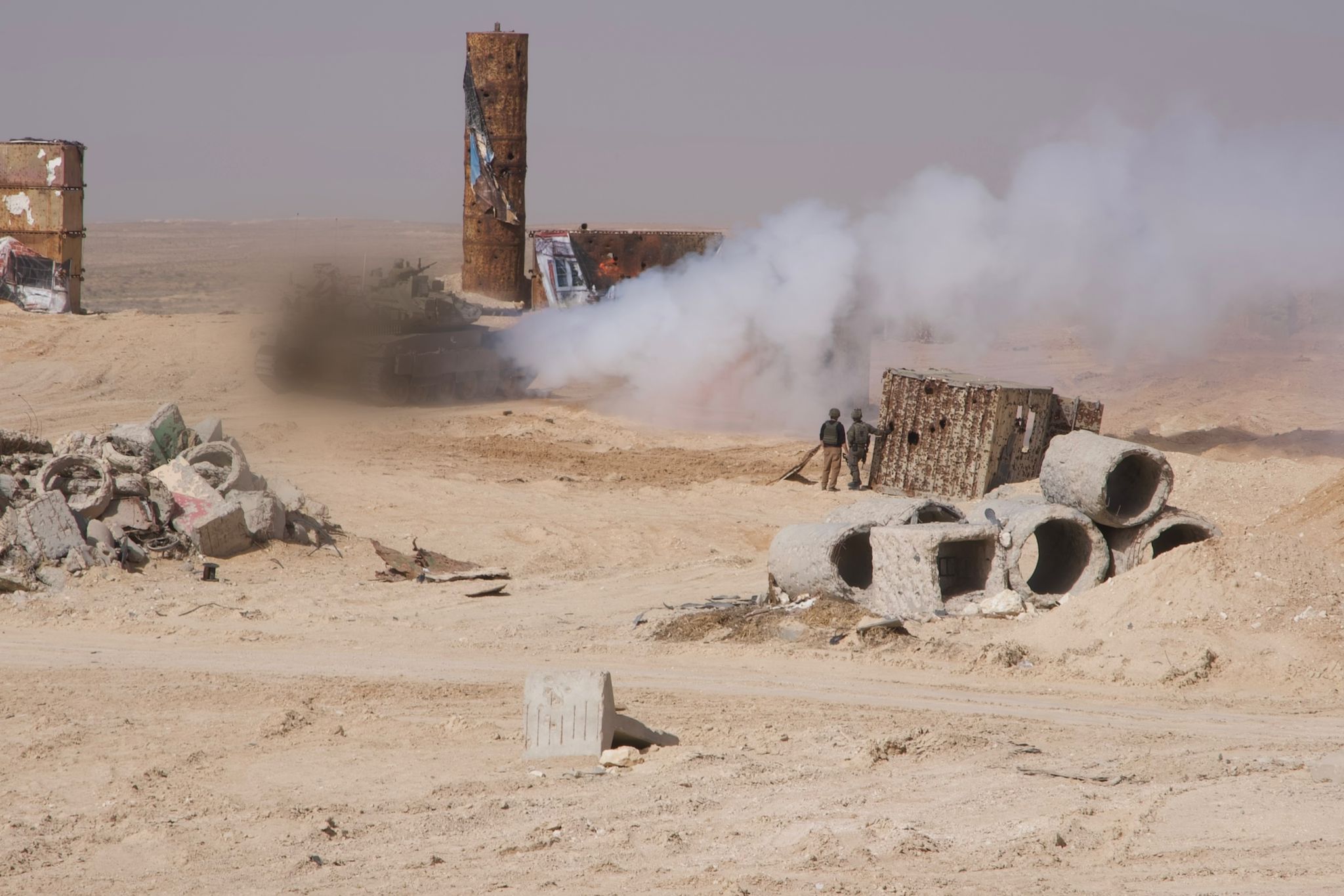
And if there is one thing he was keen to emphasize, it is the continuity of the ‘Fire Series’: “This exercise is, of course, central and significant, but in the end, it is one of many conducted during these two weeks. In just under 14 days, we manage over 25 exercises – some of which are conducted simultaneously.”
On Wednesday afternoon, after almost 24 hours of practice, the training concluded. But even this end is temporary – after a few moments, another exercise began, albeit with a different timeframe, different participants, and additional objectives, but from the commanders’ perspective, the core remains the same.
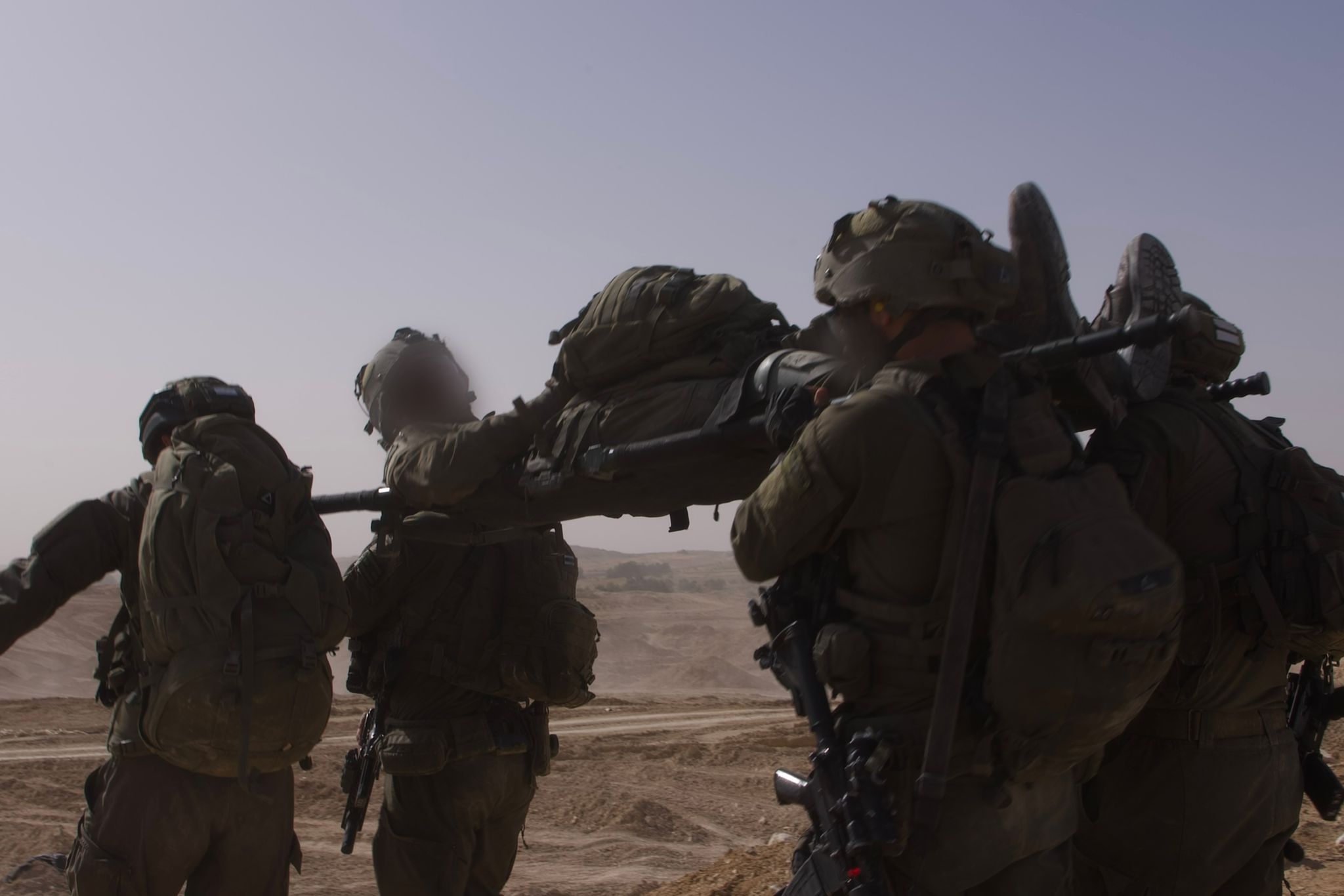
“There is an amazing generation of commanders here who have gone through two years of significant combat, hundreds of days of maneuvering and battles,” shares Colonel N. “Precisely from this painful and experienced place, they are stepping up to pass on what they have accumulated to new faces. They are living proof that there is no wisdom like experience.”
Related Topics