













“From the understanding that we have the most influence on how soldiers go into combat, we are constantly looking to improve the training,” opens our conversation Major B., commander of the Nahal Brigade’s Class of ’25. “Within 8 months from the moment we receive them at the recruitment center, we are required to transform them from civilians into combat soldiers ready for the battlefield, in any sector.”

Therefore, it was especially important for the training base commanders to bring the graduating class of the training to places that best simulate the operational reality they will encounter. “We built a training program adapted to the northern arena, which is very different from the Gaza Strip, and within it, we covered a lot of material. In the first week, we underwent a series of dry training exercises that prepared the soldiers for the second week,” describes Major B.
According to him, despite the cold that affected us over the last two weeks, the soldiers gave their all in the dry training exercises and trained with dedication. This investment certainly paid off when the soldiers in training moved to the “Lebanon Facility” in the Golan Heights.

This is the first training base to arrive at the location, utilizing its size and precision for the northern terrain and urban combat zones – also for the training of battalion soldiers. “While conducting advanced close-quarters combat training with live fire, which is only possible here, we focused on the transition between open and built-up areas, and vice versa,” says the commander. “Beyond that, we built exercises in outposts and terraces that utilize the location’s resemblance to the reality in the sector.”

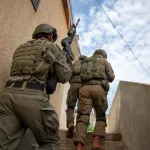
Thus, the future Nahal soldiers practiced combat within and outside the 77 houses and outposts. “We started with platoon exercises, during which the soldiers were required to take control of the entire area,” recounts Major B. “Each time they cleared and took control of 3-4 buildings, with anti-tank missiles and rockets at their disposal.”
The highlight of the week was a day and night exercise involving 160 soldiers. “We began it with a march of about 5 km to the objective. There, the soldiers deployed in the area and took control of the initial objectives. They practiced operating in dense terrain and neutralized explosive charges, enemy observation posts, and more.” Each time they captured an outpost, their mission became more challenging – as they suddenly had to hold and defend the area while continuing offensive operations.

They have been preparing for these two weeks for over a month and a half – a process that began with planning at the training base. “We tried to focus the training using the experience we gained during the war, to distill what we want to teach them,” explains Major B.
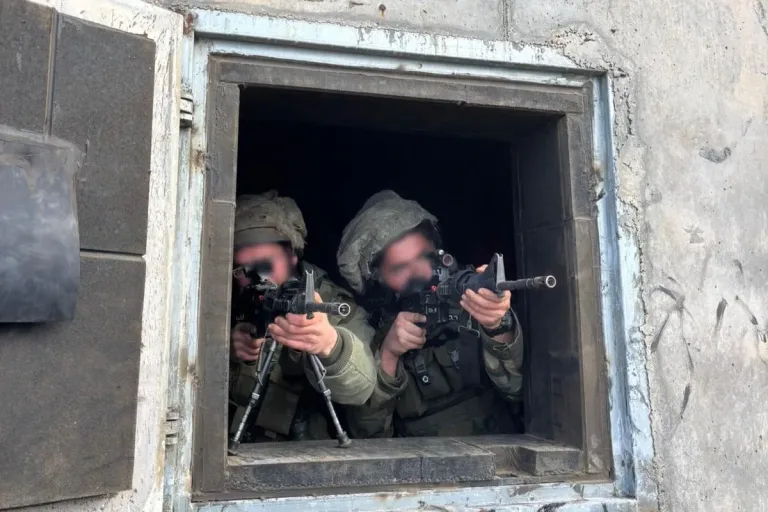
Finally, the commanders decided to spotlight techniques that all company and platoon commanders knew in depth during the war: transitioning between open and built-up areas, covering fire by squads and platoons when moving between outposts, street movement, and when to enter through a window – not the door. Additionally, the soldiers of the class practiced operating a casualty evacuation point (CASEVAC) with the training base doctor.

As part of the preliminary preparation for the training series, the rest of the training staff also arrived at the facility. “It was a kind of alignment for us: we also reviewed the safety protocols, and then we trained as well,” details Major B. “In the end, a commander needs to know how to do everything he expects from his soldiers. This is how squads, companies, and battalions operate in the most effective way.”


Related Topics