













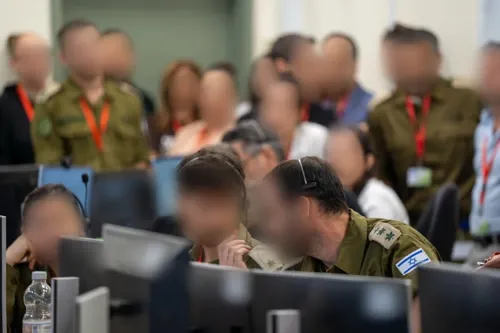
The location of the last fallen soldier in the Gaza Strip, Sergeant Major Ran Guili, may his soul rest in peace, and his return for burial in Israel, constituted a significant and moving milestone for the personnel of the Hostages and Missing Persons Directorate as well. Since October 7th, it has been operating as a task force under the leadership of the Special Operations Division of AMAN, with the objective of providing a comprehensive response to the issue of hostages and missing persons, focusing on protecting the hostages, clarifying their fate, and their return.
For over two years, the directorate, headed by Major General (Res.) Nitzan Alon, has led important operations, processes for the return of hostages, and close support for reservists and families.
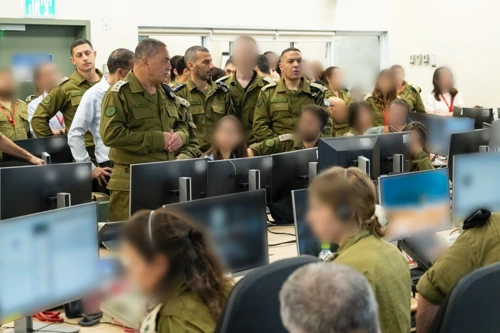
It was staffed by regular service members reassigned from their duties in the Special Operations Division, alongside reservists and advisors, and with personnel from AMAN, IDF units, and security system bodies. In numbers: approximately 2,100 reservists (about 60% of the total force), of whom about 1,300 are from the Special Operations Division and about 800 additional personnel from over 50 different units, a significant portion from the Research Division and Unit 8200.
On October 7th, the initial situation assessment estimated approximately 3,100 missing and hostages, partly due to a large number of individuals with whom contact was lost. Following in-depth data analysis and the formation of a substantiated situation assessment, it was determined that there were 255 hostages, including 4 who were held captive even before the outbreak of the war (Oron Shaul and Hadar Goldin, may their souls rest in peace, Avraham Mengistu, and Hisham Al-Sayed).
Within the framework of the directorate’s activity, 168 living hostages and 87 fallen hostages were returned. During the war, 59 living and fallen hostages were rescued as part of special operations.
Each hostage family was assigned a senior intelligence officer who maintained continuous contact throughout the war, updated them with intelligence information, and attempted to provide maximum certainty regarding the situation of their loved ones in captivity. All information that could be conveyed (subject to source security, intelligence security, and privacy) was transferred to the families, with the aim of enabling optimal understanding of the situation.
The IDF forces’ operations in the Gaza Strip and the significant damage inflicted on Hamas throughout the war created conditions that enabled the return of all hostages, both through special operations and through deals. The directorate utilized both the intelligence gathered during this period and prior intelligence that existed before the outbreak of hostilities, for the purpose of locating hostages and advancing efforts for their rescue and release.
The main aspects of its activity were characterized in several ways:
– Developing an updated situation assessment regarding the scope of the event, including systematic and continuous mapping of the status of those with whom contact was lost, missing persons, and hostages, with an emphasis on the initial weeks and months of the fighting.
– Maintaining contact with families and mediating the situation assessment for them, clarifying the fate of hostages and death determination processes, researching the locations of fallen hostages, and directing rescue operations. Contact was maintained in coordination between the intelligence directorate, AMAN, and the casualties department in the Manpower Directorate.
– Establishing focused intelligence organization, with an emphasis on “red team” research, to develop a substantiated intelligence picture of both living and fallen hostages.
– Establishing a dedicated negotiation team and defining its mission as part of the national effort to return hostages, integrating intelligence research, understanding enemy intentions, and supporting decision-making processes.
Its activities can be divided into 4 main time periods. The first, from October 7th until Operation “Sky Gates”. This focused on building an initial situation assessment and developing mechanisms, concurrently with the start of the ground maneuver and the establishment of the directorate as a regular and independent unit. During this period, 5 female hostages were rescued and released. One hostage was rescued in a special operation, and 4 female hostages were released by Hamas in two separate installments. Subsequently, as part of negotiations, Operation “Sky Gates” was carried out, during which 105 living hostages were released.
Until Operation “Dror Wings”, 47 hostages and fallen individuals were rescued as part of special operations. Concurrently with the operational activity in the Gaza Strip, including raids on Shifa and Nasser hospitals, the attack on Marwan Issa, and the beginning of the maneuver in Rafah, Khan Yunis, Jabalia, and Tel Sultan. Simultaneously, the special war team for intelligence matters moved to operate from a separate base, due to the increase in personnel and the need for independent and autonomous capabilities.
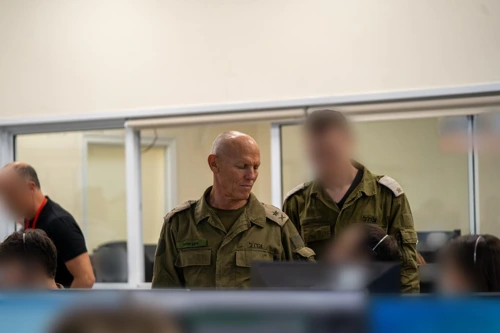
Subsequently, and until the end of Operation “Returning to Their Borders”, hostage Idan Alexander was released and 10 additional fallen hostages were rescued as part of special operations. The directorate worked to create defense and preservation mechanisms for the hostages throughout the period, alongside the IDF maneuver in the Strip within the framework of Operations “Gideon’s Chariots A” and “Gideon’s Chariots B”. Within the framework of Operation “Returning to Their Borders”, 47 out of the remaining 48 hostages were released, including 20 living and 27 fallen. And in Operation “Brave Heart”, hostage Sergeant Major Ran Guili, may his soul rest in peace, was released in a complex rescue operation.
As part of the ongoing work of the intelligence directorate, its personnel maintained continuous and close interface with various IDF bodies, understanding that the mission’s success relies on constant synchronization between intelligence, planning, and operational execution.
With Southern Command, the focus was on examining target strikes, with constant verification of the relevance and accuracy of intelligence locations relative to the plans of the command and brigades, planning attacks, and the maneuver outline. In total, dozens of special operations were carried out during the war.
Concurrently, with the Air Force, an effort was made to connect the world of targets, operational windows of opportunity for attack in light of the mission, while coordinating expectations and improving the common language between the parties. Within this framework, the directorate conducted in-depth checks of the command and brigade targets against intelligence locations, to ensure operational alignment, identify overlaps or gaps, and prioritize efforts where refinement or change was required.
Joint work was also conducted with parallel intelligence organizations, particularly close work with the Shin Bet, which focused on completing the intelligence picture, cross-referencing sources, and reducing gaps, while maintaining a clear division of responsibilities. All these actions created a work mechanism that enabled informed decision-making, increased the effectiveness of the intelligence response, and strengthened trust between the bodies. Joint work was also carried out with foreign intelligence agencies that contributed significantly to the intelligence picture surrounding the intelligence.
A dedicated production complex was established by Unit 8200 to collect and extract information as accurately as possible and integrate it into a broad intelligence picture. As part of the negotiation efforts, in-depth research was conducted at the intelligence directorate to understand enemy intentions in the context of negotiations for the return of hostages.
The directorate’s location under the Special Operations Division enabled it to utilize high-quality and talented personnel finders and to effectively leverage intelligence, technological, and operational capabilities, which constituted a point of strength for the directorate throughout the war. The directorate operated outside the standard intelligence and research chain, as an independent body that collects, researches, and generates intelligence specifically for its mission. This independence allowed for operational freedom of action and the ability to fulfill its mission independently of other bodies.
Now, the directorate maintains a state of readiness in emergency mode and is transitioning to a dedicated organization under the Special Operations Division to complete the mission in other arenas.
The service of soldiers in the intelligence directorate involved continuous exposure to difficult content, emotional burden, and heavy responsibility. Throughout the activity and even after the return of all hostages from the Gaza Strip, emphasis is placed on mental health support, including professional guidance, availability of support personnel, debriefing sessions, and referral of personnel to treatment providers as needed. The IDF will continue to support its personnel and provide them with response and support.
The intelligence directorate is drawing many lessons from the operations and activities it carried out over the past two years, focusing on inter-organizational interfaces and the execution of operations. Investigations are being conducted within the unit regarding operational aspects, coordination, and interfaces with non-IDF entities. Among other things, force-building and personnel coordination processes are taking place in relation to ongoing missions, after the directorate relied heavily on reservist personnel over the past two years.
Related Topics