












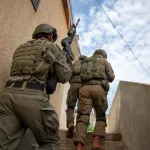
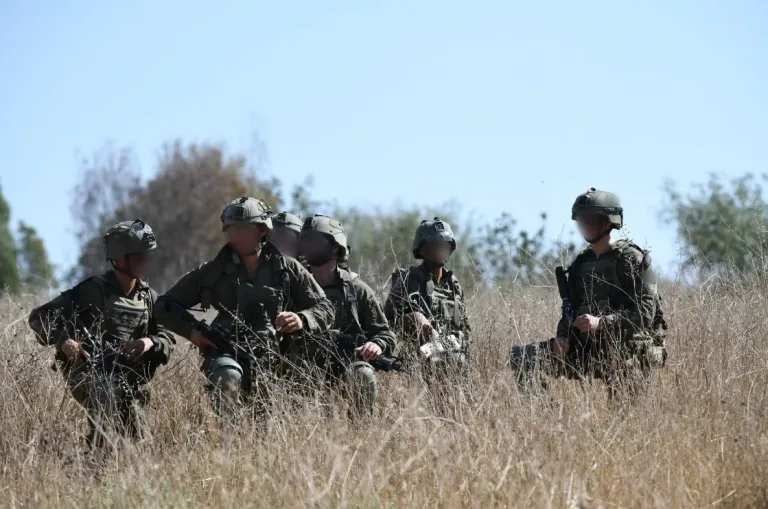
The IDF’s 2026 training graph was recently finalized, presenting the synchronization between training and exercise planning, learning efforts, and operational planning. Key lessons from October 7th and the ongoing fighting have been integrated, and based on these, training for 2025 and the upcoming year has been built.

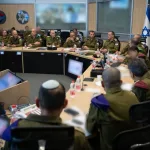
This week, a conference led by the Chief of Staff was held to summarize and draw lessons from recent defense exercises conducted at the division level.
IDF 2026 Training Graph:
- 4 General Staff exercises
- 4 Command Headquarters trainings – Center, North, Home Front, and Depth
- 6 Security and Routine Operations (B"Sh) exercises
- A number of Chief of Staff assessments
Exercises will generally be shorter to make them more focused and purposeful. In total, approximately 12 five-day exercises will be held at the Command and Staff Training Center, with a similar number for combined arms training.

For comparison, in 2025 the following were conducted:
- 17 exercises
- A defensive exercise (first time in 20 years)
- 9 exercises simulating surprise warfare on the borders
- 3 exercises simulating surprise warfare on the eastern border
- 3 General Staff exercises
- Exercises simulating multi-arena warfare
- 4 Full-Scale Operational Exercises (TIRAUG)
- A number of Chief of Staff assessments
- 4 Battle Days
In total, 45,000 reservists participated in the exercises.

Division 91 – A 5-day Full-Scale Operational Exercise (TIRAUG) was conducted. During this exercise, dozens of events were simulated in various scenarios and locations. The exercise’s objective was to improve the division’s readiness for defense and warfare on the Lebanese front, focusing on combat methods, defense, offense, and transitions between different scenarios.
Division 210 – Last November, a surprise exercise by the Chief of Staff was conducted, emphasizing the division’s reference scenario. Throughout the year, over 30 battalion, brigade, and division-level exercises were completed. All of these are in addition to training in communities with emergency response teams in the Golan Heights.
Judea and Samaria Division – Dozens of events simulating terrorist infiltrations and combat operations in the area were practiced.


After more than two years where the emphasis was on intense combat in multiple arenas, and there was no time for proper training and exercises, the IDF is now returning to continuous training operations. Among other things, a concept has been developed to ensure the integration of accumulated knowledge, alongside guiding command staff, some of whom have not conducted training until now.

Following the new model, full-scale operational exercises (TIRAUG) will be conducted in synchronization with General Staff exercises for the first time, to enable a higher level of coordination and readiness. Additionally, a separate and unique training model will be built for active duty forces and reserves. Effective and mission-specific training will be tailored for each force. Furthermore, proficiency exercises and frameworks will be added at the battalion, brigade, and division levels.
The training will incorporate multi-echelon exercises, command posts, force buildup, and the activation of alert statuses. Concurrently, emphasis will be placed on training that challenges existing plans and requires improvisation and flexible action. The exercises and training will also include friction with additional arrays and branches, including naval, ground, air, intelligence, spectrum, and more.

A central part of the training graph’s vision is the emphasis on a “single whole” – synchronization between exercise and training efforts, learning and knowledge development, and operational readiness. Together, this triad calibrates the entire IDF system, enabling optimal execution of force projection and building processes.
Another principle that was considered in building the Gantt chart is the planning of fundamental biennial exercises, with a multi-arena perspective and consideration for the importance of readiness in both defense and offense, in alignment with operational planning.

As part of the lessons learned from the events of October 7th and the prolonged fighting across all fronts, extensive debriefing and learning efforts have been integrated into the graph. Within this framework, commanders and forces in the field will practice various scenarios, some of them surprise scenarios, to test readiness for extreme situations.
Concurrently, the graph sets anchors including senior commander conferences on various topics, General Staff courses, and a Gantt chart of war debriefings. As part of the Ground Forces Command (MAZI) assessments, the branch will conduct readiness and proficiency checks for every brigade, in cooperation with General Staff bodies.

Related Topics