












General Response:
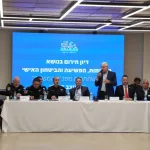
The IDF attaches great importance to the work of the Soldiers’ Complaints Authority and conducts a systematic process for learning findings and lessons. The report’s findings were presented to the Chief of Staff and some members of the General Staff Forum, in order to identify gaps and ensure they are addressed systematically and optimally. The Chief of Staff emphasized that he attaches great importance to the work of the Soldiers’ Complaints Authority as a central and essential oversight body for the IDF and instructed to ensure that all gaps presented in the report are addressed systematically and thoroughly. The Chief of Staff stressed the need to maintain ongoing and close contact between the Authority and commanders at all levels, accepted the report’s findings, and instructed to present them to the General Staff Forum.
Additionally, the Chief of Staff instructed to integrate lectures from the Soldiers’ Complaints Authority into all IDF command courses, with an emphasis on senior command courses. He also stressed the responsibility of commanders to enforce joint service orders and address inappropriate phenomena raised in the report, including verbal violence and racist remarks.
Furthermore, the Chief of Staff noted that the waiting time for an appointment with a mental health professional (Kaban) constitutes a significant gap in the response to potential recruits (Mlashabim), and instructed to examine solutions for this issue. He also instructed to examine the improvement of the response in the area of processing days, including for rear-echelon units.
Permanent Service Members in the IDF:
The IDF appreciates the work of permanent service members – both officers and NCOs – and works to ensure they receive a worthy and appropriate support system, in accordance with the challenging operational reality for them and their families.
Regarding claims of gaps and malfunctions in updating personal records, the IDF conducted an investigation throughout the war, learned lessons, and will continue to implement them in various units. The IDF is doing everything in its power to provide a satisfactory response to all IDF service members, including permanent service members.
The IDF is engaged in ongoing work on the permanent service model with the Ministry of Finance – to achieve the best salary conditions for its service members. It continues to expand the rewards package, reflected in salary supplements and bonuses, the establishment of a support fund for permanent service members, and the creation of a unique package tailored for permanent service members and their families.
Reserve Service in the IDF:
The IDF appreciates reserve service members and works continuously to provide a professional and organized response to all its service members. When inquiries arise from reserve service members, they are handled by the relevant command and professional channels, in accordance with procedures.
The nature of the war and the scope of mobilization led to many personnel movements within the army and between units. The IDF addresses emerging gaps immediately, and in most cases, record gaps are handled retroactively in the following month’s salary. During the war, in cooperation with the Ministry of Defense and the Ministry of Finance, a dedicated package was formulated for reserve service members and their families, with continuous attention to emerging needs from the field.
Following a prolonged period of emergency deployment, the IDF conducted staff work aimed at refining the policy for managing reserve personnel resources. The updated policy, which was distributed to units, is intended to enable responsible and balanced management of the resource, while maintaining operational readiness.
As part of the war, a unique digital wallet was launched for reserve service members who served at least 10 days of reserve duty under emergency orders (Tzav 8) in 2025 in a combat unit.
The IDF will continue to act with responsibility and concern for reserve service members, for their well-being and the protection of their rights, out of deep appreciation for their contribution to the country’s security.
Designated for Security Service (Mlashabim):
The IDF continuously works to improve the selection and suitability processes for service and to ensure equitable and accurate procedures, while providing a professional and satisfactory response to every inquiry received from potential recruits (Mlashabim) and their families.
It should be emphasized that there are high volumes of inquiries, and the IDF continuously works to reinforce professional staff, streamline processes, and reduce waiting times.
Service Conditions, Living, and Infrastructure in the IDF:
The IDF attaches great importance and paramount value to maintaining the service conditions of all its service members, both in terms of respecting the service members and in providing for basic needs. If there is a gap, one should contact commanders and professional staff.
Inquiries about cases requiring treatment are handled immediately, and lessons are learned for the future. The IDF appreciates its service members and will continue to work for the continuous improvement of infrastructure for all its service members.
Regarding the utilization of vacation days, 2025 was an intense war year. Due to operational necessity in some cases, commanders were unable to send soldiers on vacation. The authority to cancel vacation days rests with a commander of the rank of Colonel (Aluf Mishne) or higher.
Throughout 2025, combat soldiers received ‘frontline leave’ that did not reduce their vacation day entitlement. In light of the operational situation, the IDF allowed soldiers at activity level A or higher this year to accumulate all remaining vacation days from 2025 into 2026. The IDF places great importance on providing vacation time to its soldiers according to accepted procedures.
Medical Services in the IDF:
The IDF has been working since the beginning of the war to provide optimal medical care to its service members. Medical Corps personnel are working in full cooperation with the Soldiers’ Complaints Authority (Nekhal) to improve the medical care provided. All soldiers on the front lines receive medical care in the fields of physiotherapy, orthopedics, dermatology, dentistry, and more. To improve accessibility for soldiers at the forefront, nurses have been attached at the level of the maneuvering brigade.
In addition, the availability of online and in-person specialist medical services has been significantly increased, including personalized online medical consultations that provide accessible solutions for the field.
In the past year, the Medical Corps has made significant efforts to make various medical services more accessible. As part of these efforts, it is possible to obtain prescription medications at pharmacies within agreements with the IDF, conduct laboratory tests through Maccabi Health Services, and receive 24/7 medical service through ‘Bikur Rof’ centers.
The IDF will continue to work to provide optimal medical care to all its service members. Every inquiry received regarding a medical issue is handled promptly and taken with full seriousness.
For any inquiry, you can contact your unit commanders and medical personnel or call the “Kol HaLev” (Voice of the Heart) hotline, available 24/7 at *6690.
Command and Leadership Issues in the IDF:
The IDF requires its service members, including its commanders, to act according to its values, primarily according to the IDF Spirit document, in which human dignity and homeland defense are fundamental values. IDF commanders are at the forefront of the people’s army and are expected to serve as an example to their soldiers both professionally and in terms of values and personal conduct.
Regarding claims of physical violence towards soldiers, we emphasize that the IDF condemns physical or verbal violence among its service members and works to create a safe environment for all service members, without distinction of religion, race, or gender.
Any soldier can approach their commanders regarding such or other incidents of violence. Additionally, any soldier can call the “Kol HaLev” (Voice of the Heart) hotline, available 24/7 at *6690.
Regarding claims of privacy violations, the IDF views any incident of non-compliance with orders and privacy violations very seriously. Every soldier and commander in the IDF has a duty to act ethically and appropriately while adhering to procedures and orders. Any such reported incident is handled by professional staff with seriousness and determination in order to provide all service members with a worthy and suitable service environment.
For any inquiry, you can contact the IDF Public Inquiries Unit at 1111, extension 5, then 4.
Related Topics