













“I am sitting in the bunker, and the aerial image is projected on the screen. Slowly, planes appear on the display, beginning their journey towards Iran, and I understand – the opening strike has begun,” recounts Lieutenant Sh’, an analyst of air superiority systems at the Intelligence Directorate, about the first few minutes of many more to come in the coming days. “And no matter how many times we’ve gone through this, in all arenas, it’s an exciting and significant moment, especially in this case.”
The Air Intelligence Directorate, responsible for producing precise intelligence for the Air Force, and particularly for its fighter jets – thereby providing strike targets in various domains, whether ballistic missiles or air defense systems, and transmitting relevant real-time data to control rooms and teams. This makes the identification and targeting of objectives faster and more accurate.
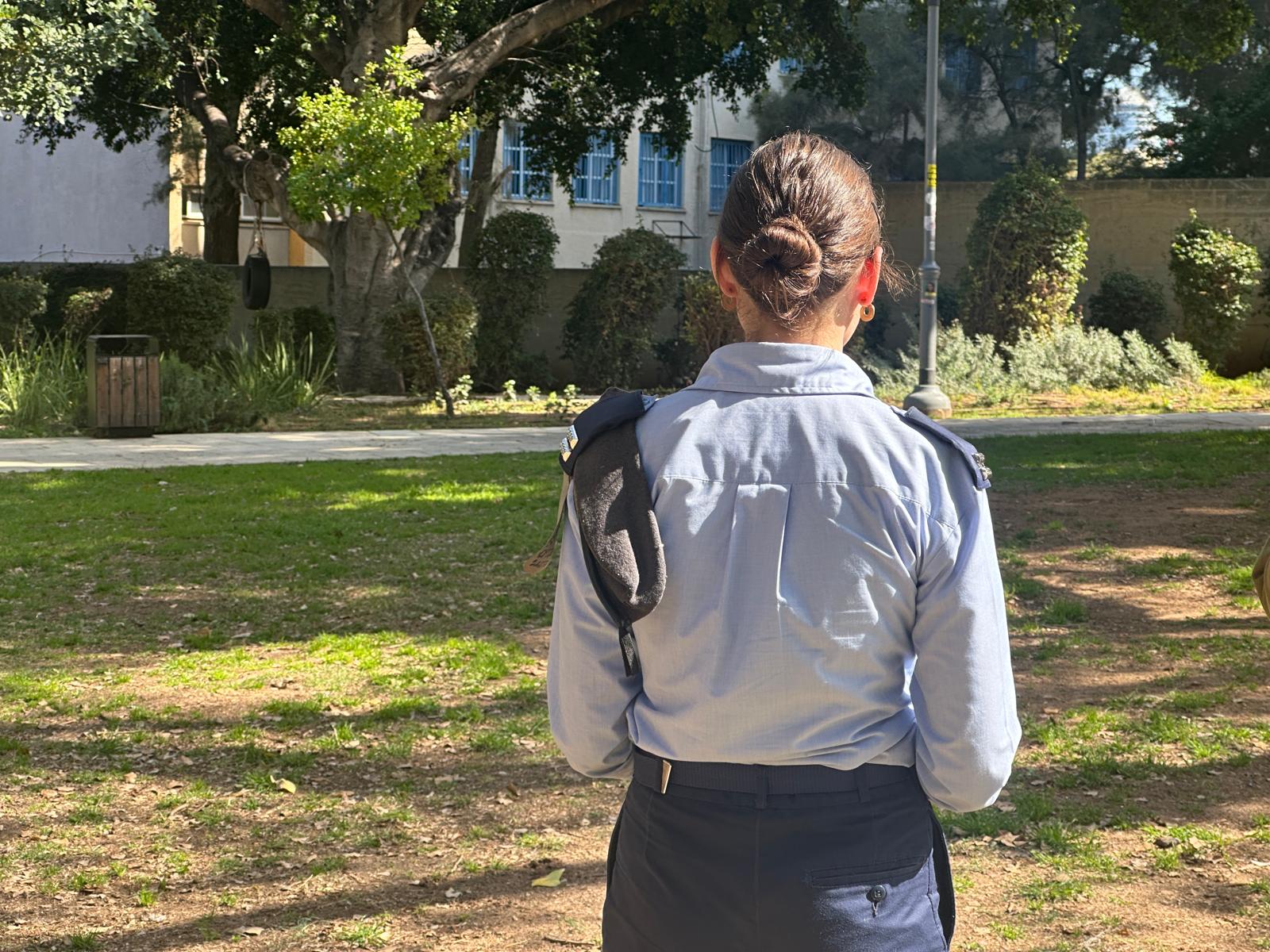
Lieutenant Sh’
Between the long shifts, which might be an understatement to call shifts, as some never truly end, we managed to catch the intelligence analyst for a brief conversation about the preparations for ‘Lion’s Roar’, drawing conclusions from the previous operation, and about the moment the opening strike, which she personally worked on with her team, was launched. The Air Intelligence Directorate.
As part of their role, the analysts process and analyze mountains of information and data of various types, and also know how to request intelligence snippets from collaborators, according to a specific mission or target. The ultimate goal: to create an operational situation picture, upon which a specific air operation will be built. Without them, no flight, bombing – or airborne elimination would look the same.
Their daily work can be compared to solving a puzzle. But in this case, they also have to find all the pieces themselves. “We know what the required achievement is, and our job is to provide all the information, and organize it in a way that allows the mission to be carried out, while offering optimization suggestions,” she explains.
And so it is with the operation that is dominating the skies over Iran these days. “We are dealing with the Iranian air defense systems, their surface-to-surface launchers and missiles,” describes Lieutenant Sh’, “I am responsible for finding where the systems are located, and what their capability range is – how much each one threatens us at the given time, and how it can be neutralized.”
On the other hand, she is quick to point out, they will also transmit this information and reflect it accurately and precisely to the ‘operational arm’ – the entities that will carry out the operation. Whether through bombing, fighter jets, elimination, or anything else. Only then is their mission truly complete.
When Hour Sh’ Arrives
As expected, the lights are always on in this place. There is no moment without work. But recently, they realized that Hour Sh’ was approaching, and subsequently, they received the exact date. “They gathered us all and informed us. There was a moment of shock in the room, and we exchanged glances of ‘Here it comes,’ but there wasn’t much time to dwell on it – because very quickly we returned to work.”
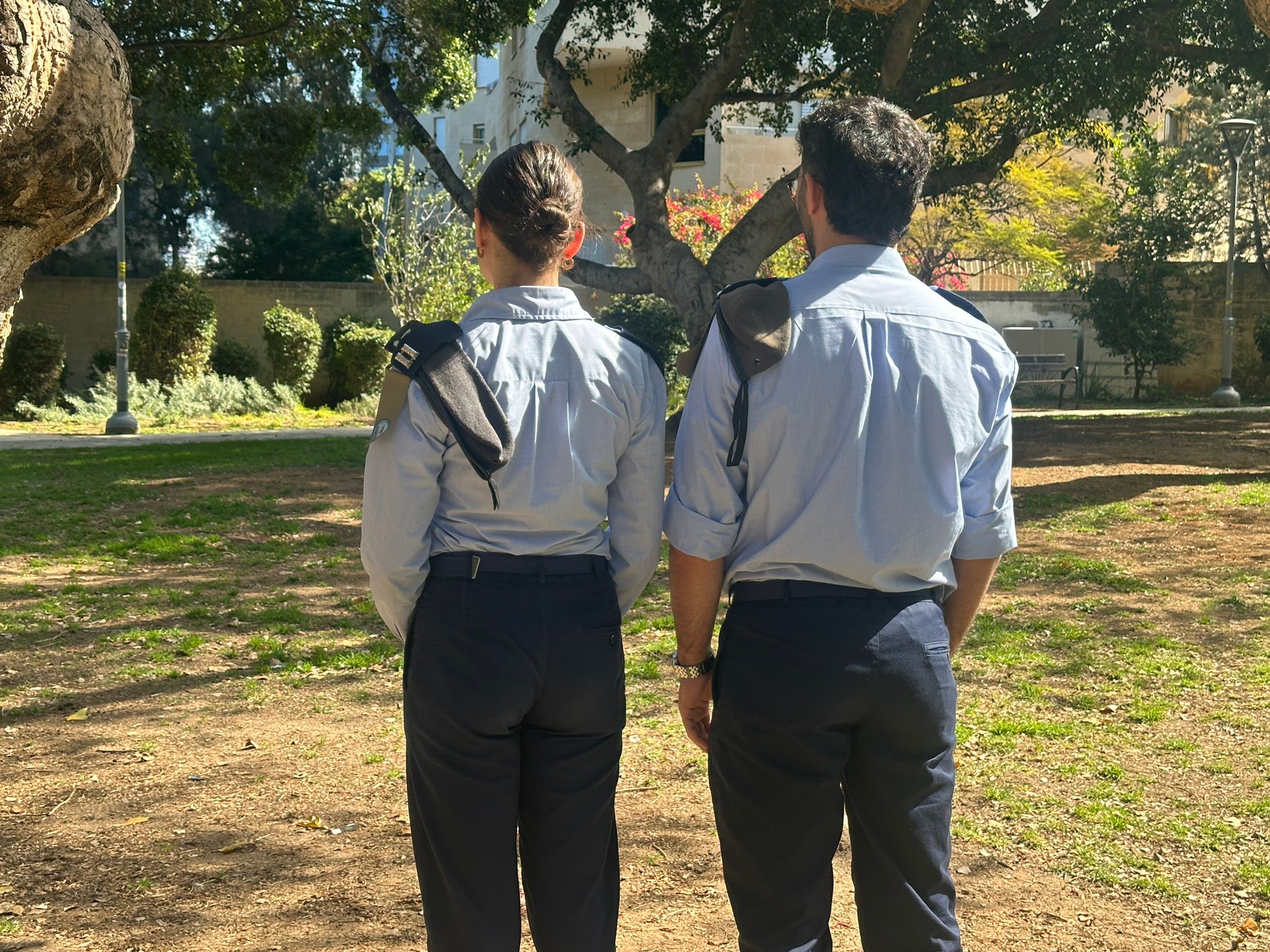
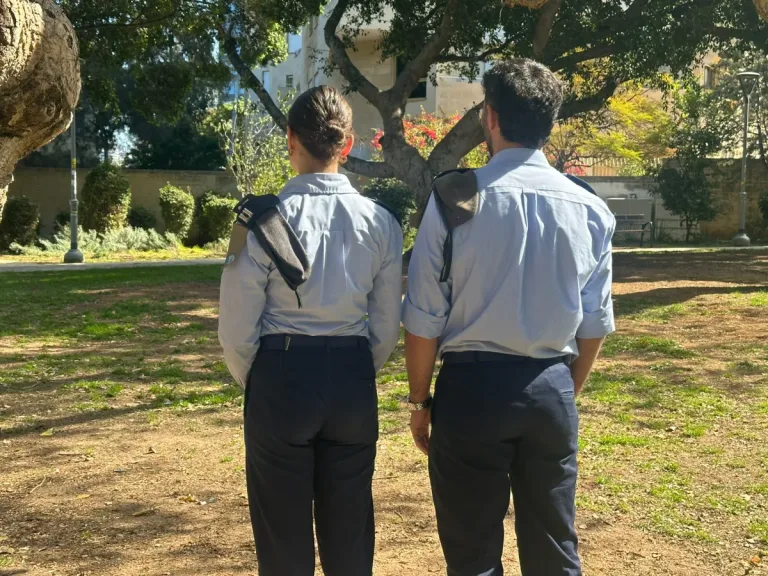
Lieutenant Sh’ and Lieutenant B’
And in the last two weeks, while we were all wondering when it would happen, they were already deep in the most intensive preparations, and were eagerly awaiting it. “We felt ready,” she emphasizes, “There was excitement among us. We wanted everything we had worked so hard on to come to fruition.”
To be sharper each time, they constantly draw on the many lessons learned from the previous frontal engagement with Iranian state-sponsored terrorism. “In ‘With the Lion’ we achieved many successes, but we didn’t really know beforehand what the campaign would look like. We didn’t have a real ability to even imagine it, and we found ourselves learning as we went,” recalls Lieutenant B’, Head of the Ballistic Missile Department in the Enemy Weapon Research Division.
His department specializes in the mechanisms of hostile systems in their possession. Now, the situation is completely different. If Lieutenant Sh’ specializes in identifying the systems and their locations, then Lieutenant B’ knows their internal mechanics in detail – and how each one works.
“Here too, we didn’t have more time to prepare, and we didn’t know exactly what was going to happen. Even now, of course, not everything is known even to us. But the change was felt on a mental level. We arrived prepared and experienced from a very similar event. We know what to expect, how it feels, and we remembered that we were facing a known enemy, so we utilized our familiarity with him, while taking into account his development since June.”
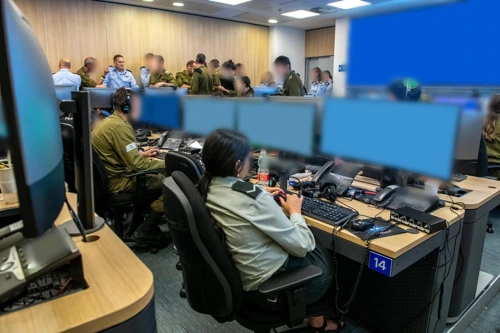
He explains that as part of the lessons learned after the previous encounter, many topics were incorporated into the training for the unit’s roles. “A significant part of the course was learning about this event in all its aspects. What were the preparations? What worked and what didn’t? How can we improve? Ultimately, this is an event that the Air Force has been preparing for for years – and finally, there are people in this system who have experienced it firsthand.”
Covert and Lethal
Each of the two had a specific mission for which they were responsible. And of course, together they help connect the puzzle pieces. Lieutenant Sh’ and her team’s task was the planning of the opening strike. “This is one of the most significant things we prepared for. On one hand, we had to maintain complete secrecy, so that the first time the enemy would discover the attack would be at the moment it was happening, and on the other hand, it had to be lethal, at multiple locations – and simultaneously.”
Her goal was to ensure they knew where the systems and targets for the attack were located, and at the same time, she tried to understand what could endanger or threaten its execution, and what solution could be found to thwart it. She summarized all this preliminary work into clear conclusions, with the mission’s probability of success, and whether it was even feasible.
White Nights
When I ask Lieutenant Sh’ about her current activity, now that the opening strike has been defined as successful and the operation is underway, she laughs. “For me, this is just the beginning. Now comes the hard part.”
Indeed, since then, the Intelligence Directorate has not slowed down for a second. They are operating in emergency shifts, which immediately means lack of sleep, and can even last for 24 hours. She notes that she hasn’t seen much sun since the operation began, for example.
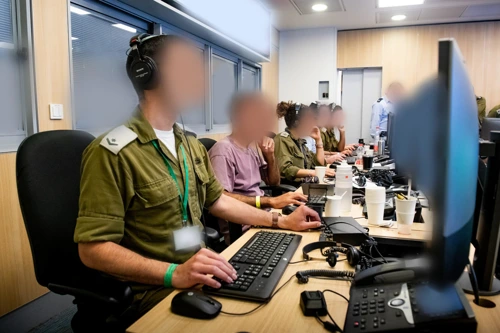
The work itself is familiar to them, but its volume has jumped to the maximum. “We are in constant communication with the operational side, while they are actually in the air, and providing them with responses. Even if it involves planning future actions, and they are in immediate reactive response to demands that arise in real-time,” explains Lieutenant B’.
This is by no means the end, and as they themselves attest, the work is still at its peak. Nevertheless, they worked very hard towards this moment – and not just them. “This is an event that the entire Air Force has been preparing for for years,” continues Lieutenant B’, “It is a privilege to take part in this campaign – however challenging it may be. My friends haven’t understood where I’ve disappeared to lately, maybe in a few years I’ll be able to tell them a bit more.”
Related Topics