
















Jerusalem, 12 January, 2026 (TPS-IL) — At 28, Gabriel Chen survives as he was trained to: alert, guarded, and always prepared. Counterterror operations in Judea and Samaria with Israel’s Border Police taught him to stay alive, but not how to return to living. The first step back came through an unexpected companion who noticed his struggles before he did.
His service was not marked by one defining Palestinian ambush or explosion. It was the accumulation. Operation after operation. Riot after riot. Live fire. Stones. Molotov cocktails. Injuries that came more than once and healed more slowly each time.
“I was in situations of immediate mortal danger again and again,” Gabriel says. “It wasn’t just one event; it was a sequence. You survive one, but you don’t really leave it behind. You carry it to the next one.”
That constant alertness kept him alive in the field. But at home, it began to destroy him. Gabriel’s body learned to live on adrenaline and never forgot how. Sleep became fragmented, then rare. Sounds triggered memories. His thoughts narrowed until the world felt distant and unreal.
The trauma crept in quietly, then all at once. Flashbacks. Panic. A growing sense that he no longer belonged to ordinary life. Friends drifted away. Days blurred together. Gabriel found himself sinking into a darkness he could not name, only feel.
At his lowest point, during a consultation with a psychiatrist, the conversation crossed a line he never imagined hearing at his age. “Assisted dying in Europe” was mentioned aloud.
“Those words didn’t sound like a solution to life,” Gabriel recalls, “but a reflection of total despair. To feel, at 28, that you have no future in your own country, no reason to stay — that feeling wouldn’t let go.”
Four Short Legs, One Big Heart
He entered a therapeutic halfway house known as Bayit Mazen. It was there, when hope felt abstract and distant, that the organization Belev Echad intervened. Gabriel expected another treatment plan, another specialist, another attempt to manage the unmanageable.
Instead, they brought a dog.
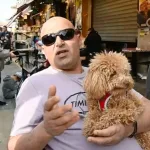
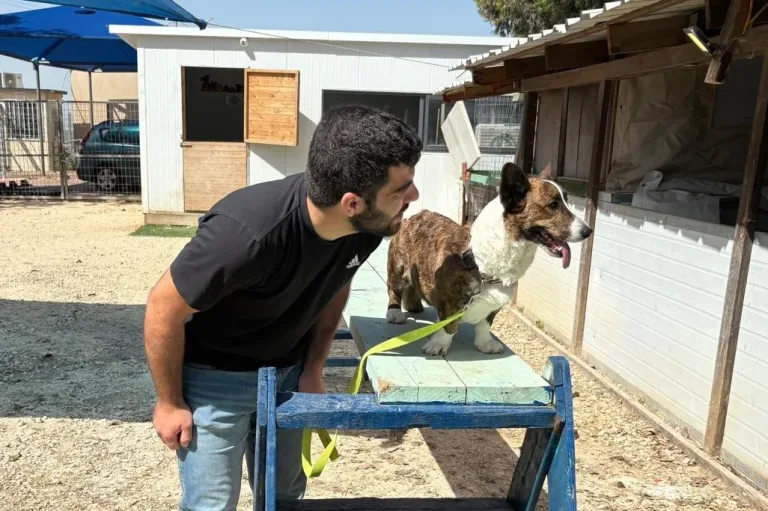
Not a large service animal or a disciplined military breed, but a Cardigan Welsh Corgi named Joya — short legs, oversized ears, curious eyes. The contrast was almost absurd.
“In one of the most mentally complex places I’ve ever been, this dog became my anchor,” Gabriel says. “He is a quiet, non-judgmental presence. When everything inside me is shaking, he is there.”
Joya stayed close, closer than anyone else could. He followed Gabriel through the house, sat beside him in silence, and accompanied him to support gatherings with other wounded soldiers. Somehow, he sensed the moments before Gabriel slipped away from himself.
“He allows me to stay present,” Gabriel explains. “He senses changes in me that I don’t even notice. When I’m about to dissociate or panic, he presses against me, stops me, and forces me to breathe. He grounds me.”
Slowly, something shifted. Gabriel began leaving the house again. Meeting people. Taking responsibility, not just for himself, but for another living being. Joya needed walks, food, attention. And Gabriel, in caring for him, began to care again about being alive.
Rabbi Uriel Vigler, founder of Belev Echad — a New York-based nonprofit that supports Israeli soldiers wounded in action, providing respite, rehabilitation, and emotional support — sees the bond as deeply symbolic. “Gabriel risked his life time and again in Judea and Samaria to protect us,” he says. “When heroes return with invisible wounds, we cannot abandon them. Healing doesn’t always come from medicine; sometimes it comes from a loyal heart that beats alongside yours.”
Belev Echad has arranged several hundred more support animals for security personnel in similar situations.
After two years of war, one-third of Israelis reported needing professional psychological support, highlighting a mounting mental health crisis, according to a comprehensive survey released in December. According to Israel’s Defense Ministry, more than 31,000 servicemembers have been treated for mental health issues, including post-traumatic stress disorder (PTSD), depression, and anxiety since October 2023.
For Gabriel, the process is ongoing. Fragile. Real.
“It’s not magic; it’s a process,” he says, glancing down at the Corgi at his feet. “A delicate process of returning to life. This didn’t just help my rehabilitation — it gave me back my will to live.”
Related Topics