





















By Ezra Lev Cohen • January 6, 2026
Jerusalem, 6 January, 2026 (TPS-IL) — It’s a bustling Friday morning in Jerusalem’s Machane Yehuda shuk, but it seems everyone has time to take a break from their pre-Shabbat shopping to say a few words of admiration about Deni Avdija, the Israeli basketball phenom from Kibbutz Beit Zera who is taking the U.S. by storm. On Monday, the Portland Trail Blazers forward was named the NBA’s Western Conference Player of the Week.
The 25-year-old Avdija is even outpacing better-known stars like LeBron James and Kevin Durant in fan voting for the All-Star Game, which will take place in February.
“He is a great player,” one young man eagerly tells The Press Service of Israel.
“He’s the best NBA player,” says another.
“He shoots beautiful three-pointers. The whole defense is on him, because he’s the player that influences the contest,” says a third.
Even people who don’t watch sports feel the “Deni-buzz.”
“I hardly watch sports [but] I see him a lot… on the cornflakes box and stuff,” says one kid excitedly.
It’s no accident that Avdija, known as “Turbo” for his aggressive play style, has become so beloved. He’s averaging 25.6 points, 7.2 rebounds, and 7.0 assists per game, numbers reminiscent of LeBron James’ production at the same age. He’s singlehandedly led the Portland Trail Blazers to contention for a playoff spot for the first time since 2021. All this puts him on the cusp of becoming Israel’s first All-Star.
But it’s not just his skills that have made him so popular. He’s different from most NBA players. He has little social media presence and a humble personality in interviews. Yet his calm demeanor belies a huge community of fans and followers who latch on to his contagious personality and a lead-by-example locker-room style. As one older gentleman put it in the shuk: “Deni Avdija is a great man. He’s a mensch,” Yiddish praise used to describe a person of character and integrity.
Rakefet Arieli, the team nutritionist for Maccabi Tel Aviv, recalled being intrigued when a 16-year-old Avdija first walked into the Maccabi Tel Aviv training facility.
“I knew that he is very talented and I knew he has very good genes because you see his parents, but he was very… childish,” she told TPS-IL. She described how their early meetings consisted of Avdija pointing at pictures of the team’s stars and saying, “I want to look like them.” This wasn’t unexpected.
“At 16-17 years old, body image is important,” Arieli explained. “But there was a point when he understood that if he wants to play basketball in the EuroLeague and in Tel Aviv, he needs to take care of his body not just in an aesthetic state of mind but also from an athletic state.”
On the court, though, and with his teammates, Arieli watched a young man who was in his element. “Even when he was young, he was always dominant because he’s a funny guy, he likes to laugh,” she reminisced. “He puts his music very loud. You always heard his voice. He has very good vibes. He’s very friendly, he has a lot of friends, and all the teammates always loved him,” something of a rarity on professional teams where competing for playing time can often become the focus.
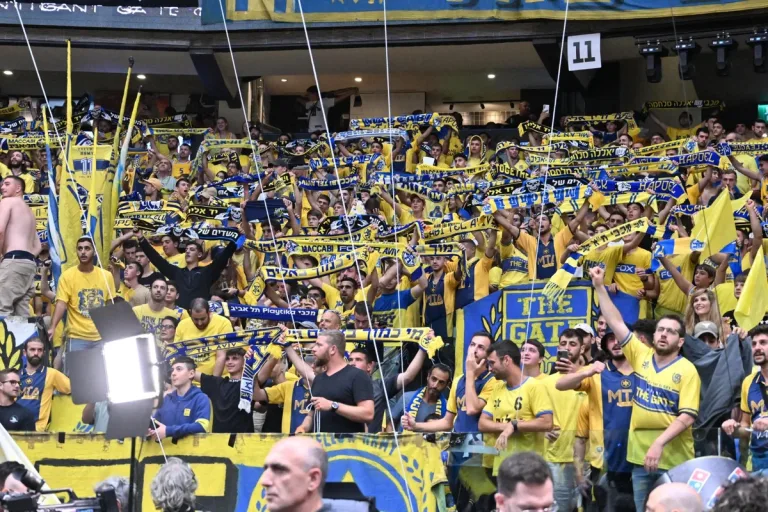
Avdija’s charisma off the court and talent on the court resulted in almost immediate success with Maccabi Tel Aviv. In 2018, at 17, he led the team to the Israeli League championship; then he did it again in 2019 and in 2020.
In 2020, at the age of 19, Avdija won both the Israeli League MVP and the Israeli League Israeli Player of the Year awards, the youngest athlete ever to achieve that feat. But all along, Deni understood his success in the context of his community, his country, and his people. In 2020, he was drafted ninth overall by the NBA’s Washington Wizards. At a post-draft celebration in Tel Aviv, Avdija declared to his family and friends, “I’m gonna make you proud. I’m gonna work 100%.”
Avdija’s Israeli and broader Jewish communities remain at the forefront of his identity, even as he’s found international fame. He doesn’t play on Yom Kippur. He lights the Chanukah candles every year. In the aftermath of Hamas’ October 7, 2023 attack, Avdija told reporters, “There’s really more important things than basketball in life. And it’s really tough for me, and my mind sometimes isn’t there. But I got to keep it professional and do my job, and when I have the chance to stand with Israel, I will.”
Meanwhile, Avdija’s play continues to improve. On Saturday, Avdija scored his third triple-double of the season and made a clutch three-pointer to seal Portland’s victory over the San Antonio Spurs. On online basketball forums and in Instagram comment sections, fans seemed more convinced than ever of his All-Star chances. In his postgame interview, though, all he could talk about was his teammates. “This team, this camaraderie, those players, it’s just fun to play. They’re fighting, they’re defending, we’re just an amazing team.”
Back in the shuk, the pride Israelis feel for Deni is infectious. “Deni, the king,” declares one passerby. “You’re going to make it to the All-Star Game, Deni, and we love you.”
“Deni Avdija has a soul,” says another. “You see that he’s playing for the people.”
One guy says it all: “Thank God for Deni Avdija.”
But even as they cheer him on, Israelis place a certain level of responsibility on Avdija.
“He wants to show the whole world that [though] Israel has much less funding for basketball, we can still make it,” says a man in the shuk. “He should just be a good person, a great basketball player.”
“He has a lot of responsibility. He’ll make it.”
Related Topics