








By Pesach Benson • June 9, 2025
Jerusalem, 9 June, 2025 (TPS-IL) — Israeli authors and publishers have produced an unprecedented literary response to the October 7 Hamas attack and subsequent war, with nearly 1,000 books addressing the conflict published in 2024, according to the National Library of Israel’s annual report released Monday during Hebrew Book Week.
“The trauma of the terror attack, the issue of the hostages, and the impact of the longest war that Israel has experienced have all influenced every aspect of life in Israel,” the report said. “This state of affairs is expected to continue to yield books in all genres into 2025.”
The National Library collected 548 books published in Israel that deal directly with the October 7 attack. Additionally, the library reached out to Jewish communities worldwide and received another 392 books on the subject from overseas, bringing the total collection of war-related books to 940 for 2024 alone.
The literary response spans multiple genres and languages, with 70% of war-related books published in Hebrew, 15% in English, 6% in Arabic, and 3% in French. Additional titles appeared in Italian, Turkish, German, Yiddish, Spanish, Catalan and Romanian, reflecting the global Jewish community’s engagement with the crisis.
Non-fiction dominated the war-related publications, with 37% focusing on the effects of the conflict on Israeli society. Books exploring the connection between war and Judaism comprised 21% of titles, while prose literature accounted for 15%. The remaining publications spanned diverse genres including cookbooks and Passover Haggadot created by residents of border communities.
The war’s impact extended particularly into children’s literature, with more than 60 titles addressing themes such as “fathers going to reserve duty; sirens and shelters; evacuated families; mourning and bereavement, and more.” This contributed to a broader surge in children’s and young adult books, which increased from 1,049 titles in 2023 to 1,405 in 2024.
Surprisingly, the library received only 30 commemorative books for victims and fallen soldiers in 2024, a relatively low figure that researchers attribute to changing commemoration practices.
“It is possible that practices of commemoration and remembrance are changing, with a shift towards other media and platforms – music, sports, cinema, community initiatives,” the report suggested.
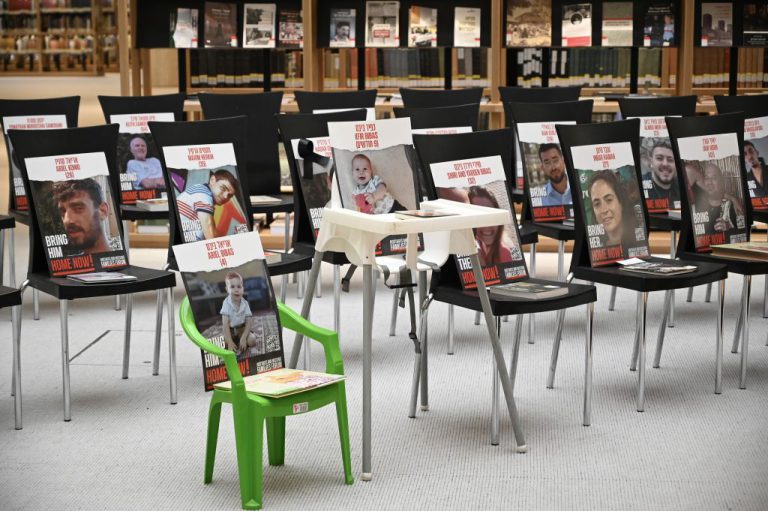
It noted that “the issue of the hostages and the struggle for their return has not yet been significantly reflected in this year’s books, perhaps because the issue is still in full swing, with no ability to analyze the issue before it is resolved.”
Overall, Israeli publishers released 6,928 books in 2024, marking a significant increase from 6,037 in 2023. The surge represents both a recovery from the sharp decline in publications following October 7, 2023, and a “catching up” by publishing houses that had delayed releases originally scheduled for late 2023.
The National Library has also embarked on a massive project to collect and archive materials from around the world that have been published about the October 7 massacre.
At least 1,180 people were killed, and 252 Israelis and foreigners were taken hostage in Hamas’s attacks on Israeli communities near the Gaza border on October 7. Of the 55 remaining hostages, 33 are believed to be dead.