





Jerusalem, 16 February, 2026 (TPS-IL) — Two Israeli soldiers wounded in the war with Hamas have taken their personal stories of survival and loss from the battlefields of Gaza to American university campuses, describing what organizers say has become a new front in Israel’s struggle for legitimacy abroad.
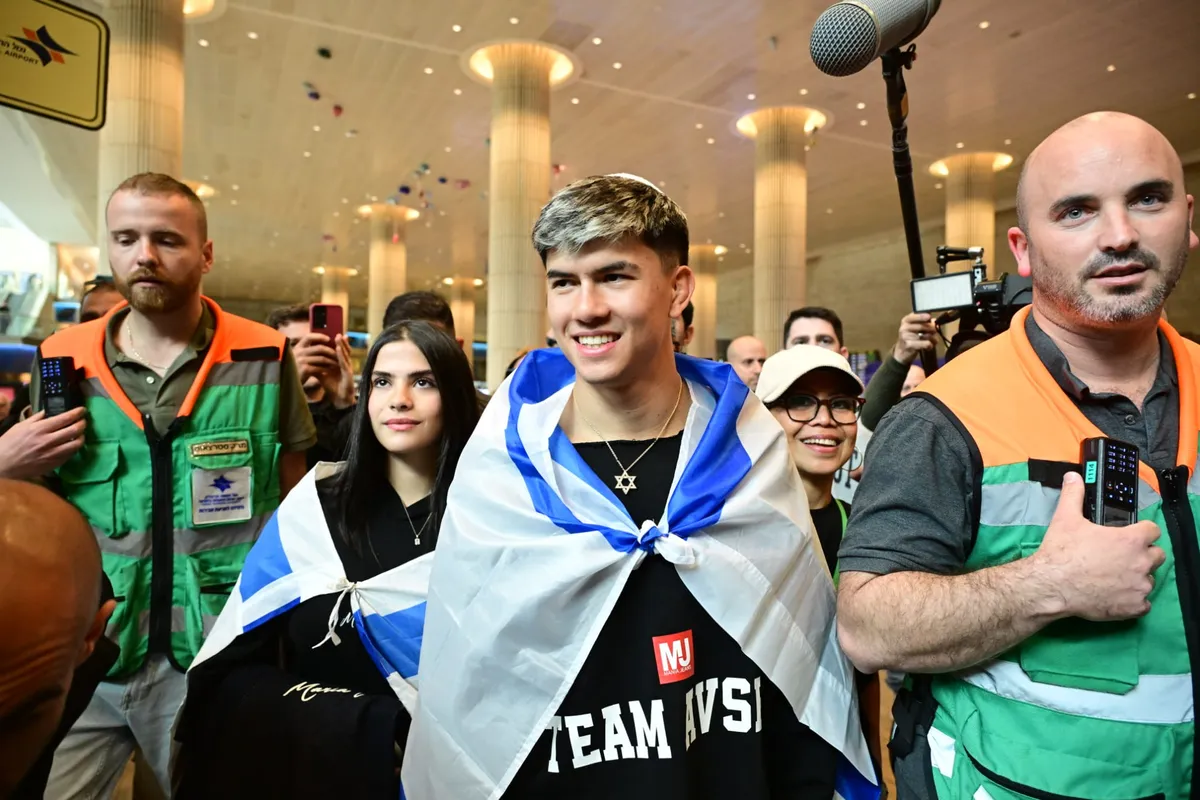
Nehorai S. and Osher P. have been visiting campuses across the United States as part of an initiative led by Belev Echad, in cooperation with Chabad on Campus. The program aims to connect Israeli combat veterans with students amid a sharp rise in anti-Israel protests and antisemitic rhetoric at universities since the outbreak of the war.
“American universities have become a second front,” said Rabbi Uriel Vigler, founder of Belev Echad. “We aren’t sending these soldiers to campuses to argue about politics. We are sending them to spread light in a place where there is so much darkness and ignorance. When people see Nehorai or Osher, they don’t see a headline. They see heroes who paid with their bodies and souls for the basic values of freedom.”
Belev Echad is a New York-based nonprofit that supports Israeli soldiers wounded in action, providing respite, rehabilitation, and emotional support.
Nehorai, a fighter in the Givati Brigade, was critically wounded during ground operations in Jabaliya in northern Gaza. While his unit was clearing a building, a grenade was thrown into the room where the soldiers were positioned. Shrapnel tore through his body, nearly severing his leg. He was evacuated under fire and underwent multiple emergency surgeries as doctors fought to save the limb.
For months, Nehorai moved between hospital wards and painful rehabilitation sessions. “In the hospital, I fought to walk again,” he told students during campus meetings. “Here, I am fighting so that the world understands why we fight. When I look a student in the eye and show them my scars, the lies they see on their phones begin to disappear.”
Standing beside him is Osher, a 21-year-old combat medic from the Golani Brigade. He survived the October 7 attack on the Nahal Oz military outpost, where more than 60 soldiers were killed. Pardo was injured when a rocket blast crushed his hand, yet he continued treating others and dragged his wounded commander to safety while the base was under assault.
Osher now speaks openly about living with severe post-traumatic stress disorder. “I wasn’t wounded physically, but I am wounded in my soul,” he said. “I am not okay, but it’s okay to be not okay.” He described the emotional toll carried by many soldiers who appear outwardly fine. “A soul injury is real, and it must never be underestimated.”
The ten-day visit began in Florida, with meetings at the University of Miami and Florida International University, and continued to Washington, D.C., and New York. At each stop, students gathered to hear firsthand accounts of combat, loss, and recovery. Danielle, a student leader at Florida International University, described the stories as “unfathomable,” while another student, Isidor Cohen, said the soldiers’ accounts of faith and resilience offered strength.
Shevy Vigler, who helped lead the delegation, said the encounters were as meaningful for the soldiers as for the students. “There is an incredible healing power in these meetings,” she said. “This isn’t advocacy. It’s a human connection that breaks through walls of hate.”
As Nehorai and Osher return to Israel to continue their rehabilitation, organizers say they leave behind students with a deeper understanding of the human cost of the war.
“If we don’t tell our story,” Nehorai said, “the lies win.”
Related Topics