


















By TPS-IL • February 2, 2026
Jerusalem, 2 February, 2026 (TPS-IL) — A routine drive home turned into a life-or-death moment for 75-year-old Moshe Ami Benita, who suffered a stroke while stopped at a red light in Rishon LeZion — and owes his life to a passing Magen David Adom (MDA) paramedic.
“How long does it take you to get angry and honk at the car in front of you when the traffic light turns green and it doesn’t start moving?” Moshe recalled. “This time, that’s what saved me. If I had been standing on the side of the road and not at a red light, they probably wouldn’t have noticed me, and I don’t know where I would be today.”
It was early evening when Moshe, driving home alone after work, began experiencing a severe headache. “I’ve never felt such a severe pain in my life,” he said. “When I reached the red light, the pain was unbearable, so I stopped the car and leaned on the steering wheel.”
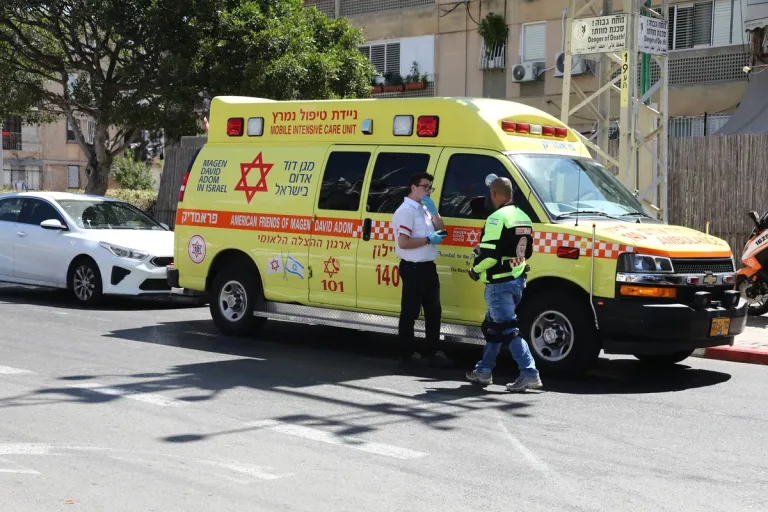
Coincidentally, MDA volunteer paramedic Naftali Halberstadt was driving by in an ambulance when he noticed Moshe’s car.
“While I was driving, I heard sirens and saw a car stuck in the middle of the road while all the other vehicles were passing it,” Naftali said. “I acted safely so as not to endanger myself or the other drivers. When I got to the car, I saw that Moshe’s head was slumped over the steering wheel. I opened the door, called his name, and started medical tests. It became clear that a stroke was suspected, and I had to take him to the hospital immediately.”
Despite Moshe’s attempts to convince the paramedics that he was fine, he was transported to the hospital.
“All in all, I had a headache. I didn’t think it was a big enough reason to go to the hospital,” Moshe said. “I tried to convince the MDA paramedics that I was okay, but they didn’t give up — and it’s good that they didn’t.”
Halberstadt emphasized the urgency of acting quickly in stroke cases. “When there is a suspicion of a stroke, you need to act as fast as possible to prevent irreversible damage. Early detection and treatment can reduce, or even prevent, lasting effects. If you notice the signs, don’t hesitate,” he said.
After a lengthy hospitalization, Moshe began a rehabilitation program that continues to this day. On a visit during his recovery, Halberstadt shared details of the incident. Moshe, visibly moved, told him, “Thank you! Thank you for noticing my car and acting quickly. I still have a long rehabilitation to go through, but I have someone to fight for, and with God’s help, I will be strong.”
MDA Deputy Director of Medicine and Blood Services Dr. Rafael Strogo stressed the importance of recognizing stroke symptoms. “A stroke is a medical emergency whose consequences depend on time. Identifying a stroke and providing treatment quickly drastically affects the patient’s life expectancy and quality of life,” he said.
The most common signs of a stroke include weakness in the hands, a drooping face, and unclear speech. “Other signs may include sudden dizziness, vision problems, severe headache, or numbness on one side of the body,” Strogo added. He stressed that one should call an emergency hotline immediately if a stroke is suspected.
Related Topics