



















By Pesach Benson • January 6, 2026
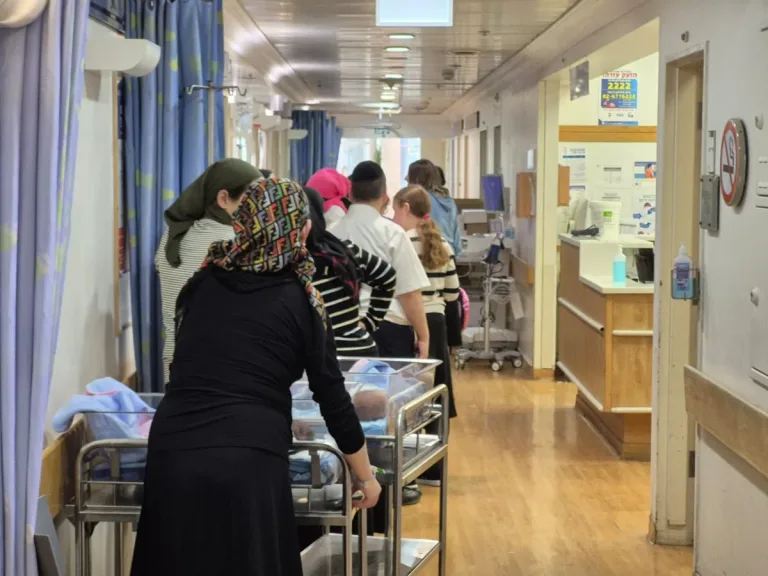
Jerusalem, 6 January, 2026 (TPS-IL) — More than half of Israel’s hospital beds lack adequate protection from rocket and missile attacks, exposing patients and medical staff to grave danger and raising doubts about the healthcare system’s ability to function during prolonged conflict, according to a sharply critical State Comptroller report released Tuesday.
State Comptroller Matanyahu Englman found that 56 percent of general hospital beds — more than 10,000 beds across 27 hospitals — are either unprotected or located in areas that cannot withstand missile strikes. The report defined these protection gaps as failures that “harm the ability of hospitals to protect the lives of patients and medical, nursing, and other staff, as well as their ability to maintain continuity of treatment and functioning during emergencies.”
The State Comptroller regularly reviews Israel’s preparedness and the effectiveness of government policies. Englman’s office also released an audit on Israeli schools being unprepared for remote learning during the war despite lessons learned during the COVID pandemic.
The audit, conducted between January and September 2024, took on heightened urgency after an Iranian ballistic missile struck the Soroka Medical Center in Beer-Sheva in June. Although patients had been evacuated hours earlier and no casualties were reported, the hit “severely damaged the hospital’s functional continuity and impaired its ability to continue operating in a continuous and effective manner to provide essential medical services,” the report said.
According to the findings, the deficiencies extend well beyond patient beds. The report found that 41 percent of operating rooms, 61 percent of medical imaging equipment, and 43 percent of intensive care beds in the hospitals examined are not adequately fortified. In hospitals near Israel’s borders with Gaza and Lebanon, the situation is even more severe. There, “significant protection gaps exist at sites used for vital activities,” including 67 percent of imaging devices and nearly half of all hospital beds.
Since Hamas’s October 7, 2023 attack, more than 37,500 rockets and missiles were fired at Israeli territory through June 2025. During the war’s first months, hospital occupancy rates fell by between 13 and 24 percent, while some hospitals near conflict zones were forced to cut ambulatory services by as much as 72 percent.
Conditions were found to be especially alarming in psychiatric and geriatric hospitals, where patients often have limited mobility or difficulty understanding emergency instructions. In the Tel Aviv Metropolitan area, only 7 percent of beds in long-term care facilities are protected. In one psychiatric hospital, staff were instructed that, during missile alerts, patients should “get out of their beds and lie on the floor,” because no protected spaces were available.
At another psychiatric hospital with 300 beds, three entire departments were transferred to other facilities when the war began. The remaining patients were concentrated in a single protected building designed to hold only about 200 people. The report described the result as “extreme crowding, combined with risks stemming from patients’ mental conditions and prolonged confinement in a shared space.”
Fully addressing the protection gaps would require an estimated NIS 4.8 billion ($1.52 million), the report said. Yet the government has allocated only NIS 500 million ($158.2 million) for hospital protection during the current war — roughly 10 percent of the required sum. Englman criticized the absence of a comprehensive national plan, noting that since 2007, hospital fortification has been handled through “partial and point-specific programs that do not provide sufficient response to the significant protection gaps.”
The report stressed that protecting hospitals is vital not only for civilian care but also for national security, warning that failure to do so could “harm the resilience of the home front and the fighting capability at the front,” as wounded soldiers depend on the same medical infrastructure.
Englman called on the government to adopt a multi-year national plan with dedicated funding and clear priorities, cautioning that without it, “the ability of many hospitals to continue providing medical services to the population during a prolonged, multi-front war will be limited.”
Related Topics