

















The Ministry of Education is launching a broad educational initiative to integrate financial education as part of the training of Israeli students for adult life. The program is designed to equip Israeli students with advanced financial literacy, tools for making informed economic decisions, personal and social responsibility, and the ability to act independently and critically in a complex and changing economic world.
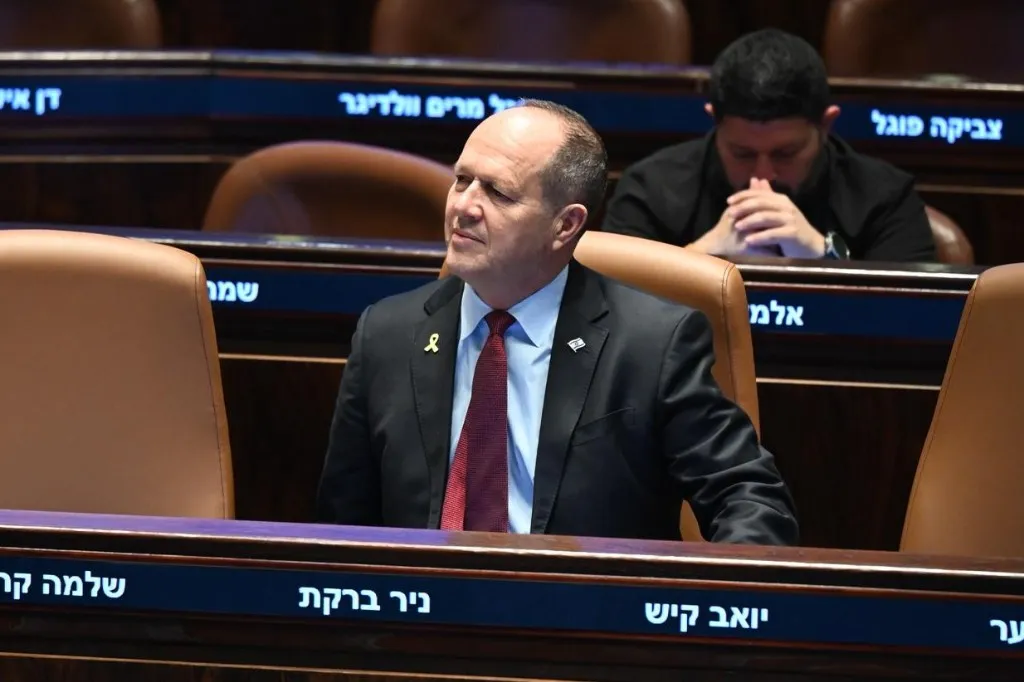
Minister of Education, Yoav Kisch: “This is a move we are leading from a clear perspective: the school must prepare its students not only for exams, but for life itself. Financial education is a necessary step in an education system that seeks to give the younger generation the ability to understand reality, weigh risks, make decisions, and act responsibly.
Starting next academic year, financial education will be taught as a compulsory subject, and Israeli students will systematically learn to build a budget, understand interest and inflation, read a payslip, know their rights in the workplace, and navigate an advanced and technological economic world. This is not a marginal addition – it is a foundation for an adult life of independence, responsibility, and self-confidence.”
Starting with the 2026-2027 academic year, the financial education program will be introduced as a compulsory program, one hour per week for two years in junior and senior high schools, with a phased implementation: in the 2026-2027 academic year, the program will be implemented for 9th-grade students, and in the 2027-2028 academic year, it will expand to include 10th-grade students.
The program was developed by the Pedagogical Secretariat at the Ministry of Education and focuses on developing active economic citizenship, strengthening emotional skills such as coping with pressure and delaying gratification, and the ability for short-term and long-term economic planning. Learning will be experiential, practical, and relevant to students’ lives, incorporating digital tools, simulations, community learning, and partnership with families and the community.
As part of the financial education program, students will learn fundamental principles of money and saving, interest and inflation, budget building, and making informed economic decisions. Students will be exposed to the world of banking, saving and investment channels, and identifying risks and fraud. Additionally, topics from the world of work will be covered, including employee rights, payslips, youth employment laws, and the impact of advanced technologies on the world of employment.
The goal: to impart knowledge, skills, and economic responsibility from a young age.
Key Topics to be Taught in the Program:
Money, Saving, and Investments – Between Opportunity and Risk
In this area, students will be exposed to the fundamental principles of the world of money and personal financial management, and will learn, among other things:
- What money is as a means of payment and a social convention, and the connection between money and values.
- The purchasing power of money: inflation, the consumer price index, and their impact on daily life.
- Basic concepts of interest: simple interest and compound interest and their long-term significance.
- Saving: saving goals, the importance of financial planning, future consumption, and behavioral biases.
- Decision-making in an uncertain world: risk versus opportunity, risk aversion, and its impact on financial choices.
- Introduction to the world of investments: the capital market, stocks, bonds, indices, private vs. public companies.
- Additional investment channels: real estate, foreign currency, entrepreneurship, human capital.
- Identifying warning signs in the investment world and protection against fraud.
The World of Money and Banking
Students will gain a basic understanding of the financial system in Israel and will learn:
- Types of payment methods and the transition to a digital world.
- Functions of commercial banks: bank accounts, fees, credit lines, and reading bank statements.
- The role of the central bank and maintaining price stability in the economy.
- How interest rates are determined and their impact on savings, loans, and the economy as a whole.
Conscious Consumerism and Financial Decision-Making
This area deals with the connection between economics, psychology, and society:
- Rational versus emotional decision-making and social pressure.
- Setting personal financial goals (SMART model).
- Building a personal and family budget.
- How product prices are determined and the mechanisms of marketing and advertising.
- Consumerism, happiness, and sustainable lifestyles – the economic aspects of consumption.
- Consumer rights, laws, and protection against fraud and cyber threats.
The Labor Market in a Changing World
In this framework, students will be trained for an initial understanding of the world of employment and income:
- Familiarity with youth employment laws and employee rights.
- Reading a payslip and understanding its components.
- Government intervention in the labor market and its impact.
- The impact of advanced technologies and artificial intelligence (AI) on the labor market.
- The connection between education, skills, employment, and pensions.
- Developing a sense of capability, responsibility, and financial independence for integration into the world of work.
The professional staff at the Ministry of Education is currently completing the preparations for implementation and integration in schools, including training education teams, pedagogical support, and developing learning materials, in anticipation of expanding the program to all middle schools.
Related Topics