














By Pesach Benson • February 17, 2026
Jerusalem, 17 February, 2026 (TPS-IL) — Israel’s electricity grid and fuel supply networks were riddled with critical gaps when the country went to war in October 2023, and many of those gaps remain unresolved today, according to a sweeping government report released on Tuesday.
In two separate but related investigations into Israel’s electricity sector and broader energy infrastructure, State Comptroller Matanyahu Englman painted a picture of a country that repeatedly delayed difficult decisions about fuel stockpiles, emergency legislation, and infrastructure investment, then found itself scrambling to improvise when rockets began falling.
The war “highlighted the significant risk of inadequate advance preparation of the electricity sector for times of emergency,” Englman’s office wrote, in language that applied equally to Israel’s supply chains for fuel, liquefied petroleum gas, and natural gas.
The State Comptroller regularly reviews Israel’s preparedness and the effectiveness of government policies.
The audits cover the period from before Hamas’ October 7, 2023 attack through the spring of 2025. However, before the Comptroller could complete the reports, Israel struck Iran’s nuclear infrastructure in June 2025. During 12 days of fighting, Iran launched roughly 550 ballistic missiles and 1,000 drones at Israel. While most were intercepted, at least 31 missiles struck populated areas, killing 28 Israelis.
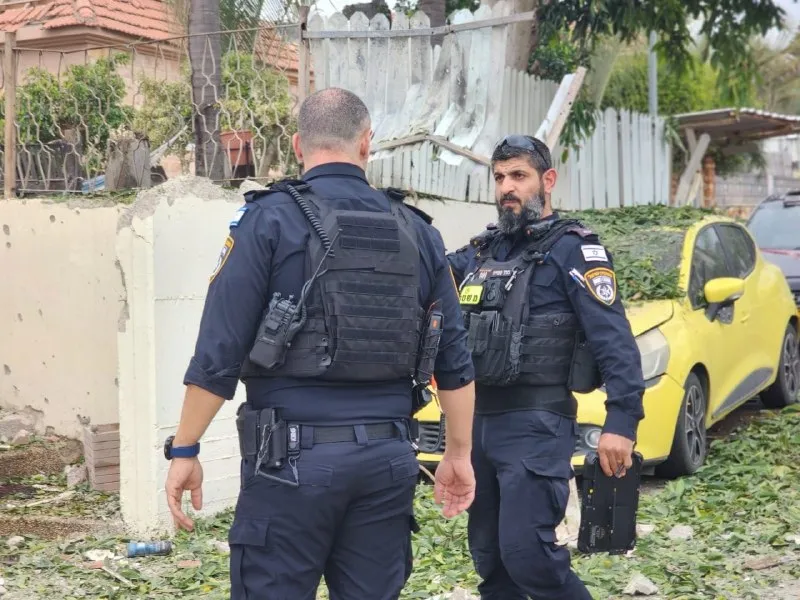
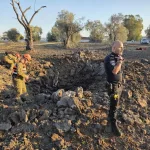
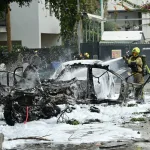
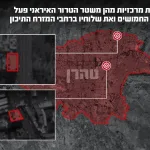
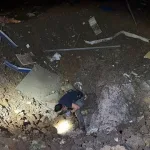
One missile strike directly hit the Bazan oil refinery in Haifa, Israel’s largest. Bazan reported on June 16 that the attack killed three employees and “significantly damaged” the power station supplying steam and electricity to its facilities, forcing a complete shutdown of all operations. Bazan began coordinating with the Israel Electric Corporation to restore power.

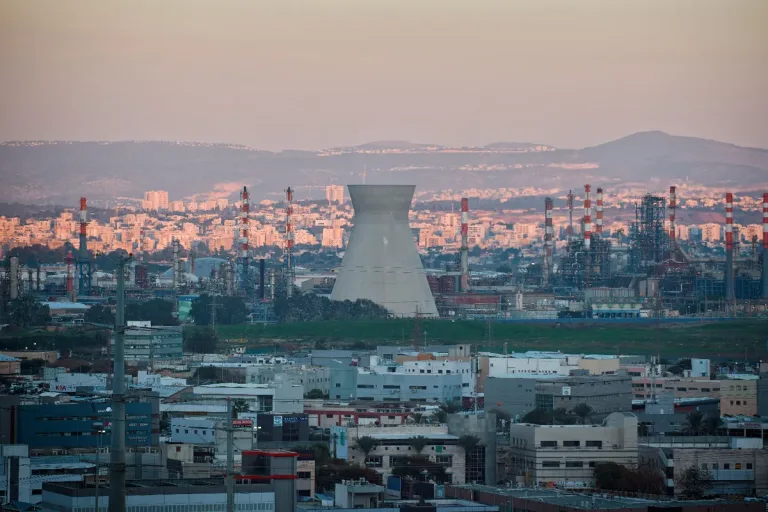
Haifa Port’s chemicals terminal on July 10, 2024. Photo by Sharon Leibel/TPS-IL
The episode raised urgent questions about a government decision to permanently close the refinery by 2029 for public health reasons. Englman’s report found that when the closure decision was made, officials did not adequately assess its national security implications. Under current plans, a single commercial importer would supply approximately 80 percent of all liquefied petroleum gas consumed in Israel — a dangerous concentration of supply risk that the report said was never addressed as a condition for proceeding with the closure. Bazan currently supplies 44 percent of the country’s LPG.
“The events that occurred in the energy sector and their long-term effects from the beginning of the Iron Swords War” require a fundamental re-examination of the balance between domestic fuel production and import dependency, the report concluded.
The problems extended well beyond the refinery.
Israel has no underground natural gas storage facility — a significant vulnerability given that gas powers a substantial share of the country’s electricity generation. According to the audit, comparable industrialized nations, including Germany, France, and Japan, maintain strategic gas reserves even though they rely on the fuel less heavily than Israel does. The Natural Gas Authority had not even completed a policy document outlining the principles for building such storage, the Comptroller noted.
On the legislative front, Israel’s primary civil defense law — the legal backbone for emergency management across all sectors — was enacted in 1951 and has never been meaningfully updated. Draft legislation to address emergency fuel powers was proposed in 2012 and again in 2022; neither advanced. Without a modern legal framework, the Fuel Administration Director cannot legally compel fuel companies to follow emergency directives, unlike in the natural gas sector where such powers exist.
The electricity-focused report, partially classified for security reasons, revealed that a 2018 government reform requiring the transfer of diesel fuel management from the Israel Electric Corporation to a new transmission company called Noga had still not been completed as of December 2024 — six years after it was decided.
Englman’s office also praised the frontline workers who kept the lights on during the fighting. “Four Israel Electric Corporation employees were killed during the war and several others were injured” while repairing the grid under fire, the report noted.
The Comptroller called on the Prime Minister and the ministers of defense, finance, energy, and justice to convene the security cabinet to oversee a remediation plan — and urged that action be taken, in the report’s words, “the sooner the better.”
Related Topics