

















By Pesach Benson • February 16, 2026
Jerusalem, 16 February, 2026 (TPS-IL) — A large stone vessel production facility dating to the Second Temple period has been uncovered on the eastern slopes of Mount Scopus in Jerusalem, an archaeological discovery made during an undercover operation that led to the arrest of an organized gang of antiquities thieves, the Israel Antiquities Authority announced on Monday.
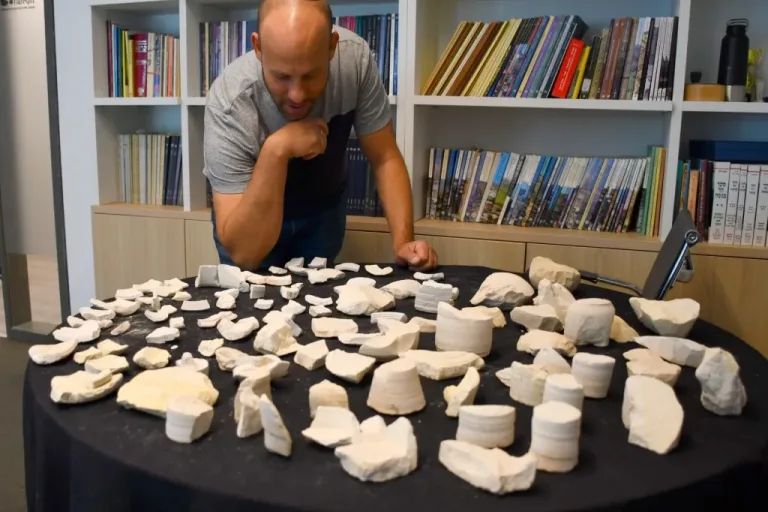
The workshop was found inside an underground cave and contained hundreds of stone vessel fragments, unfinished products, and production waste. The site also includes large water reservoirs, a limestone quarry, and a ritual purification bath (mikvah), indicating that it was a significant industrial and religious center around 2,000 years ago.
“The discovery of this workshop – alongside huge water reservoirs and a purification bath (mikva) from the Second Temple period – testifies to the centrality of this site 2,000 years ago, located on the main road Jewish pilgrims used when coming to Jerusalem from the east,” the Antiquities Authority said.
The find emerged as a byproduct of a covert investigation into suspected looting at the Ras Tamim antiquities site. Inspectors from the Israel Antiquities Authority’s Theft Prevention Unit began surveillance after identifying signs of fresh digging and attempted entry into underground spaces. After weeks of monitoring, officers moved in late one night and arrested five suspects.
According to the authority, some of the suspects were apprehended inside the cave itself, while others were caught above ground acting as lookouts and guards. The group was found in possession of extensive excavation equipment, including a generator, quarrying tools, and a metal detector. The suspects were arrested, interrogated, and later confessed. They are expected to be indicted for illegal excavation and damaging an antiquities site, offenses carrying a potential sentence of up to five years in prison.
After securing the site, inspectors conducted a systematic search of the cave and realized the scale of the archaeological discovery. Dr. Eitan Klein, deputy director of the Theft Prevention Unit, said the workshop adds an important piece to the broader understanding of Second Temple-era Jerusalem and its surroundings.
“Workshops for producing chalk limestone vessels from the Second Temple period are already known in the Judean hills,” Klein said. “A workshop was discovered in the Mount Scopus area while constructing the Naomi Shemer Tunnel… Another production facility was uncovered just north of today’s Jerusalem in the village of Hizma. However, the discovery of this workshop is particularly important, because now a broad picture of the region is emerging.”
Klein noted that the concentration of workshops, tombs, reservoirs, ritual baths, and quarries reinforces the assessment that the area lay along the main ancient route used by Jewish pilgrims arriving from the Jordan Valley, Jericho, Transjordan, and the Dead Sea region. Archaeologists believe the stone vessels produced at the site were sold in Jerusalem to both residents and pilgrims visiting the city during the Second Temple period.
Stone vessels are considered a hallmark of Jewish life in the late Second Temple era, reflecting heightened observance of ritual purity laws. Rabbinic sources later described this phenomenon as “an outbreak of purity in Israel,” a trend supported by archaeological evidence showing the widespread installation of purification baths in homes, villages, and along pilgrimage routes.
“The stone-vessel workshop uncovered in Jerusalem is not merely an archaeological site, but a window into a world preserved deep within the ground, waiting for us,” said Minister of Heritage Rabbi Amichai Eliyahu. “Attempts by our enemies to loot antiquities are not crimes of financial theft, but efforts to steal our identity.”
Related Topics