


















Inside Iran’s Hidden War: How AI is Reshaping Tehran’s Influence Campaigns
Iran weaponizes AI for covert influence campaigns targeting Israel and Western societies, experts warn. This new strategic priority significantly heightens the.


Iran weaponizes AI for covert influence campaigns targeting Israel and Western societies, experts warn. This new strategic priority significantly heightens the.
An Israeli study unveils how brainless corals coordinate complex movements via a decentralized neural system, offering new approaches for robotics and swarm.
By TPS-IL • January 13, 2026
Jerusalem, 13 January, 2026 (TPS-IL) — For generations, divers and marine biologists have been captivated by the rhythmic, pulsating motion of certain corals, opening and closing their tentacles in perfect unison despite having no brain. A new Israeli study now explains how that is possible, raising potential applications for robotics and swarm technology, the researchers told The Press Service of Israel.
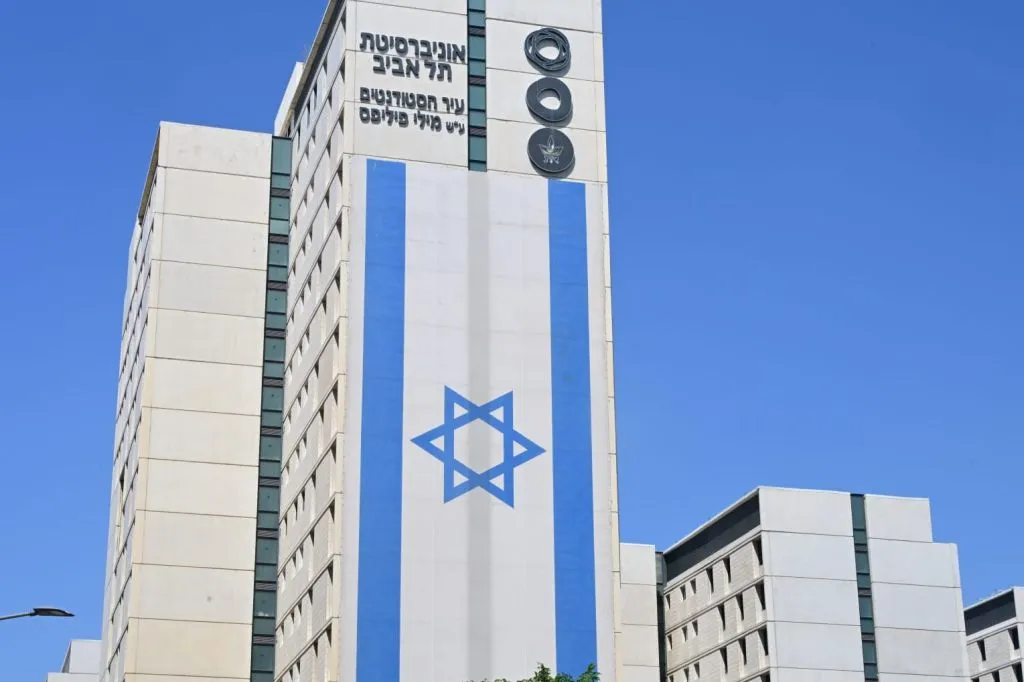
Scientists from Tel Aviv University and the University of Haifa have uncovered for the first time the mechanism that allows the soft coral Xenia umbellata to coordinate these movements without any central nervous system. According to the study, the coral relies on a decentralized neural “pacemaker” system in which each tentacle is controlled locally by its own network of nerve cells, yet remains synchronized with the others.
The findings were recently published in the peer-reviewed journal PNAS.
“We discovered for the first time that corals carry out this movement, which is essential for their survival, without any centralized control system. Each tentacle operates independently yet in full synchronization with the others,” Professor Yehuda Benayahu, who supervised the research, told TPS-IL.
He added that the implications extend beyond marine biology. “This principle could inform engineering and robotics. If engineers want to avoid complete shutdowns of complex machines or robots, they should build them in a similar way, with control distributed across separate hubs rather than a single center. That way, damage to one part will not disable the entire system.”
According to Benayahu, corals from the Xeniidae family are known for their distinctive pulsing behavior, which plays a crucial role in feeding and survival. Until now, he said, scientists could observe the movement but could not explain how it was generated. To investigate, his team conducted a series of cutting experiments, separating tentacles from the coral and even dividing them into smaller fragments. They discovered that each detached piece continued to pulse on its own.
To better understand the biological basis of this coordination, the researchers also analyzed gene expression during different stages of tentacle regeneration and found that the coral uses genes and proteins involved in neural signal transmission that are also present in much more complex animals. These include molecular components associated with rhythmic activity in processes such as heartbeat and breathing in humans.
Benayahu said the discovery suggests that the origins of rhythmic movement in the animal kingdom predate the evolution of centralized brains.
“It is fascinating to reach the conclusion that the same molecular components that activate the pacemaker of the human heart are also at work in a coral that appeared in the oceans hundreds of millions of years ago,” he said. “The coral we studied allows us to look back in time, to the dawn of the evolution of the nervous system in the animal kingdom.”
He added that the findings also deepen scientific understanding of coral reef ecosystems and underscore the need to preserve them at a time when coral reefs worldwide face mounting environmental threats.
Israeli scientists discovered wolffish teeth possess a unique tissue, osteodentin, that shrinks under pressure. This auxetic behavior could revolutionize.
By Pesach Benson • January 11, 2026
Jerusalem, 11 January, 2026 (TPS-IL) — Scientists have discovered a surprising feature in the teeth of the Atlantic wolffish that could inspire stronger bone prosthetics and body armor, and even more resilient vehicles, Israeli scientists announced.
At the heart of these teeth is a tissue called osteodentin, which shrinks in every direction when squeezed — a behavior almost never seen in natural, mineral-rich materials. This unusual property allows the teeth to absorb crushing forces, offering a blueprint for creating materials that are both tough and damage-resistant.
Normally, when materials are compressed along their length, they expand sideways. But osteodentin does the opposite, a rare property known as auxeticity, in which a material shrinks in all directions under pressure instead of bulging outward. In tests, when researchers applied force along the tooth’s axis, mimicking the wolffish’s powerful bite, the tissue contracted both sideways and lengthwise. Across all eight teeth studied, measurements fell in a range rarely seen even in man-made materials.
“This was astonishing,” said Prof. Ron Shahar of the Koret School of Veterinary Medicine at Hebrew University, who led the research. “Osteodentin behaves in a way that almost no other natural mineralized tissue does. Its structure allows the tooth to absorb heavy loads safely and efficiently. Nature has built a design that protects the fish from the extreme forces of its diet, and this could inspire new synthetic materials with similar toughness.”
The Atlantic wolffish (Anarhichas lupus) is a marine predator with an eel-like body found in the North Atlantic Ocean. Its most striking feature is its powerful jaws and large, sharp teeth, especially the canines and molar-like teeth in the back of the mouth, which allow the wolffish to crush shells that many other fish cannot. The osteodentin tissue makes the teeth less prone to breaking.
The team used advanced X-ray scanning and 3D mapping techniques to see exactly how the teeth deform under pressure. They found that osteodentin contracts evenly in all directions during compression, a highly unusual response in natural materials.
The secret lies in the tissue’s tiny structure. Osteodentin has a dense network of vertical canals, 10–20 microns wide, running from the base to the tip of the tooth and curving outward near the surface. This arrangement causes the mineral columns between the canals to bend inward when squeezed, increasing the tooth’s toughness and reducing the chance of cracking, the scientists said.
Tests also showed that while the mineral in osteodentin is about as stiff as bone, it is this unique architecture that makes the teeth so strong. “Similar behavior has been seen only in a few invertebrates, like limpet teeth and nacre,” Shahar said.
The researchers believe this feature may exist in other fish as well, suggesting a wider role for osteodentin in nature. Beyond understanding how teeth survive extreme stress, the discovery provides a model for designing synthetic materials that are strong, durable, and absorb energy—qualities valuable in medicine, aerospace, and engineering.
Materials inspired by osteodentin could be used in bone implants, dental prosthetics, and joint replacements, making them more durable, crack-resistant, and able to absorb stress. The discovery raises the possibility of engineering helmets, body armor, sports gear, and even shoes or phone cases with lightweight materials that more effectively absorb impact.
The design principles could also benefit engineering, aerospace, and automotive applications. Vehicles, aircraft, and buildings could incorporate auxetic-inspired materials to withstand repeated stress, collisions, or vibrations while remaining strong and lightweight.
“Studying osteodentin gives us insight into how nature creates materials that are both tough and resilient,” Shahar said. “It’s a remarkable example of natural engineering that could help guide new technologies.”
The study was published in the peer-reviewed Acta Biomaterialia.
Israeli scientists at Hebrew University reveal 3D-printed, see-through solar panels. These innovative, color-tunable devices can turn every window into a power.
By Pesach Benson • January 8, 2026
Jerusalem, 8 January, 2026 (TPS-IL) — Israeli scientists have developed a new 3D-printed solar panel that is both semi-transparent and color-tunable, offering a flexible alternative to conventional solar technology, the Hebrew University of Jerusalem announced. The breakthrough could allow buildings to generate electricity without sacrificing natural light or aesthetic appeal, potentially transforming the way cities harness solar power.
The study, led by Prof. Shlomo Magdassi and Prof. Lioz Etgar from the university’s Institute of Chemistry and the Center for Nanoscience and Nanotechnology, introduces a solar cell design that produces electricity while allowing architects and designers to control both how much light passes through and the color of the panels.
“At the heart of the design is a pattern of microscopic polymer pillars created using 3D printing,” Prof. Magdassi explained. “Our goal was to rethink how transparency is achieved in solar cells. By using 3D-printed polymer structures made from non-toxic, solvent-free materials, we can precisely control how light moves through the device in a way that is scalable and practical for real-world use.”
The tiny pillars act like carefully shaped openings that regulate light transmission without altering the solar material itself. The method also avoids high temperatures and toxic solvents, making it suitable for flexible surfaces and environmentally friendly production — a key consideration for architects and urban planners looking to integrate solar technology seamlessly into buildings.
Prof. Etgar highlighted the design’s visual flexibility. “What’s especially exciting is that we can customize both how the device looks and how flexible it is, without sacrificing performance. That makes this technology particularly relevant for solar windows and for adding solar functionality to existing buildings.” By adjusting the thickness of a transparent electrode layer, the panels can reflect selected wavelengths of light, producing different colors while continuing to generate electricity.
Laboratory tests showed power conversion efficiencies, of up to 9.2 percent, with roughly 35 percent visible transparency. The cells also maintained performance after repeated bending and extended operation, demonstrating durability essential for real-world architectural use.
Looking ahead, the researchers plan to enhance long-term durability through protective encapsulation and barrier layers.
Beyond the laboratory, the team envisions a range of real-world applications that could bring this flexible, color-tunable solar technology into everyday architecture and urban design.
The semi-transparent, color-tunable solar panels could transform how buildings generate electricity. They can be integrated into windows, glass walls, and façades, allowing offices, homes, and commercial spaces to produce power without blocking natural light or compromising design. Their flexibility also makes them suitable for curved or unconventional surfaces that traditional rigid panels cannot cover, opening the door to more creative and functional architectural designs.
Beyond new construction, the technology could retrofit existing buildings, adding solar functionality without major renovations. Color customization lets designers seamlessly match panels to a building’s aesthetic, while lightweight and flexible construction could extend applications to temporary structures or even portable devices. Combined with environmentally friendly manufacturing that avoids high heat and toxic solvents, these solar cells offer a practical, scalable solution for sustainable energy in urban and architectural environments.
The study was published in the peer-reviewed EES Solar journal.
Israel's Central Elections Committee DG calls for AI content marking legislation to combat millions of videos & campaigns, as State Control Committee addresses.
the state control Committee, chaired by MK Alon Schuster (Blue and White—National Unity Party), convened on Wednesday to discuss the topic of cyber influence operations, influence campaigns and measures taken by the state to cope with false information ahead of the election year. The debate was held against the backdrop of mounting threats to the integrity of the elections in the digital era, and in light of the State Comptroller’s announcement that an ongoing audit was being conducted on the issue.
Committee Chair MK Schuster: “The ability to impersonate, the dissemination of false information and the accelerated transition of news consumption from established media outlets to digital platforms dramatically reduce the ability of the authorities to cope with the threat. We see many examples worldwide of influence campaigns that intervened in election procedures and even changed results. This is not a political issue of right or left, it is an issue that pertains to the core of democracy. As we enter an election year, it is our obligation to ensure that the state is prepared for the issue in an optimal fashion, certainly after the State Comptroller has announced that a report is being prepared on the matter and has pointed at failings.”
Yuval Hayo of the State Comptroller’s Office said, “The office has arranged for dedicated personnel to deal with cyber and IT systems, while focusing on identifying future risks. Since 2020, after the COVID-19 period, and with greater intensity upon the outbreak of the Swords of Iron war, the office began to deal with a report examining the field of [public] consciousness, and the question whether the state is identifying, locating and addressing the evolving risks. This is a basic and dynamic question, which updates every month and takes on new forms, so it requires continuous monitoring and ongoing preparations. The Government is not always in a sophisticated situation that enables in-depth discussion of the issue. The field of content removal is examined by the State Comptroller’s Office with great sensitivity, with a need to establish precise resolutions and offer a dedicated response for emergencies. Beyond the actions of the Government, the fields of public education and public literacy are also being examined, as part of the overall picture.”
Central Elections Committee (CEC) Director General Orly Ades: “We received the draft of the report by the State Comptroller’s Office. What arises from it is that the conclusions were reached even before our positions were heard—and this usually does not happen. Had the position of the CEC been heard beforehand, the conclusions of the report might have changed. The main tool at the disposal of the CEC is handling of complaints that are submitted in practice; the CEC chair cannot initiate a discussion of his own volition. The question is whether we want the chair of the Central Elections Committee to become a political censor.
“The AI issues are not new, and have already been discussed before the committee chair. Even if all possible tools are at our disposal, there is no way to ‘cleanse’ the internet prior to the elections—in a reality in which every citizen can create a video or a campaign at the push of a button. The CEC does not live in a vacuum. We are aware of the concerns and the threats and operate accordingly. The committee plans to carry out a series of actions, and it is prepared to cope with the issue, but within the tools and powers granted to it by law. If the legislator believes that the tools are not adequate, it should provide the committee with other tools. The Elections and Propaganda Methods Law is a sensitive law, and every attempt to amend it raises political interests. The CEC does not initiate legislative amendments in this field. Perhaps, similarly to the European Union, it will be required in the future to mark content created by artificial intelligence. Along with legislation, the challenges can also be met with digital literacy education, removal of content by legal means, voluntary action by the platforms and use of tools for identifying content,” said Ades.
Nir Kammay of the Israel National Cyber Directorate (INCD): “There are organizations that operate by sending text messages under false pretenses and through various elements, and the INCD works to investigate the events and prevent further dissemination. We operate according to clear rankings of the attack’s severity—from state-level threat, through influence campaigns, to events with potential for harm. Setting up bots, creating fake profiles and psy-op campaigns do not fall under the INCD’s direct realm of responsibility—only when the organization attacks and infiltrates another system.”
Israeli technology could drive Venezuela's rebuilding, say expats in Israel after Maduro's capture. They see a chance to renew the nation and curb Iranian.
By Pesach Benson and Omer Novoselsky • January 6, 2026
Jerusalem, 6 January, 2026 (TPS-IL) — Venezuelans living in Israel reacted with a mix of shock and cautious optimism after former President Nicolás Maduro was captured by U.S. authorities and flown to New York on drug charges Monday. For the community of around 10,000, the news raises memories of being marginalized by Caracas’ brand of socialism and the possibility of rebuilding a country long dominated by corruption and foreign influence.
Hanna Rajs, who left Venezuela for Israel in 2005 at age 21, told The Press Service of Israel the operation marked a historic blow to Iranian terror networks tied to the Venezuelan government.
“Basically the entire financial wing of Hezbollah was hit very, very hard. For years, the Iranians used Venezuela for drug trafficking, arms trafficking, and a lot of shady dealings,” she told TPS-IL. Rajs expressed hope that new leadership could finally sever Iran’s influence, adding, “Unless the Iranians manage to kick Khamenei out as well. That’s what needs to be done. With God’s help, I hope that happens.”
Regarding economic renewal, she said, “I think some Jews will come back, maybe, if they see an opportunity to do business there and develop there. But I don’t think the majority will come back easily. Israel is nicer and more comfortable than Venezuela, but there is an opportunity if opposition leader María Corina Machado comes to power,” she said.
“Israeli technology could play a major role. People can go weeks without water, electricity, or gas. That’s where Israel can help. My hope is to bring technology there, to help Venezuela develop, and at the same time help Israel grow economically,” she explained.
Marco Manchego, who left Venezuela 19 years ago after anti-government protests, recounted how the Jewish community’s position deteriorated under Hugo Chávez and Maduro.
“Before Chávez came to power, Jews were everywhere — in media, industry, academia. Nobody did anything to us. But after 1999, everything slowly started to change. Synagogues and schools needed security, harassment increased, and Jews started leaving,” he said.
Manchego has not returned to Venezuela for over a decade. “Since 2009, I have not been able to enter. Hezbollah cells are operating in the country, and I fought in Gaza with the Israeli army. Returning now would be extremely risky,” he said. He described the current climate for Jews in Venezuela as one of fear. “They live quietly, like the Jewish community in Iran. They can’t speak freely or protest. Anyone opposing the government is accused of being a Zionist.”
Maor Malul, who emigrated in 2013 after 37 years in Venezuela, described to TPS-IL how Iran expanded its influence over the past two decades. “Even before Maduro, Iran was planting roots in Venezuela. Iranian advisers were in the oil industry, banks, and food chains. There were flights from Tehran and Damascus to Caracas with no oversight. They brought influence to the military and intelligence,” he said.
Malul also described the slow erosion of Jewish life. “Before Chávez, Jews were fully part of society. Security at schools and synagogues was normal. After 2007, with Ahmadinejad visiting and Chávez breaking ties with Israel, harassment increased. Graffiti appeared on synagogues, demonstrations against Israel were everywhere. Jews left because they could no longer live freely,” he said.
Rajs and Malul noted that the capture of Maduro, while not the end of the dictatorship, represents a severe blow to entrenched power structures. “It won’t happen overnight,” Rajs said. “But finally, there is a chance to clean up the house, rebuild, and bring order to a country that has suffered for too long.”
Malul emphasized the challenges ahead. “The dictatorship has been in place for almost 26 years. The army and security systems are infiltrated. People are afraid to speak out. The Jewish community can’t protest. But now, with Maduro captured, there is hope. Change will be slow, but at least the system has been dealt a serious blow.”
All three pointed to opposition leader María Corina Machado as a potential agent of transformation. Rajs described Machado as “capable of turning Venezuela into a truly normative place,” while Manchego and Malul emphasized her pro-Israel stance and her plans for rebuilding infrastructure, agriculture, and tourism.
“Finally,” Rajs said, “it seems like there is a chance to restore democracy, rebuild the country, and help Venezuela and Israel grow together.”
Israeli Security Forces uncover a drone-based weapons smuggling network in the Negev, arresting four citizens. Drones from Sinai ferried arms; one downed.
By Pesach Benson • January 1, 2026
Jerusalem, 1 January, 2026 (TPS-IL) — Israeli security agencies said Thursday they had uncovered a weapons smuggling network in the Negev desert that used Drones to ferry arms across Israel’s southern border from Egypt’s Sinai Peninsula.
In a joint statement, the Israel Security Agency (Shin Bet), the Israel Defense Forces (IDF), and Israel Police said four Israeli citizens from the Bedouin community of Masoud al-Azazma in southern Israel were arrested about a month ago and are now facing charges.
According to investigators, the suspects were involved in multiple attempts to smuggle weapons into Israel using drones launched from the Sinai. During one such attempt, IDF forces shot down a drone carrying four machine guns, which were seized at the scene.
“The investigation revealed significant weapons smuggling activity using drones along the southern border,” a security official said. Another official noted that the suspects also “monitored IDF communications as part of their smuggling operations,” an act that could have compromised military activity in the area.
Prosecutors filed an indictment in the Beers-Sheva District Court on Thursday.
“Smuggling weapons across Israel’s borders serves as a supply pipeline for terrorist organizations and can cause serious harm to national security,” the joint statement said.
In November, Defense Minister Israel Katz changed the army’s rules of engagement, while the National Security Council is pushing to classify the smuggling as a terror threat — a legal designation that officials say will give security bodies broader tools to counter the threat.
During a three-month period in 2025, nearly 900 drone smuggling attempts from Egypt were recorded, authorities told the Knesset’s Foreign Affairs and Defense Committee in mid-October. That number almost doubled the 464 attempts reported in the same period in 2024.
Israel launches a NIS 15M high-tech initiative to integrate Druze and Circassian talent into its booming industry, fostering equality and economic growth in the.
By Pesach Benson • December 29, 2025
Jerusalem, 29 December, 2025 (TPS-IL) — Israel is launching a government initiative to promote technological entrepreneurship within Druze and Circassian society by establishing two innovation centers in the north, Prime Minister Benjamin Netanyahu’s office announced on Monday.
The NIS 15 million ($4.69 million) initiative aims to support technological entrepreneurship and connect aspiring entrepreneurs to high-tech companies, academia, investors, and professional mentors.
“Establishing the innovation centers in the north is a strategic government initiative to reduce gaps and create true equality of opportunity in Israeli society. We are giving young people from the Druze and Circassian community an entry ticket to the world of technology and high-tech entrepreneurship, recognizing that integrating diverse populations is an essential need for the continued growth of the Israeli high-tech industry,” said Minister of Innovation, Science and Technology Gila Gamliel.
“The centers will be a powerful tool for social and personal mobility, and will connect the enormous potential in the area to the national ecosystem for the benefit of both our economy and social resilience,” she added.
Israel’s Druze community of 152,000 traces its ancestry back to the biblical figure Jethro, the father-in-law of Moses. They speak Arabic but are not Muslim. In Israel, the Druze serve in senior positions in public and military life.
Israel’s Circassian population is approximately 5,000. Originally from the northern Caucasus, the Circassians were expelled from the area during the Russo-Circassian War. The Ottoman Empire eventually resettled them in the Galilee. Although the Circassians are Muslim, they serve in the Israeli military.
“Establishing innovation centers in Druze society is an investment that generates double value: technological advancement alongside social reinforcement,” said Yasser Jedban, Chairman of the Druze and Circassian Heads of Authorities Forum. “We are creating an infrastructure for collaborations with industry, so that the men and women of the community can lead startups, develop groundbreaking solutions, and bring our culture to the high-tech world.”
The two centers, Northtech Galil and Beyond-D Innovations, will operate with a cumulative investment of NIS 15 million ($4.69 million). Northtech Galil will focus on supporting early-stage startups and entrepreneurs from the Galilee and Golan Heights, connecting them with professionals, universities, and experienced mentors. Beyond-D Innovations, based in the Carmel region, will provide support throughout all stages of entrepreneurship, from initial idea development to early investment rounds, including a dedicated fund for Druze entrepreneurs.
The centers will join 13 existing innovation hubs in Israel’s periphery, which span from Kiryat Shmona to Eilat. Together, these initiatives form a national effort to strengthen local entrepreneurship, expand human capital, and foster economic growth by integrating additional populations into israel’s high-tech ecosystem.
“Promoting demographic and geographic diversity in high-tech is a central and long-term goal of the Innovation Authority,” said Dr. Alon Stopel, Chairman of the Innovation Authority. “The establishment of innovation centers for the Druze and Circassian society is a significant milestone in expanding opportunities for these communities, and will enable the creation of an infrastructure for the development of technological entrepreneurship, professional training at the highest level, and a connection to the Israeli high-tech ecosystem.”
Israel delivered the Iron Beam, the world's first operational laser air-defense system, to the IDF on Dec 28, 2025. It offers cost-effective interception.
By Kostis Konstantinou • December 28, 2025
Jerusalem, 28 December, 2025 (TPS-IL) — Israel has formally presented and delivered the first Iron Beam high-energy laser interception system to the IDF today, bringing laser air defense from experimentation into operational reality, the Ministry of Defence has announced.
The handover ceremony took place at the headquarters of Rafael Advanced Defense Systems in northern Israel.
The Iron Βεαμ was produced following years of development led by the Israeli Ministry of Defence’s R&D directorate in partnership with Elbit Systems and other defense industries, including SCD and Shafir Systems.
Designed to intercept rockets, mortars, and unmanned aerial vehicles at short ranges, Iron Beam will be integrated into the Israeli Air Force as an additional layer of defence alongside Israel’s existing systems: Iron Dome, David’s Sling and Arrow.
According to defence officials, the system has already proven itself in an extensive series of trials, successfully intercepting multiple types of aerial threat under realistic operational conditions.
What sets Iron Beam apart, however, is its combination of a powerful laser source with advanced electro-optical tracking and adaptive optics.
This, according to the MoD, enables high-precision engagements at negligible marginal cost, about the price of electricity instead of thousands of dollars per launch, dramatically improving the cost-effectiveness balance against mass rocket and drone attacks.
Defence Minister Israel Katz described today’s delivery as a ‘historic milestone’, stating that, for the first time anywhere, a high-power laser system has reached full operational maturity.
He also said that Iron Beam ‘fundamentally alters the threat calculus’ and sends a clear strategic message to Israel’s adversaries that any attempt to overwhelm its defences will come at a high cost.
Israel's tech sector surged in 2025 with $15.6 billion in private funding despite fewer deals, signaling a market shift toward larger, more mature companies.
By Pesach Benson • December 22, 2025
Jerusalem, 22 December, 2025 (TPS-IL) — Israel’s technology sector saw a sharp rebound in 2025, with estimated private funding reaching $15.6 billion, according to early figures released Monday by Startup Nation Central. At the same time, overall deal volume fell to 717 rounds, the lowest in a decade. The data suggest a market increasingly focused on fewer, larger, and more mature companies.
In an exclusive interview with The Press Service of Israel, Yariv Lotan, VP of Product and Data at Startup Nation Central (SNC), highlighted the significance of the numbers. “The year-end figures show direction, not just recovery,” he said. “Investors are making fewer decisions and writing much larger checks. A record $10 million median deal size, and mega-rounds capturing around 50% of total capital, signal a market that has recalibrated toward scale, maturity, and conviction.”
SNC is a Tel Aviv-based non-profit that promotes Israeli startups and innovation.
Lotan also noted the risks of concentrated funding. “When capital concentrates, access becomes uneven, and early-stage experimentation can narrow. Israel’s long-term strength depends on supporting new founders while enabling proven companies to scale,” he said. He added that AI is helping offset tighter early-stage funding conditions, allowing founders to build products and validate markets with fewer resources.
Mergers and acquisitions dominated headlines. Total M&A value reached $74.3 billion across 150 deals. Two transactions drove much of the total: Google’s $32 billion acquisition of Wiz and Palo Alto Networks’ $25 billion purchase of CyberArk. Even excluding those, M&A value rose 12% compared with 2024.
“Large acquisitions can reduce the number of independent scale-ups in the short term, but they also recycle capital, create experienced operators, and fuel the next generation of companies,” Lotan said. He emphasized that multinational buyers, including Nvidia, are anchoring R&D leadership locally rather than just acquiring headcount.
Sector trends show that capital continues to flow to Israel’s global strengths. Business Software led private funding with $4.5 billion, followed closely by Cybersecurity at $4.1 billion, where median deal size hit $20 million — double that of Business Software. Health Tech led in deal volume, completing 152 rounds.
Early-stage funding recovered to $3.9 billion, mid-stage funding jumped to $5.2 billion, and late-stage investment moderated at $2.5 billion. Mega-rounds accounted for roughly half of total private funding, highlighting the growing concentration of capital in fewer companies. Investor participation narrowed to 592 active investors, though 60% were international, signaling sustained global confidence.
Public company funding also grew to $10.3 billion, driven by U.S.-listed offerings from companies including Navan, eToro, and Via, as well as PIPEs and convertible bonds.
“2025 was not about a return to business as usual; it was a pivot toward high-conviction maturity,” said SNC CEO Avi Hasson. “When we see global giants like Nvidia expanding their operations here, alongside a record $74.3 billion in M&A activity, it confirms that Israel is not just a source of innovation — it is a global hub for critical technologies like AI and Cybersecurity.”
Looking ahead, Lotan identified to TPS-IL semiconductors, AI infrastructure, and climate and energy transition technologies as sectors likely to challenge the current leaders in 2026. He warned that while larger early-stage deals improve durability, fewer rounds could narrow the pipeline of new startups. “The likely outcome is a narrower funnel with higher maturity entering Series A, but a risk of missing breakthroughs that require longer exploration cycles,” he said.
Israeli scientists from Hebrew University unveiled a new gene-editing method today, December 17, to easily identify disease-carrying mosquitoes, revolutionizing.
By Pesach Benson • December 17, 2025
Jerusalem, 17 December, 2025 (TPS-IL) — Israeli scientists have developed a new gene-editing method that could significantly improve mosquito control programs by making it easy to distinguish male mosquitoes from females — a longstanding challenge in curbing mosquito-borne diseases, the Hebrew University of Jerusalem announced on Tuesday.
Mosquitoes are among the most dangerous animals to humans, primarily due to their role in spreading disease. Female mosquitoes transmit viruses and parasites when they bite, including Dengue, Zika, Chikungunya, malaria, yellow fever, and West Nile virus. Together, these diseases infect hundreds of millions of people each year.
Only female mosquitoes transmit diseases to humans. Female mosquitoes bite because they need blood proteins to develop their eggs. When they feed, they can pick up viruses or parasites from an infected person or animal and later pass them on to another host through subsequent bites. Male mosquitoes feed on nectar and plant sugars and do not bite.
Currently, mosquito control programs such as the Sterile Insect Technique aim to suppress populations by releasing large numbers of sterile males, which mate with wild females and reduce reproduction. However, existing separation methods typically rely on size differences at the mosquito’s pupal stage, a process that is labor-intensive, difficult to scale, and not fully reliable.
The Hebrew University study, led by Doron Zaada and Prof. Philippos Papathanos of the Department of Entomology, introduces a genetically engineered approach that produces dark-colored males and pale, yellow females. The visible difference allows for rapid and accurate sex separation, a critical step in control strategies that depend on releasing only male mosquitoes into the environment.
The study, published in the peer-reviewed Nature Communications, focuses on the Asian tiger mosquito, Aedes albopictus, an invasive species and a major disease vector worldwide. Using CRISPR gene editing, the researchers disrupted the mosquito’s yellow pigmentation gene, producing albino-like insects. They then restored normal dark pigmentation only in males by linking the pigmentation gene to nix, a key genetic factor that acts as a master switch in male sex determination.
“This produces an engineered sex-linked trait in mosquitoes that uses the insect’s own genes,” Papathanos said. “By understanding and controlling the sex determination pathway, we were able to create a system where males and females are visually different at the genetic level.”
The result is what scientists call a Genetic Sexing Strain, or GSS, in which all males are dark and all females remain pale. Because the difference is visible to the naked eye, the system allows for automated sorting without the need for complex or expensive equipment, making it more suitable for large-scale use.
Beyond simplifying sex separation, the researchers identified an additional safety feature built into the engineered strain. They found that the eggs laid by the yellow females are highly sensitive to desiccation. Unlike wild mosquito eggs, which can survive dry conditions for months, these eggs die quickly if they dry out.
“This acts as a built-in genetic containment mechanism,” Zaada said. “Even if some females are accidentally released, their eggs won’t survive in the wild, preventing any engineered strain containing our system from establishing itself in the environment.”
The study also examined whether genetically converted males retained normal behavior and reproductive capacity. According to the researchers, the engineered males closely resembled natural males in gene expression and mating behavior, suggesting that the approach does not compromise male fitness, a key requirement for successful control programs.
“Our approach provides a versatile platform for mosquito sex separation,” Papathanos noted. “By combining cutting-edge gene editing with classical genetics, we have created a scalable, safe, and efficient system.”
The gene-editing method has practical applications in mosquito control programs that rely on releasing only male mosquitoes. Techniques such as the Sterile Insect Technique require accurate sex separation to avoid releasing biting, disease-transmitting females. By making males and females visually distinct at the genetic level, the system enables fast, automated sorting and improves the reliability of population-suppression efforts.
The approach also simplifies mass rearing and supports industrial-scale mosquito production. Unlike existing methods that are labor-intensive and difficult to scale, visible genetic markers can be identified with simple optical tools, reducing costs. A built-in safety feature, in which engineered females’ eggs die if they dry out, further limits environmental risk and addresses regulatory concerns.
Beyond sterilization-based programs, the platform can be combined with other control strategies, including the release of males carrying Wolbachia bacteria or similar traits. It also allows for future customization, such as making females sensitive to heat or rearing conditions.