














FM Sa’ar meets with Thai FM Maris Sangiampongsa
FM Sa’ar to FM Sangiampongsa: “As long as Hamas remains in power in Gaza, there will be no stability in the entire Middle East."


FM Sa’ar to FM Sangiampongsa: “As long as Hamas remains in power in Gaza, there will be no stability in the entire Middle East."
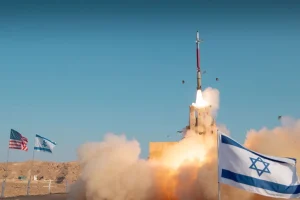
Israel and Slovakia signed a 2 billion shekel ($582 million) agreement on Monday to boost the European country's air defense…
Israel renewed a waiver allowing banks to work with the Palestinian Authority despite terror stipend concerns. Officials warned cutting ties…
The Israel National Cyber Directorate has identified an increase in the volume and sophistication of phishing messages distributed by Iranians…
Enhancing bilateral security cooperation, Israeli and Indian defense officials shared technological expertise and operational expertise on threats posed by aerial drones at a New Delhi seminar that ended on Wednesday.
The Israel Defense Forces confirmed airstrikes on 160 targets in Gaza over the past day while gearing up to resume humanitarian aid ...
By Ehud Amiton/TPS • May 19, 2025
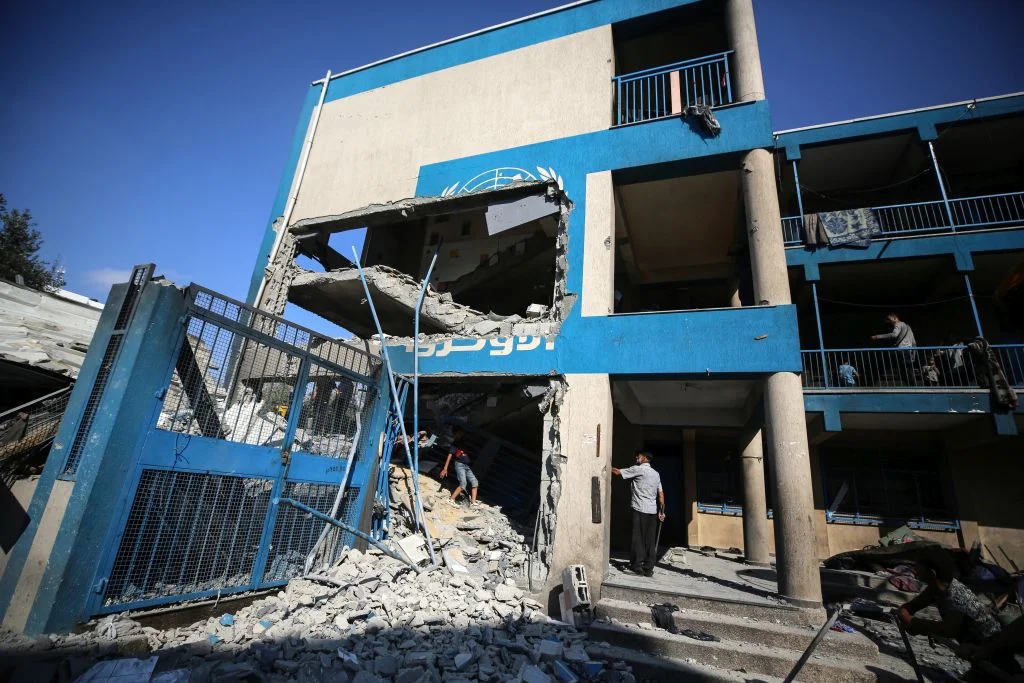
Jerusalem, 19 May, 2025 (TPS-IL) — The Israel Defense Forces confirmed airstrikes on 160 targets in Gaza over the past day while gearing up to resume humanitarian aid deliveries on Monday.
The Air Force struck terror cells, anti-tank missile launch posts, and military structures were struck in northern Gaza, underground infrastructure, and a weapons storage facility were hit in central Gaza, while terror cells, military structures, anti-tank missile launch posts, and booby-trapped structures were struck in southern Gaza.
The IDF did not acknowledge unconfirmed Palestinian reports that undercover Israeli forces in Khan Yunis killed Ahmed Sarhan, a senior commander in the Popular Resistance Committees (PRC). The PRC is a coalition of small Palestinian terror groups opposed to the Palestinian Authority who are fighting alongside Hamas. Sarhan’s body was reportedly brought to one of the Gaza hospitals.
Meanwhile, on Sunday night Israeli Prime Minister Benjamin Netanyahu ordered the resumption of humanitarian aid to Gaza, lifting a blockade imposed in early March. Israel suspended aid deliveries at the beginning of March after Hamas rejected a proposal by U.S. envoy Steve Witkoff to extend the ceasefire through the Islamic holy month of Ramadan and the Jewish Passover holiday.
According to a statement from Netanyahu’s office, Israel will allow a minimal amount of food into Gaza while taking steps to prevent Hamas from seizing the aid. “Israel will act to deny Hamas’s ability to take control of the distribution of humanitarian assistance,” the statement said.
The decision coincides with preparations by the newly formed, U.S.-backed Gaza Humanitarian Foundation (GHF) to begin aid operations in the Strip by month’s end. The initiative—supported by private American firms and endorsed by Israel—aims to establish a secure framework for aid distribution.
Until GHF’s infrastructure is ready, the foundation has requested Israel allow international organizations to resume deliveries under existing procedures.
Under the plan, humanitarian goods will be routed to secure distribution centers in southern Gaza, overseen by the Israeli military. From there, supplies will be handed over to aid agencies. GHF is partnering with UG Solutions for security and Safe Reach Solutions for logistics.
At least 1,180 people were killed, and 252 Israelis and foreigners were taken hostage in Hamas’s attacks on Israeli communities near the Gaza border on October 7. Of the 58 remaining hostages, 36 are believed to be dead.
A pregnant Israeli woman in her 30s is in critical condition following a shooting attack Wednesday night near the community of Peduel, ...
By Sveta Listratov • May 15, 2025
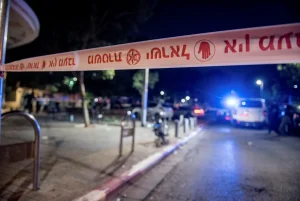
Jerusalem, 15 May, 2025 (TPS-IL) — A pregnant Israeli woman in her 30s is in critical condition following a shooting attack Wednesday night near the community of Peduel, close to Brukhin, in Samaria. Her husband, who was also in the vehicle, sustained light injuries and is currently being treated in the trauma unit at Beilinson Hospital in Petah Tikva.
A security source told The Press Service of Israel that the shooting was not a drive-by, as some initial reports suggested. Instead, the gunmen had set up an ambush and fired from a concealed position at three Israeli vehicles. Two were unharmed; one was struck.
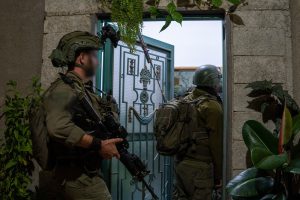
Security forces, led by the commander of the Ephraim Brigade, launched an extensive manhunt in the area. Intelligence and ground forces are pursuing the suspected terrorist, believed to have escaped in a vehicle. The IDF has established roadblocks and imposed a closure on the nearby Palestinian village of Bruqin. Aerial surveillance units and special forces have been deployed to the area. Central Command’s General and the head of IDF operations in Judea and Samaria are holding ongoing situational assessments at the scene.
Beilinson Hospital confirmed the woman remains in critical condition after being evacuated by helicopter. Doctors are fighting to save both her life and that of her unborn baby.
Yossi Dagan, head of the Samaria Regional Council, currently in Washington, said he is coordinating closely with the IDF and following the situation from abroad.
Israel Gantz, head of the Binyamin Regional Council and Chairman of the Judea and Samaria Council, stated:
“This attack is a painful reminder of the urgent need to change the security approach on the ground. As long as we treat terror as isolated events rather than uprooting its sources, Israeli lives will remain at risk.”
In the political arena, both coalition and opposition figures responded in a similar tone, calling for intensified military action and a fundamental shift in Israel’s security strategy in Judea and Samaria.
Prime Minister Benjamin Netanyahu said he was “deeply shocked by the horrific attack on a pregnant woman and her husband,” and pledged that security forces would “settle accounts with the terrorists and those who aided them.”
MK Pnina Tamano-Shata, chair of the opposition “National Unity” faction, condemned the attack:
“Bloodthirsty terrorists shoot pregnant Israeli women without mercy… I pray for the recovery of the wounded woman and her child. Am Yisrael must defend itself and eliminate those who seek to kill us.”
MK Zvi Sukkot from the coalition Otzma Yehudit party called for a decisive military response:
“There’s no difference between the terrorists in Judea and Samaria and those in Gaza. The response must be the same—strike hard and uproot them.”
The Israel Defense Forces reported on Thursday that its Medical Corps has achieved the fastest battlefield medical evacuation times ever ...
By Pesach Benson • May 15, 2025
Jerusalem, 15 May, 2025 (TPS-IL) — The Israel Defense Forces reported on Thursday that its Medical Corps has achieved the fastest battlefield medical evacuation times ever recorded during an armed conflict.
According to data released by the IDF, wounded soldiers in Gaza are now being evacuated to hospitals in an average of just 51 minutes by helicopter and 61 minutes by ground — down from a 90-minute average during the 2014 war.
“This is the fastest recorded in any conflict worldwide,” the IDF said.
Since Israel launched its ground war in Gaza, around 7,400 wounded personnel have been treated by the Medical Corps. Medical teams escort the injured from the battlefield through hospitalization and rehabilitation — often while under fire. In one dramatic moment captured on a medic’s helmet camera, a soldier can be heard saying, “I’m with you — lead me to the injured. Take off your boots, take off everything… Battalion commander, we have five wounded, all conscious… Head injury—conscious. Two lying down. Urgent evacuation needed.”
The military attributed the breakthrough to sweeping reforms, new technologies, and an expanded force of frontline medics.
Where it once took 25 minutes to reach the wounded during the 2006 Second Lebanon War, medics now arrive within one to four minutes. These changes have halved the case fatality rate to 7.1 percent—compared to 15 percent in 2006—and led to a sixfold increase in survival among the critically injured compared to that war, and triple the survival rate seen in 2014.
Technology has played a central role in this evolution. The IDF is working on an automatic smart tourniquet and a drone designed to deliver refrigerated blood directly to the battlefield — with no convoy required. Developed with the Ground Forces’ Technological Division and the Defense Ministry’s research unit, the drone is expected to be operational this summer. Casualty tracking has also improved, with upgraded medical documentation systems that allow real-time updates and coordination between medics and command centers. One of the system’s developers was himself wounded on Oct. 7 and later returned to active service to manage the project.
Beyond the battlefield, RAM-2, a network of hospital-based medical support units for injured troops was boosted. Some 1,300 soldiers are assigned to RAM-2, more than double the number before the war. Among career soldiers treated through RAM-2, roughly 80 percent have returned to duty.
Mental health care has also expanded significantly. Since the war began, over 1,000 mental health officers have been deployed, with more than 80 field missions conducted inside Gaza and Lebanon to offer direct support to combat troops. The IDF recorded 21 suicides in 2024, up from 17 in 2023. While the increase mirrors the rise in personnel, officials have responded with new initiatives, including a mental health hotline and proactive outreach to thousands of soldiers.
A dedicated PTSD clinic called Tatzumot has treated 800 personnel, 90 percent of them combat soldiers. Of those treated in the Combat Reaction Unit, 85 percent have returned to duty. Meanwhile, general healthcare services for soldiers have scaled dramatically. Since the war’s outbreak, the rate of PTSD has tripled among Israeli soldiers.
To streamline care, the IDF has upgraded its medical app, introduced AI-powered tools, and is developing an online health center for remote services. A new partnership with Maccabi Healthcare Services will soon allow soldiers to access lab services at over 400 civilian locations. Wait times for specialists have dropped 20 percent since 2023. Agreements with pharmacy chains have also improved prescription access.
At least 1,180 people were killed, and 252 Israelis and foreigners were taken hostage in Hamas’s attacks on Israeli communities near the Gaza border on October 7. Of the 58 remaining hostages, 36 are believed to be dead.
The fate of Hamas' military leader Muhammad Sinwar remained unclear on Wednesday morning after airstrike targeted what the Israel Defense ...
By Pesach Benson • May 14, 2025
Jerusalem, 14 May, 2025 (TPS-IL) — The fate of Hamas’ military leader Muhammad Sinwar remained unclear on Wednesday morning after airstrike targeted what the Israel Defense Forces said was an underground Hamas command center beneath a Gaza hospital. While the IDF said Sinwar was the intended target, the military has not confirmed if he was killed.
Footage released by the military appeared to show the aftermath of the strike, with large plumes of smoke rising from around the hospital and nearby areas. “We will not allow the Hamas terrorist organization to use hospitals and humanitarian facilities in Gaza as shelters and terrorist headquarters,” said Defense Minister Israel Katz. “We will pursue them and their leaders and strike them everywhere.”
The IDF emphasized it had taken measures to avoid civilian casualties, including the use of precision-guided bombs and real-time aerial surveillance. “The Hamas terror organization continues to use hospitals in the Gaza Strip for terror purposes, cynically and cruelly exploiting the civilian population in and around the hospital,” the military said.
Several hours after the strike, additional explosions were reported near the hospital. Online footage showed parts of the ground collapsed in the vicinity of the blast, consistent with subterranean infrastructure.
Sinwar, a longtime Hamas operative, rose to the top of Hamas following the death of Muhammad Deif in a July airstrike and his older brother Yahya, who was killed during a chance encounter with soldiers in October.
Mohammed Sinwar is described as a staunch opponent of a negotiated end to the war and the release of hostages. He is also firmly in the terror group’s pro-Iran camp. In the 1990s, he was jailed by Israel for nine months and later imprisoned by the Palestinian Authority for three years before escaping in 2000. In 2006, Sinwar was involved in the abduction of IDF soldier Gilad Shalit and later commanded Hamas’s Khan Yunis Brigade.
In the hours following Tuesday’s strike, three rockets were launched from northern Gaza at Ashkelon and Sderot in southern Israel. Two were intercepted and one fell in an open area, according to the IDF. There were no injuries, and Palestinian Islamic Jihad claimed responsibility.
The military also issued an evacuation warning for residents of Jabalia in northern Gaza. IDF Arabic-language spokesman Col. Avichay Adraee posted a map online, calling it a “final warning” before further strikes.
On Tuesday, Israel struck part of the Nasser Hospital in Khan Yunis where Hamas operatives had set up a command and control center. Ismail Barhoum, a member of the Hamas politburo and the terror group’s financial chief, was killed in an airstrike in the same hospital in March.
Eighty-five percent of Gaza’s hospitals have been used by Hamas and Palestinian Islamic Jihad for terror according to the Israel Defense Forces.
As reported by The Press Service of Israel in 2023, Hamas made extensive use of the Shifa Hospital, Gaza’s largest medical center. Hamas launched rockets from its compound, hid hostages in the bowels of the building, tortured collaborators, and dug tunnel shafts.
Other Palestinians told Israeli interrogators Hamas deeply embedded itself in the Palestinian Red Crescent Society to use hospitals and clinics as a base for attacks.
At least 1,180 people were killed, and 252 Israelis and foreigners were taken hostage in Hamas’s attacks on Israeli communities near the Gaza border on October 7. Of the 58 remaining hostages, 36 are believed to be dead.
UNIFIL announced on Monday its peacekeeping forces in southern Lebanon have uncovered more than 225 weapons caches since the ...
By Pesach Benson • May 13, 2025
Jerusalem, 13 May, 2025 (TPS-IL) — UNIFIL announced on Monday its peacekeeping forces in southern Lebanon have uncovered more than 225 weapons caches since the Israel-Hezbollah ceasefire went into effect in November.
“Since November, with UNIFIL support, the [Lebanese Armed Forces] has redeployed to more than 120 permanent positions south of the Litani. Full deployment is hindered by the presence of Israeli forces in Lebanese territory. Peacekeepers have found over 225 weapons caches and referred them to the LAF,” UNIFIL tweeted.
Under the terms of the ceasefire that went into effect on November 27, the Iran-backed Hezbollah is supposed to withdraw its armed presence from areas of southern Lebanon. Israel continues to launch airstrikes targeting Hezbollah figures, weapons smuggling and stockpiles in southern Lebanon. On May 8, the Israeli Air Force struck Hezbollah-linked sites in southern Lebanon after ceasefire violations. Days earlier, the IDF killed senior Hamas and Hezbollah operatives involved in cross-border attacks and arms trafficking, and hit weapons facilities across Lebanon.
The United Nations Interim Force in Lebanon was established in 1978 to confirm Israel’s withdrawal from Lebanon. The “Blue Line” demarcating the 120 km-long Israeli-Lebanese border was created in 2000 by UN cartographers to verify Israel’s withdrawal from Lebanon, which the UN Security Council later certified as complete. The border runs from Rosh HaNikra on the Mediterranean coast to Mount Dov, where the Israeli-Lebanese border converges with Syria.
According to UN Security Council Resolution 1701, which ended the 2006 Second Lebanon War, Hezbollah is forbidden from operating in southern Lebanon south of the Litani River.
For years, Israeli officials have been critical of the peacekeepers for failing to prevent Hezbollah from entrenching itself in southern Lebanon. After the Hamas attacks of October 7, 2023, Hezbollah began launching rockets and launching drones at northern Israel communities daily.
Meanwhile, the Wall St. Journal reported on Saturday that the Lebanese government is cracking down on Hezbollah’s presence at Beirut’s Rafik Hariri International Airport, firing personnel associated with the terror group, detaining smugglers, and upgrading surveillance.
Crystal Ball: A Collaborative, Multilateral GenAI Threat Intelligence Platform
RSA Conference 2025, San Francisco
The FBI’s 2024 Internet Crime Report revealed $16.6 billion in losses reported to the Crime Complaint Center over the past year. Ransomware posed the greatest threat to critical infrastructure, with a 9 percent increase in complaints compared to 2023.
The International Counter Ransomware initiative (CRI) is currently recognized as the largest international cybersecurity collaboration partnership for combating cybercrime at state level and specifically addressing ransomware. The CRI lead chair has increased its partners from 35 in 2022 to 72 as of the 30th of april 2025, and continues to expand.
At present, more than 30 nations, including US: The FBI, CISA, Department of Treasury, Singapore, UAE, Germany, Albania, Israel, Belgium, Spain, and others, are actively using and sharing on the Crystal Ball Platform. About 15 nations are actively considering near onboarding. The goal is to reach 50 connected nations by the end of the year.
Over the past three years, the UAE Cyber Security Council (CSC), Israel National Cyber Directorate (INCD) and Microsoft have developed “Crystal Ball,” an AI threat intelligence platform for the CRI coalition. It is based on the values of Attribution, Deterrence, and Culture, powered by GenAI at the core.
At the RSA Conference, members of the CRI coalition, including the United States, Germany, Italy, Canada, Czech Republic, Israel, UAE, Netherlands, and others, are convening to discuss establishing trust, exchanging information, and collaborating on the Crystal Ball Platform for collective defense and global resiliency under the CRI.
During RSAC, the new integrations and partnerships were showcased to demonstrate the collaborative and threat sharing capabilities of the Crystal Ball Platform, including the integration with blockchain intelligence firm Chainalysis, which offers insights into the risks associated with cryptocurrency. Another notable example is integration with Microsoft Security Copilot – a generative AI-powered security solution that provides a natural language, assistive copilot experience to support security professionals in incident response, threat hunting, intelligence gathering, and posture management also showcased in the event integrations of the platform with Malware Information Sharing Platform (MISP), NIST, and MITRE ATT&CK.
To encourage utilization and build confidence and trust, in April UAE CSC and INCD conducted International CRYSTAL BALL CYBER DRILL:NATIONS UNITE. This drill provides a unique opportunity to the CRI partners to engage with real-world threats, foster international collaboration, and leverage the Crystal Ball Platform recently announced capabilities.
His Excellency, Dr. Mohamed Al Kuwaiti, Head of the Cyber Security Council, The United Arab Emirates
“As we enter the third year of the Crystal Ball international partnership, I am truly proud of the remarkable progress we’ve achieved. With over 30 nations now actively adopting and utilizing the platform and many more nations are planning to onboard, this initiative has demonstrated its global relevance, success, and impact. Building on this momentum, we are now planning to expand the scope of our partnership and deepen system integration. Our goal is to enhance the platform’s resilience and robustness, ensuring it can effectively meet the growing demands of cyber deterrence and combat the evolving threats posed by cybercrime worldwide.”
Deputy Director General of the INCD, Executive Director for Defense, Mr. Nitzan Amar
stated after the Drill: ” As part of the first multinational cybersecurity drill on Crystal Ball, participating CRI countries engaged in a coordinated drill and shared cyber threat intelligence to collectively investigate, contain, and remediate complex cyber incidents.
The drill not only demonstrated the platform’s capacity to enable trusted, cross-border information exchange, but also underscored the transformative role of AI in strengthening international cyber cooperation and resilience.
CRI countries now have an operational and secure platform to collaborate effectively, share timely information, and jointly combat cybercrime with greater speed, coordination, and resilience.
Vasu Jakkal, Corporate Vice President, Microsoft Security
The Crystal Ball Initiative is a visionary project that exemplifies forward-thinking in cybersecurity. We are proud of the way it harnesses the power of AI and international collaboration for current threats, and importantly, future challenges. We continue to invest with the aim of enhancing threat actor attribution to combat cybercrime more effectively.
Faced with mounting threats to its food supply, Israel unveiled its National Food Security Plan 2050 on Monday, laying out a sweeping ...
By Pesach Benson • May 12, 2025
Jerusalem, 12 May, 2025 (TPS-IL) — Faced with mounting threats to its food supply, Israel unveiled its National Food Security Plan 2050 on Monday, laying out a sweeping strategy to prepare the country for climate shocks, labor shortages, and increased dependence on food imports. The plan, presented by the Ministry of Agriculture and Food Security in cooperation with other government bodies, will require an estimated investment of NIS 2.5 billion-5 billion ($710 million-$1.4 billion).
“The risks are clear and immediate,” warned Minister of Agriculture and Food Security Avi Dichter at the conference. “Without decisive, coordinated action, we face a future of shortages, instability, and weakened national resilience.”
Climate change is expected to slash agricultural yields by tens of percent across multiple crops, while Israel’s population is projected to soar to 16.5 million by 2050, leading to a 65% increase in food demand, the ministry said. At the same time, the workforce needed to sustain food production is shrinking, with a deficit of about 5,000 workers today expected to balloon by another 10,000 within five years.
“We are looking at an enormous increase in demand and a simultaneous decline in our ability to supply food locally. The existing gap, if left unaddressed, will only grow wider,” said the Agriculture Ministry’s Director General, Oren Lavie
Compounding the crisis is Israel’s dependence on imports for critical food categories: 97% of sugar and confectionery products, 92% of fish, 91% of grains, and 71% of legumes come from abroad — often from just one or two source countries. This makes Israel highly vulnerable to global disruptions, trade restrictions, or climate disasters elsewhere, the ministry noted.
Brig. Gen. (res.) Itzik Bar, Deputy, Head of the National Security Council for Security Policy, cautioned, “In times of war, political upheaval, or supply chain breakdowns, we cannot afford to rely on others for our basic needs. Food security is national security.”
Food loss is another urgent concern. According to figures presented at the conference, Israel wastes over 2.6 million tons of food annually, amounting to more than a third of total local production, with an economic cost estimated at NIS 24.3 billion ($6.8 billion) each year.
“Wasting food not only drains our economy, it undermines the health and stability of our society,” said Dr. Sharon Alroy-Preis, Head of Public Health Services at the Ministry of Health.
Against this backdrop, the National Food Security Plan sets out a series of long-term objectives, with targets for 2030 and 2040. Its four strategic pillars are promoting healthy and sustainable diets, ensuring continuous food availability, strengthening production and import capacity, and building long-term resilience.
To achieve these goals, inter-ministerial working groups recommended expanding local agricultural production, particularly in fish, legumes, vegetables, and olive oil; fostering food-tech and agri-tech innovation; creating digital platforms for data and surplus food management; and redesigning import strategies to diversify suppliers and reduce risk.
The Food Industries Group proposed financial incentives and potential taxes to encourage healthier food production and consumption, addressing both health and environmental burdens, which are currently estimated to cost over NIS 55 billion ($15.5 billion) per year.
Meanwhile, the Food Loss Group set ambitious goals: cutting food loss per capita by 20% by 2035, and by half by 2050. Measures such as real-time digital trading platforms for surplus food and improved infrastructure to redirect excess production were among the tools recommended.
Despite the plan’s scope, officials emphasized that Monday’s presentation is only the beginning. “We have the blueprint,” said Dichter. “But translating it into reality will require constant monitoring, annual data updates, and flexibility to adapt to new challenges.”
Staff Sgt. Edan Alexander, a 21-year-old Israeli-American soldier, was freed after 584 days in Hamas captivity, returning to Israel in an ...
By Pesach Benson • May 12, 2025
Jerusalem, 12 May, 2025 (TPS-IL) — Staff Sgt. Edan Alexander, a 21-year-old Israeli-American soldier, was freed after 584 days in Hamas captivity, returning to Israel in an emotional moment that briefly paused fighting in Gaza.
In a video shared by the Prime Minister’s Office, Alexander’s mother, Yael, is heard speaking to him for the first time since his release. “You are strong. You are safe. You are home. We’ll see each other soon. I love you,” she told her son by phone.
After reuniting with his family and an initial medical checkup near the Gaza border, Alexander was being transferred to Tel Aviv’s Ichilov Hospital.
Prime Minister Benjamin Netanyahu called Alexander’s return a “very emotional moment,” crediting “military pressure and the diplomatic pressure applied by President Trump” for securing the release, which he described as a “winning combination.”
Alexander, a 21-year-old IDF soldier from the Golani Brigade, was abducted on October 7, 2023, during Hamas’s attack on Israel. Serving as a lone soldier without immediate family in Israel, he was captured at the Kissufim military post near the Gaza border after volunteering to stay on duty while others were on leave.
US Senator Cory Booker of New Jersey, Alexander’s home state, said he was “overjoyed” at the news, urging the immediate release of all other hostages, “living or dead,” and called for a recommitment to a Gaza ceasefire and expanded humanitarian aid.
The Israeli Air Force temporarily suspended operations in Gaza to allow for Alexander’s safe transfer.
Alexander’s release was celebrated by other hostage families.
Jon Polin and Rachel Goldberg-Polin — whose son Hersh was murdered in Hamas captivity — said, “In 584 days, we’ve come to know and love the Alexander family,” said Jon Polin, whose son, Hersh, was murdered in Hamas captivity. “Today we are celebrating with all of you.”
Rachel Goldberg-Polin added, “Most important, Edan, we’ve grown to love you without ever having met you. We’re so relieved that you are home, welcome home.” Yet, she reminded the public, “We have 58 more people that have to come home.”
Kibbutz Nir Oz, from which many hostages were taken, also welcomed the news but issued a somber statement highlighting ongoing anguish. “Every abductee who returns is a great light in the darkness we find ourselves in,” the kibbutz said in a statement. However, it added, “It is difficult to ignore the difficult message… An abductee with an American passport is given priority, while the other 58 abductees are left behind—14 of whom are members of the Nir Oz community.”
At least 1,180 people were killed, and 252 Israelis and foreigners were taken hostage in Hamas’s attacks on Israeli communities near the Gaza border on October 7. Of the 58 remaining hostages, 36 are believed to be dead.
Israel was preparing for the expected release of Israeli-American hostage Edan Alexander on Monday after being held captive by Hamas for ...
By Pesach Benson • May 12, 2025
Jerusalem, 12 May, 2025 (TPS-IL) — Israel was preparing for the expected release of Israeli-American hostage Edan Alexander on Monday after being held captive by Hamas for 584 days.
His imminent release comes as part of an arrangement between Hamas and the US, following talks described by Hamas as an effort to promote a ceasefire, reopen border crossings, and allow humanitarian aid into Gaza. US special envoy to the Middle East Steve Witkoff personally informed Alexander’s parents, Yael and Adi, of the news on Sunday, and they immediately flew to Israel with US hostage envoy Adam Boehler to be present for their son’s arrival. Witkoff, traveling separately from Oman where he had been holding nuclear talks with Iran, is expected to join them.
Prime Minister Benjamin Netanyahu’s office confirmed that the United States informed Israel of Hamas’s decision to release Alexander “without any compensation or conditions,” describing it as a goodwill gesture toward Washington. “According to Israeli policy, the negotiation will take place under fire, with a firm commitment to achieving all the objectives of the war,” Netanyahu’s office said.
Alexander, a 21-year-old IDF soldier from the Golani Brigade, was abducted on October 7, 2023, during Hamas’s attack on Israel. Serving as a lone soldier without immediate family in Israel, he was captured at the Kissufim military post near the Gaza border after volunteering to stay on duty while others were on leave.
A spokesperson for Tel Aviv’s Ichilov Hospital confirmed preparations were being made to receive Alexander.
Boehler called the development “a positive step forward,” adding on social media, “We would also ask that Hamas release the bodies of four other Americans that were taken.” Among the 59 hostages still held by Hamas are the remains of Americans Itay Chen, Omer Neutra, Gadi Haggai, and Judith Weinstein Haggai. US officials believe up to 24 hostages are still alive.
The Hostage Families Forum, while welcoming the news, emphasized that Alexander’s release must not be the end of the effort. “The expected release of Edan shows that a determined leader is committed to his citizens,” the group said in a statement, pointedly refraining from naming former President Donald Trump, whose diplomatic push is credited with the breakthrough.
Turning its focus on Israeli leadership, the forum urged Netanyahu to act. “Prime minister, what of your commitment to the 58 remaining hostages?” it challenged. “Will you choose to make history, to return all of them and allow Israeli society to recover? Or will you continue playing for time and dodging responsibility at the cost of shredding Israeli society, seriously harming the hostages and preventing the possibility of returning the remains [of those killed]?”
Hamas has stated its readiness to release all hostages in exchange for an end to the war. Netanyahu has so far rejected such proposals, warning that a ceasefire without dismantling Hamas would allow the terror group to remain in power.
Qatar and Egypt welcomed the decision to release Alexander in a joint statement, calling it “a gesture of goodwill and an encouraging step toward a return to the negotiating table” aimed at reaching a ceasefire, securing the release of prisoners, and facilitating humanitarian aid for Gaza’s civilians.
At least 1,180 people were killed, and 252 Israelis and foreigners were taken hostage in Hamas’s attacks on Israeli communities near the Gaza border on October 7. Of the 59 remaining hostages, 36 are believed to be dead.
Edan Alexander has returned home. We embrace him and we embrace his family. This was achieved thanks to our military pressure and the diplomatic pressure applied by President Trump. This is a winning combination.
Prime Minister Benjamin Netanyahu, this evening (Monday, 12 May 2025) [translated from Hebrew]:
“This is a very emotional moment – Edan Alexander has returned home. We embrace him and we embrace his family.
This was achieved thanks to our military pressure and the diplomatic pressure applied by President Trump. This is a winning combination.
I spoke with President Trump today. He told me ‘I am committed to Israel. I am committed to continuing to work with you in close cooperation’ – in order to achieve all of our war objectives: Releasing all of the hostages, and defeating Hamas.
This goes together. They are combined with each other.”