














Three Officers Injured After Suspect Ignites Gasoline at Gas Station
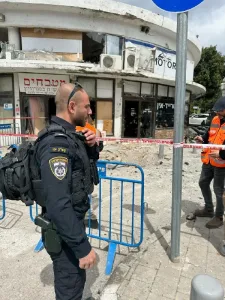
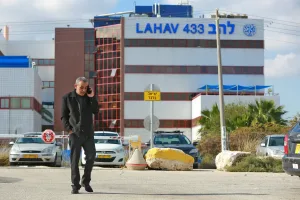
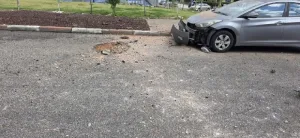
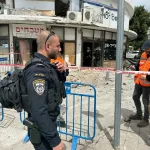
Three Israeli police officers were injured, one moderately, in Kiryat Bialik after a suspect ignited gasoline at a gas station. The 33-year-old man was.


Three Israeli police officers were injured, one moderately, in Kiryat Bialik after a suspect ignited gasoline at a gas station. The 33-year-old man was.
Israel's Supreme Court lifts secrecy on a high-profile reservist espionage case, revealing Assaf Shmuelevitz, accused of infiltrating IDF Southern Command…
Israel's IDF eliminated Hezbollah officer Abu Ali Salameh in Lebanon's Yanouh on Jan 21, 2026 for enabling terror infrastructure and…
Israel Police ease Temple Mount prayer restrictions, allowing Jewish visitors to bring pre-prepared prayer pages for the first time in…
An Israeli counterterror raid in Nablus on January 11 resulted in friendly fire due to navigation errors. Despite the incident, no injuries were reported.
By Ehud Amiton • January 21, 2026
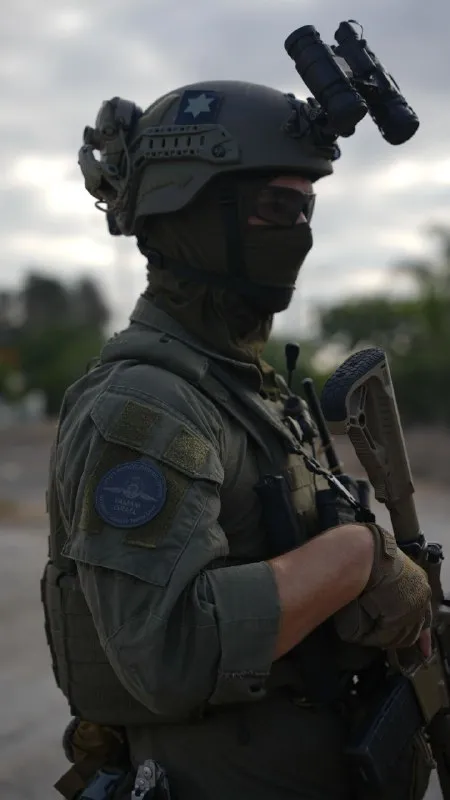
Jerusalem, 21 January, 2026 (TPS-IL) — An Israeli counterterror operation in the Shechem (Nablus) kasbah resulted in a serious friendly fire incident after fighters mistakenly identified another force from the unit as an armed threat, the Israel Defense Forces said.
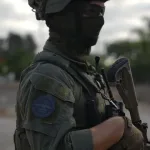
According to the IDF, the January 11 incident occurred due to a navigation error that placed one team from the elite Duvdevan unit inside the sector of a neighboring detachment, leading to gunfire directed at a building. Duvdevan is a commando unit known for its undercover raids with soldiers often disguised as Arabs.
No casualties were reported and two wanted terror suspects were arrested.
The IDF said an investigation found flaws in planning and execution, leading to disciplinary measures, including dismissals and command remarks.
Israeli Defense Minister Israel Katz met his Greek counterpart Nikos Dendias in Athens, deepening defense cooperation and discussing counter-drone and missile.
By Kostis Konstantinou • January 20, 2026
Jerusalem, 20 January, 2026 (TPS-IL) — Israeli Defense Minister Israel Katz was in Athens on Monday for talks with his Greek counterpart, Nikos Dendias, highlighting strategic defense ties between the two countries.
The visit builds on an already close defense relationship that includes joint military exercises, pilot training programmes hosted in Greece, and a recently agreed trilateral military work plan with Cyprus for 2026.
Dendias said cooperation between the two countries continues to deepen, particularly in counter-drone capabilities, cybersecurity, and the exchange of operational experience. He noted that discussions also addressed developments in the Red Sea and Yemen, as well as security challenges in the Balkans and the Eastern Mediterranean.
Speaking after the meeting, Dendias reiterated Greece’s condemnation of the October 7 attacks on Israel and reaffirmed Athens’ support for Israel’s right to self-defence. He added that Greece backs international initiatives aimed at stabilising Gaza and is prepared to contribute to broader efforts to promote peace and regional security. He also stressed the importance of protecting civilian populations and religious communities in Syria and Lebanon, with particular emphasis on Christian minorities.
In his remarks, Katz said Israel remains on heightened alert amid what he described as “a conflict fought across seven fronts,” warning that efforts to impose control through terrorism or regional destabilisation would face a coordinated international response. He also referred to Israel’s ongoing efforts to recover the remains of hostages and fallen soldiers held by Hamas, calling it both a moral and national obligation.
Greek media reported that the Athens talks were closely linked to wider discussions on advanced air and missile defence systems, counter-drone technologies, and maritime security. According to those reports, Israeli systems are being examined as part of Greece’s planned multi-layered air defence architecture, although no formal procurement decisions have been announced.
The trilateral cooperation includes the formation of an Eastern Mediterranean rapid response team, joint exercises and training, and working groups addressing shared security challenges — most notably Turkey.
Turkish President Recep Tayyip Erdogan has condemned the Israeli-Greek-Cypriot military cooperation, saying it threatens Ankara’s interests in the region.
Israeli military reports an 80% fall in terror attacks in Judea and Samaria during 2025, with 57 Palestinian attacks causing 20 deaths, down from 258.
By Pesach Benson • January 19, 2026
Jerusalem, 19 January, 2026 (TPS-IL) — The Israel Defense Forces reported a sharp decline in Palestinian attacks in Judea and Samaria last year, while incidents of violence by extremist Jews surged, according to figures released Monday by the IDF’s Central Command.
In 2025, the IDF recorded 57 attacks by Palestinians against civilians and soldiers, resulting in 20 deaths, compared with 258 attacks and 35 deaths in 2024. Two additional soldiers were killed in an attack originating from Jordan. “Sustained offensive activity in northern Samaria refugee camps, combined with ongoing security operations, contributed to the decrease in attacks,” an IDF spokesperson said.
The number of Palestinians killed by Israeli forces fell to 240, down from around 500 in 2024. The military said that roughly 96 percent of those killed were involved in attacks or clashes, while about 40 percent were armed with firearms or explosives. “Fewer than 4 percent of the casualties were uninvolved civilians,” the spokesperson added. Stone-throwing and Molotov cocktail incidents also declined, from 1,230 in 2024 to 1,015 in 2025.
The IDF also noted an increase in counterterror raids targeting Palestinians. According to the figures, 3,486 Palestinians were detained in 2025, up from 2,694 in 2024, and 37 homes belonging to terrorists were demolished or sealed. The military carried out 57 airstrikes in Judea and Samaria, killing 51 suspected terrorists. Officials said Iranian-backed groups and Hamas-linked cells abroad have helped organize armed units in northern refugee camps, including Jenin and Tulkarem.
Illegal crossings into Israel remain a concern. The army reported that 8,636 Palestinians entered the country without permits last year, with just under half captured. “Between 50,000 and 70,000 Palestinians now reside illegally in Israel,” the spokesperson said. The IDF is also reviewing border security along Jordan and monitoring potential weapons-smuggling routes.
Economic conditions are further fueling tensions. Before the Hamas attacks of October 7, 2023, unemployment in Judea and Samaria was roughly 12–13 percent. It spiked to 35 percent during the conflict and currently stands near 30 percent, with only about 26,000 Palestinians permitted to work in Israel or Israeli communities. Military officials said expanding legal work opportunities could help ease unrest.
Looking ahead, Central Command plans to maintain a strong presence in refugee camps and critical areas, even as troop levels in Judea and Samaria are reduced from 2,064 to 1,200 in 2026 due to budget constraints. “Our aim is to neutralize terrorist networks while preventing escalation on other fronts,” said Maj. Gen. Avi Bluth, head of Central Command. “We are focused on operational control, security, and stabilizing the region amid complex social and economic pressures.”
At the same time, the IDF and the Israel Security Agency (Shin Bet) reported a sharp rise in violent acts by extremist Jews. Central Command data showed that 867 “nationalist crime” incidents occurred in 2025, an increase of 27 percent compared with 682 incidents the previous year. Severe attacks, including arson, shootings, and vehicle rammings, rose from 83 to 128 incidents.
“These acts are carried out by a small but organized group of about 300 individuals,” a senior IDF official said. “Of those, roughly 70 are considered hardcore extremists responsible for the most severe attacks.” Central Command has imposed restraining orders and house arrests on 39 of the most active extremists, with limited use of electronic monitoring.
Iran weaponizes AI for covert influence campaigns targeting Israel and Western societies, experts warn. This new strategic priority significantly heightens the.
By TPS-IL • January 19, 2026
Jerusalem, 19 January, 2026 (TPS-IL) — As Iran’s regime violently cracks down on unrest at home, Tehran is accelerating a quieter campaign abroad. Experts tell The Press Service of Israel that Iran is increasingly turning to artificial intelligence to supercharge covert influence operations targeting Israel and Western societies, reshaping how disinformation and manipulation are carried out.
For years, Iran has relied on fake online personas, coordinated social media activity, and low-cost psychological pressure. What is changing, analysts warned TPS-IL, is the toolset. Artificial intelligence enables Iranian actors to imitate real people more convincingly, operate across languages fluently, and push narratives at a scale and speed previously difficult to sustain.
The concern is not only technological but strategic. Iran’s expanding use of AI in covert influence campaigns comes amid weeks of internal instability. As the regime suppresses widespread anti-government protests, Tehran is formalizing AI as a national strategic priority. That convergence, analysts warned, could significantly increase the long-term threat to democratic societies.
AI allows Tehran and the regime’s supporters to manufacture images of support or amplify claims when information from inside Iran is tightly restricted. In that environment, AI-driven manipulation becomes harder to verify and easier to weaponize.
“There is no ability today to systematically identify AI-driven influence campaigns,” Danny Citrinowicz, a senior researcher in the Iran and Shi’ite Axis Program at Tel Aviv University’s Institute for National Security Studies, told TPS-IL.
Iran’s interest in AI is not limited to hackers or marginal influence operators. According to analysis published in December by Dr. Avi Davidi of the Jerusalem Institute for Strategy and Security, the drive comes from the top.
As recently as April, Iran’s supreme leader Ayatollah Ali Khamenei described AI as a strategic national issue, warning that future international frameworks could limit access to advanced technologies. He urged Iran to develop what he called the “deep layers” of AI rather than rely on foreign systems.
That directive has been translated into policy. Iran’s parliament approved a National Artificial Intelligence Document outlining state goals, followed by legislation establishing a National Artificial Intelligence Organization under the president’s office. Senior commanders in the Islamic Revolutionary Guard Corps (IRGC) have also spoken openly about using AI in military planning, cyber activity, and decision making.
Davidi’s analysis portrays a regime that sees AI not as a side project but as part of its long-term approach to security and power.
According to Citrinowicz, “The regime uses it to create the impression of broad public support.”
He added that AI manipulates the apparent size of crowds in photos and helps the regime portray protesters as rogue activists seeking to harm Iran. “People are being killed in the streets,” he said. “But when everything is shut down inside Iran, AI makes it easier to convince outside audiences.”
As internal challenges mount, Davidi documents Iranian-linked actors exploiting Western-developed AI tools to enhance cyber and influence operations abroad.
One example is the influence group STORM 2035. According to OpenAI reporting cited in Davidi’s analysis, actors tied to the group used ChatGPT to generate content for fake news sites and social media accounts in multiple languages, including English, Arabic, French, and Spanish. The content focused on polarizing issues such as the Israel–Hamas war, U.S. politics, and social divisions in Western societies, enabling Iran to push messaging that appeared local while concealing its origin.
AI is also used for technical cyber activity. Hackers operating under the CyberAv3ngers persona, linked to the IRGC, used generative AI tools to scan networks, research vulnerabilities, and identify common passwords. OpenAI and Google Cloud reporting cited by Davidi shows the group focused on infrastructure and industrial control systems in Israel and parts of Europe, using AI to speed reconnaissance rather than invent new attack methods.
Another group, APT 42, specializes in social engineering and credential theft. Google Cloud research cited by Davidi indicates the group uses AI to tailor phishing messages, research vulnerabilities, and simulate attack scenarios, improving their ability to impersonate targets across languages and cultures.
OpenAI and Google Cloud did not respond to TPS-IL queries.
These AI-enabled tactics build on a longer pattern. Over the past several years, Iran has run sustained covert campaigns to shape discourse inside Israel and abroad.
In 2022, researchers exposed an Iranian-linked Facebook network posing as Israelis and Palestinians to spread disinformation. More recently, Israeli security officials warned of suspected Iranian operations targeting the Arab community ahead of elections, as well as bot-driven efforts encouraging graffiti and provocation to inflame internal tensions.
Iranian actors have also been linked to phone hacking and unauthorized access attempts against senior Israeli figures, part of a long-range strategy of pressure rather than isolated cyber incidents.
Experts say AI is accelerating these efforts, allowing Iran to produce more convincing content, operate across languages fluently, and expand its reach to North America and Europe.
Israel’s National Cyber Directorate told TPS-IL that while it operates “around the clock” to address cyber threats, public awareness is critical to prevent the spread of unverified content. “Ultimately, public awareness is the first line of defense against influence operations, with or without AI,” a spokesperson said.
Citrinowicz noted that Iran’s AI-driven influence efforts intensified after Hamas’ October 7, 2023, attack as Tehran sought to weaken Israeli society from within.
AI has reduced gaps that once made Iranian campaigns easier to spot, particularly around language and cultural cues. Deepfakes, avatars, and AI-generated personas are far harder to identify systematically, even as Israel maintains strong cyber defenses.
“Everything we’ve seen, from phone hacking to covert social media campaigns, follows the same logic,” he said. “The goal is to weaken Israeli society internally.”
Israel is due to hold national elections by the end of October, and Citrinowicz warned that Iranian AI operations could severely manipulate the vote. “Artificial intelligence changes the game because it significantly improves Iran’s ability to operate credibly inside Israeli society. This is a very disturbing development,” he stressed.
State Comptroller, Matanyahu Englman has already warned that Israel’s preparations for foreign interference in the elections were “deficient.”
Moran Alaluf, an independent researcher on Iran, described AI as a ״force-multiplier״ for Tehran, enabling it to tailor messages to different audiences at a scale impossible with human operators alone. She warned Iran is likely pursuing independent AI capabilities through cooperation with allies such as China and Russia, while exploiting Western tools in the meantime.
Alex Grinberg, an Iran researcher at the Jerusalem Institute for Strategy and Security, offered a less pessimistic view. While acknowledging Iran’s technological progress, he noted ideological blind spots and a tendency to project a totalitarian mindset onto democratic societies can expose Iranian operations. Mistakes continue to reveal campaigns, he said.
“Iran is moving from basic tactics like phone hacking to advanced technologies, but it still has clear limitations. Their demonization of Israel prevents them from fully understanding Israeli society, often exposing their influence campaigns,” he said.
All experts agreed that the burden increasingly falls on Western societies to verify what they see online.
They also noted Iran’s AI targeting methods are similar in Israel and abroad – aimed at weakening societies internally and tarnishing Israel’s name – though the scale of activity inside Israel is far greater.
In the U.S. and Europe, Iran has used AI to exploit existing political and social divisions. Iranian-linked actors have generated large volumes of tailored content on elections and the Israel–Hamas war, presenting it as local opinion and creating fake profiles to raise funds for pro-Palestinian causes such as the 2025 Gaza flotilla. More recently, Britain’s Daily Telegraph reported a wave of pro-Scottish independence accounts on X abruptly going dark after Iran imposed a internet blackout.
Taken together, the assessments point to a clear trend: Iran’s use of AI in cyber and influence operations may be uneven and opportunistic, but combined with leadership-driven AI development, it creates a growing long-term risk.
Dr. Daniel Cohen, head of the Policy and Technology Program at the Abba Eban Institute at Reichman University, told TPS-IL that Iran’s use of AI goes beyond deepfakes or synthetic avatars.
“This is going to be a war over knowledge itself,” Cohen said. “The Iranians will try to plant messages inside the sources that train AI models. People will then receive disinformation that serves Iranian interests. That is how knowledge gets shaped. They learned this from Russia.”
Preparing for this next phase requires ensuring AI systems are trained on reliable, authentic information. “We need to be ready for this battle over knowledge so that future AI models are grounded in verified sources, not manipulated narratives,” he said.
Cohen added that as countries race to develop AI, Iran’s covert influence campaigns against Israel and the West are likely to become increasingly sophisticated, scalable, and automated.
Two Israeli-Arabs were arrested for smuggling over 500 M16 ammunition rounds to Palestinian terror contacts in Judea and Samaria after a Shin Bet probe.
By Pesach Benson • January 15, 2026
Jerusalem, 15 January, 2026 (TPS-IL) — Two Israeli-Arabs from Lod and a Palestinian resident of Samaria were arrested on suspicion of transferring weapons components intended for terrorist operatives in Judea and Samaria, it was cleared for publication on Thursday.
A joint investigation by the Israel Security Agency (Shin Bet) and Israel Police led to the arrest of Hamdan Essam Abu Lebeda, 25, and Muhammad Hassan Khalil Amsaad, 25, both residents of Lod. Also detained was Ahmed Muhammad Saleh Awad, 33, a Palestinian resident of the village of Urta, near Shechem (Nablus).
The investigation was launched after Amsaad was apprehended while attempting to enter Judea and Samaria carrying more than 500 rounds of M16 ammunition. Following his arrest, the case was transferred to the Shin Bet for further questioning.
According to investigators, Amsaad admitted that the ammunition was intended for Awad, who maintains contacts with terrorist operatives in Judea and Samaria and assists them in acquiring weapons. The probe further revealed that Abu Lebeda was the source of the ammunition and that he acted together with Amsaad to transfer weapon parts to Awad inside the territory.
Upon completion of the investigation, the Central District Attorney’s Office is expected to file indictments against the two Israeli suspects. The case involving Awad is being handled by the military prosecution in Samaria.
Three Bedouin men were arrested in Israel for robbing a Hebron-area jewelry store while impersonating IDF soldiers, using uniforms and a disguised vehicle.
By Pesach Benson • January 13, 2026
Jerusalem, 13 January, 2026 (TPS-IL) — Three Bedouin men were arrested Tuesday after allegedly robbing a jewelry store in the Hebron-area village of Dahariya while impersonating Israeli security forces, police said.
According to police, the suspects arrived at the store in a vehicle disguised as an official security vehicle, equipped with flashing lights. They were dressed in Israeli Defense Forces (IDF) uniforms and protective gear and were armed. Investigators say the men broke into the Palestinian-owned jewelry store, stole its contents, and then attempted to flee south.
Video circulating on social media showed armed, masked men wearing IDF uniforms outside one shop.
“We emphasize that these are not IDF soldiers,” the IDF said.
Police officers, soldiers and member of the Border Police launched an immediate search operation, locating the suspects in the Palestinian village of Samu’a, south of Hebron.
Police confiscated three M16 rifles and one pistol from their possession.
Israel's IDF arrested several men posing as soldiers who robbed Palestinian shops in the Hebron-area village of Dhahiriya, emphasizing they are not real troops.
By Ehud Amiton • January 13, 2026
Jerusalem, 13 January, 2026 (TPS-IL) — The Israel Defense Forces arrested several men suspected of impersonating soldiers and robbing Palestinian shops in the Hebron-area village of Dhahiriya on Tuesday. The IDF added that soldiers are pursuing additional suspects.
Video circulating on social media showed armed, masked men wearing IDF uniforms outside one shop.
“We emphasize that these are not IDF soldiers,” the IDF said.
Israel raises alert over escalating Iran turmoil and US tensions, while the IDF denies any role in protests. Over 648 reported dead as Tehran warns of.
By Pesach Benson • January 13, 2026
Jerusalem, 13 January, 2026 (TPS-IL) — Israel’s military raised its state of alert on Monday as unrest in Iran intensified and tensions mounted between Tehran and Washington, while senior defense officials sought to quell public anxiety at home fueled by widespread rumors of an imminent regional escalation.
In a rare tweet aimed at countering speculation, military spokesperson Brig. Gen. Effie Defrin said the Israel Defense Forces (IDF) was prepared for potential fallout from events in Iran but had no intention of intervening in the protests themselves.
“In recent days, many rumors have circulated in light of the situation in Iran,” Defrin tweeted. “As clarified in the past, the IDF is prepared defensively and remains on alert for surprise scenarios if required. The protests in Iran are an internal matter. Do not lend a hand to rumors.”
The remarks came as Iran faces its most serious wave of anti-government demonstrations in years, sparked by a sharp economic collapse and escalating into open calls for the overthrow of the Islamic Republic’s clerical leadership. U.S. President Donald Trump has said he is prepared to intervene if Iranian authorities kill protesters. Tehran has responded by threatening retaliation against Israel and U.S. military bases in the region.
Rights groups report a death toll of at least 648 since the unrest escalated late last month, but say the true number is probably much higher after Iranian authorities cut internet access.
In Israel, the combination of Iranian threats and Trump’s statements triggered a wave of speculation on social media, including false reports that bomb shelters were being opened in Tel Aviv. The city later denied the claims, saying no change had been made to civilian defense instructions. Still, the rumors spread quickly enough to prompt mayors in central Israel to issue reassurances that daily life was continuing as normal.
Defrin stressed that Israel’s heightened readiness was precautionary rather than a prelude to action. He said the military was conducting continuous situational assessments and would update the public if necessary, but emphasized that Israel would not initiate hostilities.
A similar message was delivered by IDF Chief of Staff Lt.-Gen. Eyal Zamir on Monday, who described the protests and the regime’s crackdown as “an internal Iranian matter” unrelated to Israel. He added that any attack by Tehran would be met with overwhelming force.
Beyond the immediate unrest, Israeli defense officials are closely tracking Iran’s efforts to rebuild its ballistic missile capabilities, which were damaged during a brief but intense war between the two countries in June. That 12-day conflict began with Israeli strikes on senior Iranian military commanders, nuclear scientists, uranium enrichment facilities, and missile infrastructure.
The demonstrations began on December 28 with the collapse of the Iranian rial and rising prices.
Israel launched preemptive strikes against Iranian nuclear sites on June 13, citing intelligence that Tehran had reached “a point of no return” in its pursuit of nuclear weapons. Israeli intelligence also exposed a covert program to complete all components of a nuclear device. During 12 days of fighting, Iranian missile strikes killed 28 Israelis and injured over 3,000.
Turkish pro-government media escalates threats to Greece, baselessly alleging Israeli military presence on Aegean islands and urging immediate seizure of.
By Kostis Konstantinou • January 12, 2026
Jerusalem, 12 January, 2026 (TPS-IL) — A wave of incendiary commentary in Turkish pro-government media has targeted Greece and the eastern Mediterranean island of Kastellorizo, including explicit calls for military action and unsubstantiated claims involving Israel.
İbrahim Karagül, a columnist for the Islamist, pro-government daily Yeni Şafak, alleged that Greece has transferred “Israeli weapons and Israeli soldiers” to Aegean islands and established missile depots and bases “on Turkey’s borders.” He warned that if Athens were to take similar steps on Kastellorizo, “Turkey must immediately seize the island, without hesitation,” dismissing international law as irrelevant.
In similar rhetoric, Turan Oğuz, described in pro-government outlets as a defense analyst, paraphrased remarks attributed to U.S. President Donald Trump on Greenland to argue that “something must be done on Kastellorizo, whether they like it or not,” claiming—without evidence—that otherwise Russia or China would take control of the island. He also questioned Greek sovereignty based on historical arguments.
By contrast, Yusuf Erim of TRT World dismissed as “fake news” reports that Greece is considering an Israeli proposal for joint use of Kastellorizo, while cautioning that any such move would prompt a “disproportionate and decisive” response.
No official confirmation has been provided for the claims circulated by Turkish commentators. The statements add to heightened rhetoric in the eastern Mediterranean amid ongoing regional tensions.
Israel's Knesset has approved a proposed law in its first reading to commemorate the events of October 7th, establishing a state memorial day and a.
approved in First Reading: Law to Commemorate the Events of October 7th
The Knesset plenum approved in its first reading the proposed law to commemorate the events of October 7th – Sukkot, 5786-2025. 18 Knesset members supported the proposal, with no opposing votes, and it will be transferred for discussion in the Education, Culture, and Sports Committee.
It is proposed to establish the 24th of Tishrei as the State Memorial Day for the events of October 7th – Sukkot. On this day, in accordance with the proposal in the law, state ceremonies will be held, the flag will be lowered to half-mast at state institutions, and a special discussion will be held in the Knesset.
It is further proposed to establish a Commemoration, Memory, and Heritage Authority for the events of October 7th, which will act to carry out commemoration activities and preserve national memory. Additionally, a commemoration site and museum will be established in the Western Negev region.
Finally, it is proposed that until the Authority is established, the Prime Minister’s Office will coordinate memory, documentation, and commemoration activities, and the minister responsible for implementing the law will be the Prime Minister.
The explanatory notes to the proposal state: “This law is based on the understanding that preserving memory, documentation, and developing heritage are essential for the rehabilitation and development of communities, and they carry significant weight in the rehabilitation of Israeli society. Commemoration and memory contribute to strengthening personal, community, regional, and national resilience, as well as strengthening national and international solidarity and cohesion, by creating a meaningful connection between the past and the future, connecting citizens to the shared national story, and enabling bereaved families to find a supportive community.”
Approved in First Reading: State Memorial Day to Commemorate the Events of October 7th; Additionally, a Memory and Commemoration Authority will be Established
The Knesset plenum approved in its first reading the proposed law for the commemoration of the massacre and the remembrance of heroism on the 22nd of Tishrei (Simchat Torah) – October 7th, 5785-2025, by MK Etty Attar and a group of Knesset members, to which a proposal by MK Naama Lazimi was attached. 18 Knesset members supported the proposal, with no opposing votes, and it will be returned for discussion in the Education, Culture, and Sports Committee.
It is proposed to establish a state memorial day for the massacre and heroism on the 24th of Tishrei in order to preserve the events of October 7th in the national consciousness for generations. This day will be marked, among other things, by a state memorial ceremony, a special discussion in the Knesset, and ceremonies and activities in educational institutions. According to the proposal, on this day the state flag will be lowered to half-mast and broadcast programs will reflect the special nature of the day.
Furthermore, it is proposed to establish a Memory Authority, which will be a statutory corporation, to fulfill the objectives of the proposed law. Its responsibilities will include: establishing and making accessible a central database to the public, operating a commemoration site, establishing a museum and archive, and holding cultural and memorial events.
The explanatory notes to the proposal state: “The purpose of the proposed law is to ensure for generations the memory of the events of October 7th, including the acts of massacre and terror and the abduction of civilians and security forces personnel, to honor and commemorate the memory of the fallen and the victims, to document the stories of the massacre survivors, and to commemorate the acts of heroism and the resilience shown by the people of Israel.”
Approved in First Reading: Temporary Order Stipulating that Legal Proceedings Concerning Security Prisoners Will Generally Be Conducted via Visual Conferencing
The Knesset plenum approved in its first reading the proposed law for conducting visual conferencing proceedings involving detainees, prisoners, and incarcerated individuals (Temporary Order), 5786-2025, by MK Tzvi Fogel. 11 Knesset members supported the proposal, with no opposing votes, and it will be returned for discussion in the constitution committee.
It is proposed to establish, as a temporary order for a period of four years, a regulation mandating that court proceedings concerning security prisoners be conducted via visual conferencing, based on a joint declaration by the Minister of Justice and the Minister of National Security regarding security restrictions due to the risk posed by the prisoners and their transportation. Exceptions for initial arrest hearings and the hearing of testimonies are stipulated within the framework of the regulation.
In addition, it is proposed to establish general arrangements for conducting court proceedings concerning detainees, prisoners, and incarcerated individuals via visual conferencing, in situations where the normal course of life in the country or a part thereof is disrupted due to the security situation, a genuine public health concern, or natural disasters, based on a declaration by the Minister of Justice. The extension of a declaration of security restriction or a full restriction will require the approval of the Constitution, Law, and Justice Committee.
The explanatory notes to the proposal state: “During the outbreak of the Coronavirus pandemic and throughout the Swords of Iron War, a system was implemented that allowed for visual conferencing proceedings for detainees and prisoners in a wide range of legal proceedings.
Due to the situation during the Swords of Iron War, emergency regulations were enacted for a short period, allowing for visual conferencing proceedings for detainees and prisoners. Subsequently, the law for conducting visual conferencing proceedings involving detainees and prisoners (Temporary Order – Swords of Iron) was enacted, until it was replaced by the law for conducting visual conferencing proceedings involving detainees, prisoners, and incarcerated individuals (Temporary Order – Swords of Iron), 5784-2023.
It is now proposed to re-enact the law, largely as it was before its expiration, for a period of four years, which can be extended by order, while disconnecting it from the state of war and the special situation that prevailed in the home front.”