











Giv’at Haviva Summit: Promoting Shared Society
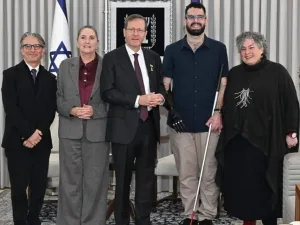
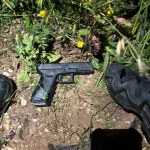
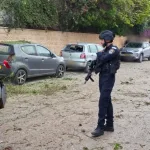
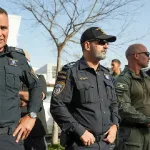
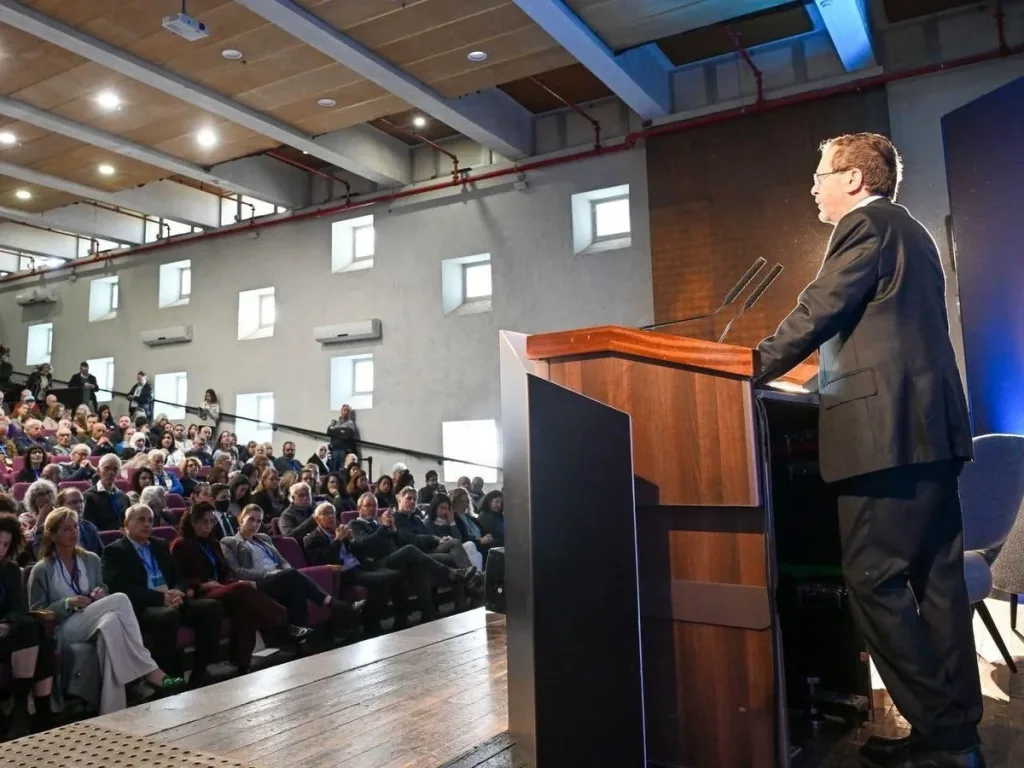
Israel's President demands urgent action against violence in Arab society at Giv'at Haviva summit, calling for equal law enforcement to ensure safety for all.



Israel's President demands urgent action against violence in Arab society at Giv'at Haviva summit, calling for equal law enforcement to ensure safety for all.

Discover the prevalent virus causing the most infant hospitalizations this winter, a critical health concern for families and healthcare providers in Israel.
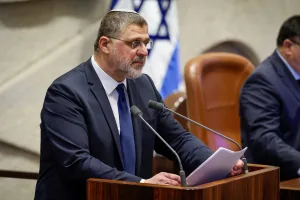
Israel's Knesset plenum debated a motion challenging the High Court's authority on amending Basic Laws. MK Avichai Boaron argued court orders are void without.
The Knesset plenum held a discussion on a motion for the agenda regarding “The court’s decision to issue an order nisi on amending a Basic Law was made without authority, and is void from its inception (void)” by MK Avichai Boaron.
MK Avichai Boaron: “This is a fundamental question. Who runs the State of Israel? Who leads it? Who received the authority to advance its affairs? Is it the sovereign people or the court? Does each branch operate within the scope of authority granted to it by law? Is there a limit to the judiciary in the State of Israel, or not?
An action without authority is void from its inception. This is a fundamental principle in every democratic regime. The Knesset is no longer an administrative authority. It is the legislative authority. There are directives, orders that we will not be able to uphold and execute, and it is fitting that the one sitting in the Supreme Court hear these words. In countless contemptible decisions, the High Court tramples the will of the people and the Knesset. There are judges in Jerusalem, but there are also legislators and a government in Jerusalem. The court is authorized to interpret Basic Laws, but not to nullify them. Disqualifying Basic Laws does not strengthen democracy, but rather undermines it.
The Knesset will not allow a situation where the court turns itself into a super-legislator. We are here to restore governability, and it doesn’t matter who controls this house – right or left. This is a motion for the rule of law and for the rule of the people.”
Minister of Justice, MK Yariv Levin: “This is an important and worthy motion for the agenda. The basis of any democracy is that no one holds all the powers, and no one is above the law, with oversight over everyone. There is a judiciary that is supposed to judge and decide on disputes and disagreements. It must do so within the framework of the law that the legislative branch establishes. We want three branches of government that have a balance between them. We want the court to deal with what it is authorized to do, and that certainly the Knesset’s legislation will be respected by everyone, including the judges.”
24 Members of Knesset supported raising the issue for the Knesset’s agenda and its transfer for discussion in the plenum. Two Members of Knesset opposed.
Israel's Knesset has approved a proposed law in its first reading to commemorate the events of October 7th, establishing a state memorial day and a.
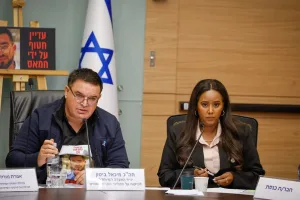
approved in First Reading: Law to Commemorate the Events of October 7th
The Knesset plenum approved in its first reading the proposed law to commemorate the events of October 7th – Sukkot, 5786-2025. 18 Knesset members supported the proposal, with no opposing votes, and it will be transferred for discussion in the Education, Culture, and Sports Committee.
It is proposed to establish the 24th of Tishrei as the State Memorial Day for the events of October 7th – Sukkot. On this day, in accordance with the proposal in the law, state ceremonies will be held, the flag will be lowered to half-mast at state institutions, and a special discussion will be held in the Knesset.
It is further proposed to establish a Commemoration, Memory, and Heritage Authority for the events of October 7th, which will act to carry out commemoration activities and preserve national memory. Additionally, a commemoration site and museum will be established in the Western Negev region.
Finally, it is proposed that until the Authority is established, the Prime Minister’s Office will coordinate memory, documentation, and commemoration activities, and the minister responsible for implementing the law will be the Prime Minister.
The explanatory notes to the proposal state: “This law is based on the understanding that preserving memory, documentation, and developing heritage are essential for the rehabilitation and development of communities, and they carry significant weight in the rehabilitation of Israeli society. Commemoration and memory contribute to strengthening personal, community, regional, and national resilience, as well as strengthening national and international solidarity and cohesion, by creating a meaningful connection between the past and the future, connecting citizens to the shared national story, and enabling bereaved families to find a supportive community.”
Approved in First Reading: State Memorial Day to Commemorate the Events of October 7th; Additionally, a Memory and Commemoration Authority will be Established
The Knesset plenum approved in its first reading the proposed law for the commemoration of the massacre and the remembrance of heroism on the 22nd of Tishrei (Simchat Torah) – October 7th, 5785-2025, by MK Etty Attar and a group of Knesset members, to which a proposal by MK Naama Lazimi was attached. 18 Knesset members supported the proposal, with no opposing votes, and it will be returned for discussion in the Education, Culture, and Sports Committee.
It is proposed to establish a state memorial day for the massacre and heroism on the 24th of Tishrei in order to preserve the events of October 7th in the national consciousness for generations. This day will be marked, among other things, by a state memorial ceremony, a special discussion in the Knesset, and ceremonies and activities in educational institutions. According to the proposal, on this day the state flag will be lowered to half-mast and broadcast programs will reflect the special nature of the day.
Furthermore, it is proposed to establish a Memory Authority, which will be a statutory corporation, to fulfill the objectives of the proposed law. Its responsibilities will include: establishing and making accessible a central database to the public, operating a commemoration site, establishing a museum and archive, and holding cultural and memorial events.
The explanatory notes to the proposal state: “The purpose of the proposed law is to ensure for generations the memory of the events of October 7th, including the acts of massacre and terror and the abduction of civilians and security forces personnel, to honor and commemorate the memory of the fallen and the victims, to document the stories of the massacre survivors, and to commemorate the acts of heroism and the resilience shown by the people of Israel.”
Approved in First Reading: Temporary Order Stipulating that Legal Proceedings Concerning Security Prisoners Will Generally Be Conducted via Visual Conferencing
The Knesset plenum approved in its first reading the proposed law for conducting visual conferencing proceedings involving detainees, prisoners, and incarcerated individuals (Temporary Order), 5786-2025, by MK Tzvi Fogel. 11 Knesset members supported the proposal, with no opposing votes, and it will be returned for discussion in the constitution committee.
It is proposed to establish, as a temporary order for a period of four years, a regulation mandating that court proceedings concerning security prisoners be conducted via visual conferencing, based on a joint declaration by the Minister of Justice and the Minister of National Security regarding security restrictions due to the risk posed by the prisoners and their transportation. Exceptions for initial arrest hearings and the hearing of testimonies are stipulated within the framework of the regulation.
In addition, it is proposed to establish general arrangements for conducting court proceedings concerning detainees, prisoners, and incarcerated individuals via visual conferencing, in situations where the normal course of life in the country or a part thereof is disrupted due to the security situation, a genuine public health concern, or natural disasters, based on a declaration by the Minister of Justice. The extension of a declaration of security restriction or a full restriction will require the approval of the Constitution, Law, and Justice Committee.
The explanatory notes to the proposal state: “During the outbreak of the Coronavirus pandemic and throughout the Swords of Iron War, a system was implemented that allowed for visual conferencing proceedings for detainees and prisoners in a wide range of legal proceedings.
Due to the situation during the Swords of Iron War, emergency regulations were enacted for a short period, allowing for visual conferencing proceedings for detainees and prisoners. Subsequently, the law for conducting visual conferencing proceedings involving detainees and prisoners (Temporary Order – Swords of Iron) was enacted, until it was replaced by the law for conducting visual conferencing proceedings involving detainees, prisoners, and incarcerated individuals (Temporary Order – Swords of Iron), 5784-2023.
It is now proposed to re-enact the law, largely as it was before its expiration, for a period of four years, which can be extended by order, while disconnecting it from the state of war and the special situation that prevailed in the home front.”
Prime Minister Netanyahu declared in the Knesset that Israel will not allow Iran to rebuild its ballistic missile or nuclear industry, warning of severe.
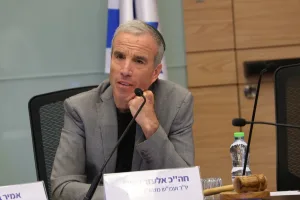
Prime Minister Netanyahu in the Knesset Plenum: “We will not allow Iran to rebuild its missile or nuclear industry”
Prime Minister Benjamin Netanyahu delivered a speech this week in the Knesset plenum as part of a 40-signature discussion: “President Trump and I have expressed a firm stance – we will not allow Iran to rebuild its ballistic missile industry or renew its nuclear program.” The Prime Minister also said: “We identify with the struggle of the Iranian people and their aspiration for freedom and justice. If we are attacked – the consequences for Iran will be very severe.”
Netanyahu also addressed the law for integrating yeshiva students into security service: “We are advancing a historic plan that will lead to the enlistment of 23,000 Haredim in the next three and a half years. This is a real revolution.” Regarding the investigation committee for the October 7th events, he said: “There will be no broad trust in an investigation committee in which more than half the nation is not represented and does not believe in it.”
Opposition leader MK Yair Lapid responded to the Prime Minister’s remarks: “We managed this country much better than you, more quietly and more efficiently. We don’t just think about ourselves, but about all citizens of Israel.” The Opposition leader added: “The cost of living is crushing an entire generation here. There is a record of negative immigration. People are leaving because they have despaired, they have stopped believing in the future of the State of Israel.”
IDF Representative Revealed in the Foreign Affairs and Defense Committee Discussion How Many Haredim Enlisted
Head of the Manpower Planning and Administration Division, Brigadier General Shay Tayeb, noted in the foreign affairs and Defense Committee discussion held on Sunday the enlistment data as of that day: “As of noon, there were over 210 combat soldiers and over 140 support personnel, and it is likely that in ten days this will conclude with the largest enlistment in recent times.”
This week’s discussion dealt with the revocation of personal benefits for those who did not report for regular service. Among the benefits to be revoked: driver’s license, revocation of scholarships and financial assistance, restriction of exit from the country, ineligibility to apply for positions designated for groups entitled to affirmative action, and revocation of eligibility for tax credits. Deputy Director of Budgets at the Treasury, Kfir Batat, said regarding the economic sanctions: “Almost everything listed in the immediate sanctions are things that are already prohibited by law. Regarding future sanctions, the expiration date of the sanctions renders most of them void.” MK Yitzhak Goldknopf insisted during the meeting: “We insist that there will be no sanctions on Torah scholars.”
Mayors from the Negev in the Committee for Strengthening and Developing the Negev and Galilee Discussion: We are living in a reality of personal insecurity
These remarks were made in a discussion held following the “pogrom in the Negev settlements.” Southern District Police Commander, Superintendent Shlomi Darai, said: “There is still much to improve, but the business outputs of the Southern District do not lie; whoever takes the law into their own hands – we will attack them with all means.” Chairman of the committee, MK Oded Forer: “The situation in the Negev is far from excellent and is not solely the responsibility of the Israel Police but of the entire government, and it will not end with just one operation. I do not accept the assertion that the situation is improving.”
Deputy Mayor of Jerusalem: “70,000 residents have no protection against infiltrators”
This was warned by Yael Antabi regarding the residents of the Neve Yaakov and Pisgat Ze’ev neighborhoods in the capital, during a joint discussion of the State Audit Committee headed by MK Alon Schuster and the Foreign Affairs and Defense Committee headed by MK Boaz Bismut, which took place this week. The discussion dealt with the operational and infrastructural situation on the seam line and at the crossings of the Jerusalem envelope. Representatives of the settlements in the Jerusalem envelope added: “There is no single body managing the crossings, and a security failure has occurred.” According to the Comptroller’s report on the matter from the past month, there are breaches in the seam line used for the passage of illegal infiltrators. According to the audit findings, there have been delays in repairing damage to the fence and in maintaining the technological components installed on it, there is a shortage of dedicated personnel, and in the quality of the technological response for monitoring and inspection.
Discussion on Police Enforcement Against Ethiopians: “Cases are opened wholesale”
The Committee for Removing Barriers, which convened this week, discussed police enforcement against Ethiopians, some of whom testified at the hearing about violence from police officers. One of them told the committee: “I was arrested for lack of identification and then they tasered me in the back while I was handcuffed.” MK Pnina Tamano protested to the police representatives who participated in the discussion: “You are opening cases wholesale. We are in a state of survival, and I am discovering insensitivity and a wall and a lack of responsibility. Israel Police, you are going the wrong way.” Committee Chairman MK Michael Biton: “There is a prevalence of hundreds of percent in arrests relative to their size in the population.” The police representative responded: “We need to sit together and lead joint activity. We will spare no effort and will come with data, and where we are not good, we will do everything to be better.”
The Election Committee and the Shin Bet Established a Team to Deal with External Influences Ahead of the Elections
This was reported in a discussion of the Subcommittee of the Science and Technology Committee, which dealt with dealing with awareness campaigns based on artificial intelligence, especially during election periods. The CEO of the Election Committee, Orly Adas, emphasized in the discussion that the existing law is outdated and noted as an example: “It is not stipulated that lying in election propaganda is forbidden.” It was noted in the discussion that the Election committee and the Shin Bet have established a team to deal with external influences, due to concerns about fake AI-based campaigns. Adas said that the Election Committee has already held preliminary discussions with Meta and TikTok, but the committee has no ability to act with X and Telegram networks due to the lack of representation in Israel.
In a discussion of the State Audit Committee, headed by MK Alon Schuster, which took place this week and dealt with the same issue, the CEO of the Central Election Committee called: “We must consider adopting the European Union’s decision and promoting legislation that will require clear labeling of content created by artificial intelligence.” She explained: “It is impossible to clean the network of millions of videos and campaigns created with the click of a button.”
The Ministry of Health will clarify to hospitals: Operate an acute room at all hours of the day
The Director of the Department for the treatment of Sexual Assaults at the Ministry of Health, Dr. Zohar Sahar, made these remarks in a discussion of the Health Committee that dealt with the operation of acute rooms. The Chairperson of the committee, MK Limor Son Har Melech, clarified: “Medical treatment in an acute room is a basic right and is not conditional on filing a police complaint. No victim should give up her health due to incorrect information or lack of clarity in the process.”
The Economics Committee Discussed the Regulation of Mortgage Counseling: “A difference of hundreds of thousands of shekels”
President of LAHAV, Adv. Roi Cohen, explained: “A difference of heaven and earth and hundreds of thousands of shekels between professional advice and someone receiving incorrect service.” The initiators of the law, MK Asher and Beliak: “The cost of living is most evident in mortgages.” Committee Chairman MK David Bitan: Regulation in the industry is important, we will advance the proposal quickly.
The Committee on the Rights of the Child: A shortage of approximately 3,000 educational assistants
This was estimated by the Center for Local Government, in a committee discussion that dealt with the intermittent closure of kindergartens due to a severe shortage of early childhood personnel. The shortage leads to sudden and repeated closures of kindergartens, shortened school days, and cancellation of afternoon programs. Committee Chairperson, MK Keti Shitrit: “It is unacceptable for the education system to operate through temporary solutions, improvisations, and surprise closures, instead of a structured policy.”
Amendment to the Law Regarding Contract Interpretation Approved
This week, the Knesset plenum approved in its second and third readings an amendment to the Contracts Law (General Part), according to which the interpretation of a contract will be as the parties agreed; a business contract in which no provisions for interpretation are specified – will be interpreted according to its wording alone, unless the wording of the contract leads to an unreasonable result or a contradiction between its provisions. The explanation for the amendment states: “The purpose of the amendment is to establish interpretation rules adapted to business contracts versus other contracts, in accordance with the trend in case law that distinguishes between different types of contracts, in order to bring greater certainty to the business world and assist in reducing the burden on the courts.”
IDF presents Almoz Committee suicide prevention recommendations for discharged soldiers and reservists. A unique response is planned for the 'Swords of Iron'.
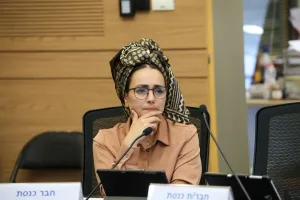
The IDF presented the recommendations of the Almoz Committee for examining the response to discharged soldiers and reservists not on active duty, who took their own lives due to their service. Head of the Manpower Directorate, Brigadier General Wadmani: “In light of the implications and exceptional circumstances, the committee recommended that regarding the ‘Swords of Iron’ war, a unique and tailored response should be implemented.” According to army data, in 2025, 22 cases of suicide were recorded, including 12 conscripts, one officer, and 9 reservists. Committee Chairman, MK Stern: “The fight against suicide is not a personal fight, it is a fight for all of us as a Society.”
The IDF was asked to present the committee’s conclusions for examining the response provided to discharged soldiers and reservists not on active duty, who took their own lives due to their service (Almoz Committee). Committee Chairman, MK Elazar Stern: “I am full of appreciation for the military personnel involved in saving lives, but to reach everyone who needs help, we must continue to invest more Budgets, professionals, and appropriate accessibility for those in need. The fight against suicide is not a personal fight, it is a fight for all of us as a society. We will not abandon anyone to cope alone, it is our duty to help, listen to their distress, and be there for them.”
Head of the Manpower Directorate, Brigadier General Amir Wadmani, presented the committee’s recommendations: “The committee recommended maintaining the unique status of an IDF fallen soldier and preserving the existing distinction between a civilian and a soldier. At the same time, in light of the implications of ‘Swords of Iron’ and the exceptional circumstances, it recommended that regarding the ‘Swords of Iron’ war, a unique and tailored response should be implemented.
The response involves two stages – if someone takes their own life after military service and there are circumstances related to their military service, the matter is brought before the Head of the Manpower Directorate. The Head of the Manpower Directorate examines whether the suicide event meets the criteria, including the duration of service, the nature of the role, exposure to exceptional events during service, the proximity in time between service and death, and whether there were indications of mental distress during military service. The information is immediately clarified between the IDF and the police, and if the Head of the Manpower Directorate decides there are unique circumstances, with the family’s consent, military insignia are allowed during a civilian funeral ceremony.
In the second stage, the IDF accompanies the family in the process with the Ministry of Defense to receive rights according to the law. If the Ministry of Defense accepts the causal link, commemoration on the Wall of Remembrance at Mount Herzl, on the Yizkor website, placing a candle and flag on memorial day, and a military cantor at the memorial service are added.”
According to army data, in 2025, 22 cases of suicide were recorded, including 12 conscripts, one officer, and 9 reservists. For comparison, in 2024, 21 cases were recorded. In terms of conscripts, there was an increase from 7 to 12, while among reservists, there was a decrease from 12 to 9.
In the year before the war, i.e., 2022, there were 14 cases among conscripts and zero cases among reservists. The IDF explains that the increase among reservists in 2024 and 2025 is due to the very extensive activation of reservists.
50% of the cases in 2025 were of combat soldiers, 75% of the cases were not treated by a mental health officer (קב”ן), and 85% of the cases involved suicide by weapon.
MK Ofer Cassif presented data from a report by the Knesset Research and Information Center, written at his request, which shows that between 2017 and 2022, the proportion of combat soldiers among all IDF soldiers who committed suicide ranged between 42% and 45%. In 2023, this proportion decreased to 17%, and in 2024, it increased significantly to 78%. In 2024-2025 (until the end of July), 17% of soldiers who committed suicide had met with a mental health officer in the two months prior to their suicide.
Regarding suicide attempts, between January 2024 and July 2025, 279 soldiers attempted suicide – meaning, for every soldier who committed suicide in the IDF, another seven suicide attempts were documented. In the clinical report of the Medical Corps, 12% of these suicide attempts were defined as severe (i.e., actions whose execution could have led to the person’s death or significant injury), and 88% were defined as moderate (suicidal actions with low risk potential).
Head of Clinical Services, Lt. Col. Dr. Carmel Kahlah: “Regarding the treatment of career soldiers in their first year, there is the Liba unit that deals with career soldiers in their first year. We are engaged in awareness campaigns to reduce stigma regarding seeking help, and we are also seeing an increase in inquiries. It is important for me to clarify that the primary goal of mental health officers is to treat.”
Israel's Security Committee debates the Security Service Bill, aiming to integrate Yeshiva students while protecting women's status and Haredi lifestyles.
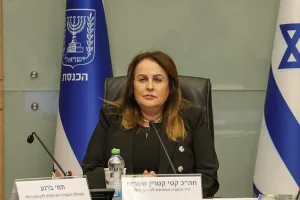
The foreign affairs and Defense Committee continues its series of discussions on the Security Service Law (Amendment No. 26) (integration of Yeshiva Students), 5782-2022. The first part of today’s discussion dealt with sections 26 Ka – 26 Ke, which concern preventing harm to the status and integration of women in security service, while preserving the way of life of graduates of Haredi educational institutions.
Section E of the proposed law concerns general provisions for the bill. On one hand, the IDF is obligated to preserve the Haredi way of life of graduates of Haredi educational institutions. On the other hand, the IDF has a parallel obligation not to harm the service or status of women as a result of integrating graduates of Haredi educational institutions.
It is proposed to anchor in section 26 Ka the obligation to protect the status of women in the IDF. The section explicitly states that the integration of graduates of Haredi educational institutions into security service, in accordance with the provisions of this chapter, shall not be done in a way that harms the status, service, or integration opportunities of a woman in security service. Concurrently, it is proposed to stipulate in section 26 Kb a provision that the IDF will act to enable the preservation of the way of life for those who enlist according to the provisions of this chapter.
As a direct continuation of the IDF’s obligations to act to preserve the way of life of yeshiva students and graduates of Haredi educational institutions, the proposed law introduces for the first time several sections intended to implement this obligation. Within this framework, several sections have been added to ensure the codification of the IDF’s duty.
According to the Legal Counsel’s position to the committee, it is of utmost importance to anchor in law provisions that ensure that the status and integration of women in the IDF are not harmed. This importance is equivalent to the importance of defining the IDF’s obligations to open tailored tracks, selection and placement procedures, and the establishment of pre-military preparatory programs for graduates of Haredi educational institutions.
In the opinion of the Legal Counsel, it is important to anchor fundamental provisions that will ensure that frameworks intended for women are not reduced due to the integration of graduates of Haredi educational institutions. In addition to these, it is also possible to consider including provisions that ensure the increased representation of women in key positions, by presenting orderly work plans from the IDF to achieve these goals.
The Legal Counsel also stated that the IDF’s ability to establish tailored tracks is closely related to our remarks regarding the need for an internal division concerning the minimum threshold for enlistment, in accordance with the division presented by the IDF in the committee’s discussions. This division will allow the IDF to plan and open tailored tracks that suit the army’s needs on the one hand, while acting according to its obligations, as proposed in the bill, to adapt these tracks to graduates of Haredi educational institutions on the other hand.
The Foreign Affairs and Defense Committee continued its series of discussions on the Security Service Law (Amendment No. 26) (Integration of Yeshiva Students), 5782-2022. The second part of today’s discussion dealt with sections 2 to 9, which concern supervision provisions.
Sections 2 to 9 of the proposed law amend the supervision mechanism established in sections 49a to 49h of the Security Service Law. The provisions of this chapter stipulate that a supervisor who finds that a person designated for security service is not present at the yeshiva must notify the commander or his representative. Supervisors and inspectors have been granted powers to demand identification from yeshiva students and yeshiva staff, to request documents, and supervisors have also been granted explicit authority to enter yeshivas, except for residential areas, only by court order.
The bill presented to the committee proposes several changes in this regard.
According to the Legal Counsel’s position to the committee, the supervision in yeshivas reflects the purposes of the proposed law – on the one hand, reducing inequality by increasing the number of recruits from the Haredi public, and on the other hand, recognizing the importance of Torah study as a justification for deferring service, by supervising that those whose service is deferred for Torah study are indeed studying Torah. Given its importance, it is necessary to ensure that the supervision is effective.
The Legal Counsel notes that the proposed law includes several amendments that contribute to increasing the effectiveness of supervision, such as the obligation to appoint supervisors and set criteria for their number, the cancellation of the Ministry of Defense’s reliance on the Ministry of Education’s supervision, and the detailing of the report to be submitted to the Foreign Affairs and Defense committee and increasing its frequency.
At the same time, the Legal Counsel states that the proposed law also includes several arrangements that, in their opinion, weaken the effectiveness of supervision.
In the proposed section 49c in section 4, it is proposed to stipulate that inspections will take place once every three months. Supervision at such a frequency, especially when the date of supervision is known in advance, is not effective, and effective supervision should be on a daily basis.
They also state that the sanction for repeated absence from a yeshiva must be sharp and clear. Explicit provisions should be included in the body of the proposed law regarding the cancellation of the service deferral order for a yeshiva student found to be absent from the yeshiva multiple times, and this should not be left to the Minister of Defense.
The proposed law does indeed suggest imposing sanctions on yeshivas for failing to fulfill the attendance obligation, which did not exist previously, but the proposed arrangement raises a question regarding the effectiveness of its implementation. According to the proposal, a yeshiva where a supervisor finds that at least 20% of its students are absent more than once will receive a warning, and if this is found again, it will be removed from the list of yeshivas.
The Legal Counsel to the committee states that the proposed absence percentage is very high and that it is clear that there may be cases where a student is absent due to illness or personal circumstances, and this must be addressed, but a provision that effectively allows 19.9% of yeshiva students to be absent from it on a regular basis is not in line with the purposes of the law.
The Legal Counsel supports the amendment to abolish the institution of “inspectors” and states that it is correct for the supervision to be carried out by the Ministry of Defense, as proposed in the bill, and not to be outsourced to external entities.
Child Rights Committee, led by MK Kتي Shtrit, toured Sheba Hospital's eating disorder departments, revealing a flagship program but a severe national shortage.
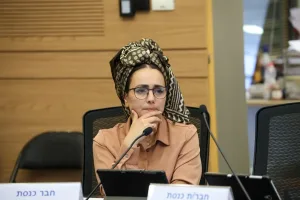
The Committee for the Rights of the Child, chaired by MK Kتي Shtrit, conducted a tour today at Safra Children’s Hospital at the Sheba Medical Center. The committee visited the Pediatric Psychiatry Department and the Pediatric Eating Disorders Department. MKs Pnina Tamano-Shata and Adi Azoulay also participated in the tour.
committee chair, MK Kتي Shtrit: “We were exposed to one of the flagship departments in the healthcare system for treating eating disorders, but even this department cannot meet the national need. This model must be replicated everywhere.
I was exposed to the professional, dedicated, and sensitive work of the medical and therapeutic staff. This is high-quality personnel who work with exceptional dedication and under appropriate conditions, out of a deep commitment to the well-being and rights of children and adolescents struggling with eating disorders.
Alongside this, a serious problem arose that cannot be ignored – a significant national shortage of inpatient beds. This distress impairs the ability to provide timely care to children and adolescents who need life-saving treatment, and puts families in an unbearable situation of waiting and uncertainty.
As Chair of the Committee for the Rights of the Child, I will do everything to ensure the increase in the number of beds and resources in the eating disorder departments, to ensure that every child across the country receives accessible, appropriate, and timely treatment. This is an urgent need, and it is a national responsibility.”
Prof. Doron Gothelf, Director of the Department of Child and Adolescent Psychiatry at Safra Children’s Hospital at Sheba: “The past few years have presented children and youth in Israel with unprecedented psychological and emotional challenges. The unique model we have developed in the Psychiatry Department at Safra Children’s Hospital was built to provide a precise response to these distresses.
We hope it will be adopted as a national model and expanded to additional hospitals and medical centers across the country, alongside a significant strengthening of community care.
Our responsibility is clear: to build an accessible and high-quality continuum of care, which will allow every child to receive professional psychological care, in a timely manner, and wherever they need it.”
Israel's Health Committee approved canceling the Dangerous Drugs Regulations (Dispensing and Transfer of Drugs), 1983, balancing medical access and preventing.
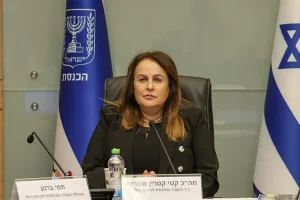
committee chair Limor Son Har Melech: We must ensure that those who need these medications for medical purposes can obtain them with dignity and accessibility, while on the other hand – erecting a barrier that will make it difficult for those attempting to acquire them for trade or misuse.
The Health Committee today (Monday) approved the cancellation of the Dangerous Drugs Regulations (Dispensing and Transfer of Drugs), 1983. The cancellation is in light of an amendment approved by the committee about a year ago, which established a new version of regulations governing the dispensing of drugs for the purpose of drug rehabilitation. The committee chair, Limor Son Har Melech (Otzma Yehudit), emphasized that “we all understand that for patients who need them, drug substitutes are a necessity and an integral part of the treatment path. However, we cannot ignore the changing reality: in recent years, with accelerated technological development, the forgery of prescriptions and illegal purchase and trade has become easier and more accessible than ever before. Our goal is to close this loophole as much as possible. We want to create a precise balance: to ensure that those who need these medications for medical purposes can obtain them with dignity and accessibility, but on the other hand – to erect a barrier that will make it difficult for those attempting to acquire them for trade or misuse.”
Eliyahu Marom, Deputy Director of the Pharmacy Division at the Ministry of Health, explained that the regulations were drafted about 43 years ago and are no longer adapted to the drugs currently in use for drug rehabilitation. The Pharmacists Regulations stipulate the process for handling dangerous drugs for the purpose of rehabilitation from drugs used as drug substitutes that were registered at that time, and they were primarily intended for the treatment of severe street drug users. However, today there is a wider variety of drug preparations registered in Israel for rehabilitation purposes, not just the drugs defined in the regulations’ appendix, and rehabilitation processes have also been expanded for the purpose of overcoming addiction to opioid drugs, which patients began using as part of medical treatment and became addicted to over the years.
The Dangerous Drugs Ordinance, in its new version, regulates the handling of dangerous drugs, and based on it, the Dangerous Drugs Regulations, 1979, were enacted, which regulate the conduct with dangerous drugs. The Dangerous Drugs Regulations were amended about a year ago and updated according to the needs that arose over the years with the rise in the use of dangerous drugs. Even today, they are undergoing legislative amendment as part of the Ministry of Health‘s response to the opioid epidemic in Israel. As part of this amendment, the Dangerous Drugs Regulations will include an updated list of drug substitutes used to treat drug users within the framework of addiction rehabilitation.
For background material and the Ministry of Health‘s appeal:
https://main.knesset.gov.il/Activity/committees/health/Pages/CommitteeMaterial.aspx?ItemID=2238253
Child rights committee visits Safra Hospital's eating disorders unit, with MK Shitrit stressing a severe bed shortage impedes timely, life-saving treatment for.
The special committee for the Rights of the Child, chaired by MK Kathrin Shitrit (Likud), conducted on Sunday a tour of the Sheba Medical Center’s Edmond and Lily Safra Children’s Hospital. At the hospital, the committee visited the Department of Child Psychiatry, and its eating disorders unit. In addition to committee chair MK Shitrit, the tour was attended by MKs MK Pnina Tameno Shete (Blue and White—National Unity Party) and Adi Ezuz (Yesh Atid).
Committee Chair MK Shitrit said, “We were exposed to one of the flagship departments in the healthcare system for treating eating disorders, but even this department cannot meet the national need. It is essential to replicate this model everywhere.
“I was impressed by the professional, dedicated, and sensitive work of the medical and therapeutic staff. It is a high-quality workforce that operates with exceptional devotion and under adequate conditions, with a deep commitment to the well-being and rights of children and adolescents dealing with eating disorders.
“At the same time, a serious issue arose that cannot be ignored – a significant national shortage of hospital beds. This shortage harms the ability to provide timely care to children and adolescents who need life-saving treatment and puts families in an unbearable state of waiting and uncertainty.
“As Chair of the Special Committee for the Rights of the Child, I will do everything I can to ensure an increase in beds and resources in the eating disorders departments, to make certain that every child across the country receives timely, accessible, and appropriate treatment. This is an urgent need, and it is a national responsibility,” she said.
Prof. Doron Gothelf, Director of the Child and Adolescent Psychiatry Unit at the Safra Children’s Hospital, said, “In recent years, Israeli children and adolescents have faced unprecedented emotional and mental challenges. The unique model we developed in the Psychiatry Unit was designed to provide a precise response to these difficulties. We hope that it will be adopted as a national model and expanded to additional hospitals and medical centers across the country, alongside a significant strengthening of community-based treatment services.
“Our responsibility is clear: to build an accessible and high-quality treatment continuum that will allow every child to receive timely, professional mental health care, wherever and whenever they need it,” he said.
Knesset approves two bills for October 7 commemoration in first reading, designating 24 Tishrei as a memorial day and establishing a heritage authority.
In its sitting on Wednesday, the Knesset Plenum voted to approve in first reading two bills for commemoration of the October 7 events.
The first bill approved in first reading was the Commemoration of the October 7 Events Bill, 2025. In the vote, 18 Members of Knesset supported the bill, without opposing votes, and it will be turned over to the Education, Culture and Sports Committee for deliberation.
It is proposed to designate the 24th of Tishrei as a national memorial day for marking the October 7 events. On this day, as proposed in the bill, state ceremonies will be held, the flag will be lowered to half-mast in state institutions and a special debate will be held by the Knesset.
It is further proposed to establish a commemoration, memorial and heritage authority for the October 7 events, which will work to carry out the actions for commemoration and preservation of the national memory. In addition, a commemoration site and a museum will be set up in the western Negev region.
It is further proposed that until creation of the authority, the Prime Minister’s Office will coordinate the memory, documentation and commemoration activities, and that the minister in charge of the bill’s implementation will be the Prime Minister.
The explanatory notes to the bill state: “This bill is based on the conception that preservation of memory, documentation and development of heritage are essential to the rehabilitation and development of the localities, and bear great weight in the rehabilitation of Israeli society. The commemoration and memory contribute to strengthening the personal, community, regional and national resilience, and to strengthening national and international solidarity and unity, by forging a meaningful bond between the past and the future, connecting the citizens to the shared national story and enabling the members of bereaved families to find a supportive community.”
Also approved in first reading was the Marking the Memory of the Massacre and Commemorating the Heroism of October 7 Bill, 2025, sponsored by MK Etty Hava Atia (Likud) and a group of MKs, to which a bill sponsored by MK Naama Lazimi (Labor) was attached. In the vote, 18 Members of Knesset supported the bill, without opposing votes, and it will be returned to the Education, Culture and Sports Committee for deliberation.
This bill proposes to establish a national memorial day on the 24th of Tishrei, in order to preserve the October 7 events in the national consciousness for generations. The day will be marked, among other things, by a state memorial ceremony, a special debate in the Knesset and ceremonies and activities in educational institutions. It is proposed that the national flag will be lowered to half-mast and that broadcast programming will express the special character of the day. It is also proposed to establish a memorial authority that will be a statutory corporation and will operate to fulfill the purposes of the bill.
The explanatory notes to the bill state: “The purpose of the bill is to ensure that the October 7 events will be remembered for generations, including the acts of massacre and terrorism and the kidnapping of civilians and members of the security forces; to honor and commemorate the fallen and those who were killed; to document the stories of the massacre’s survivors and the resilience displayed by the people of Israel.”
IDF Human Resources Subcommittee convenes to discuss suicidality prevention, with MK Stern vowing, "We will not leave anyone to fight alone." Almoz Commission.
The foreign affairs and Defense Committee’s Subcommittee for IDF Human Resources, chaired by MK Elazar Stern (Yesh Atid), convened on Sunday for a debate on the measures the IDF is taking to prevent suicidality.
The IDF was asked to present the conclusions of the Almoz Commission, which reviewed the support to be provided to the families of discharged soldiers or reservists who are not in active duty, who take their own lives after their release from military service, under circumstances that may be related to their service. Subcommittee Chair MK Stern said, “I have great respect for the soldiers who work to save lives, but in order to reach everyone who needs help, we must continue to invest more in budgets, professionals, and appropriate accessibility for those in need. The fight against suicidality is not an individual struggle, it is our collective battle as a society. We will not leave anyone to fight alone. It is our duty to help, listen to their distress, and be there for them.”
Brig. Gen. Amir Vadmani, Chief of Staff for the IDF Personnel Directorate, said, “The [Almoz] Commission recommended maintaining the unique status of fallen IDF soldiers and preserving the distinction between civilians and soldiers. However, given the consequences of the Swords of Iron war and the exceptional circumstances, it recommended a unique and tailored response for this war. The response includes two stages – if someone takes their life after their military service and there are circumstances related to their service, it will be brought before the head of the Personnel Directorate, who will assess whether the suicide meets criteria such as the duration of service, the nature of the role, exposure to extraordinary events during service, the timing of the death in relation to service, and whether there were indications of mental distress during service. The information is immediately verified between the IDF and the police. If the head of the Personnel Directorate determines that there are unique circumstances, in accordance with the family’s wishes, military symbols may be included in the civilian funeral ceremony.
“In the second stage, the IDF assists the family in the process with the Ministry of Defense to receive rights according to the law. If the Ministry of Defense accepts that there was a causal connection, commemoration is added, including placing the name on the memorial wall at Mount Herzl, on the Yizkor memorial website, the placement of a candle and flag on memorial day, and the presence of a military cantor at the memorial ceremony,” he said.
According to IDF data, in 2025, 22 suicide cases were recorded, including 12 soldiers in compulsory service, one soldier in standing army service, and nine reservists. In comparison, 21 cases were recorded in 2024. Among soldiers in compulsory service, there was an increase from seven to 12 suicides, while among reservists, there was a decrease from 12 to nine. In 2022, there were 14 cases – 13 among soldiers in compulsory service and none among reservists. The IDF explains that the rise in suicides among reservists in 2024 and 2025 is due to a massive activation of reservists.
Fifty-percent of the suicides in 2025 were committed by combat soldiers, 75% of those who committed suicide had not been treated by a mental health officer (Kaban), and 85% of the cases involved suicides with weapons.
MK Ofer Cassif (Hadash-Ta’al) presented data from a report by the Knesset Research and Information Center, written at his request. The report shows that between 2017 and 2022, the percentage of combat soldiers among all IDF soldiers who committed suicide ranged from 42% to 45%. In 2023, this rate dropped to 17%, and in 2024, it rose significantly to 78%. Between 2024 and 2025 (until the end of July), 17% of the soldiers who committed suicide had met with a mental health officer in the two months prior to their suicide.
Regarding suicide attempts, between January 2024 and July 2025, 279 soldiers attempted suicide – meaning, for every soldier who committed suicide in the IDF, seven more suicide attempts were recorded. According to the IDF Medical Corps’ clinical report, 12% of these suicide attempts were classified as severe (i.e., actions that could have led to death or significant injury), and 88% were classified as moderate (suicidal actions with low risk potential).
Lt. Col. Dr. Carmel Kala, head of the Clinical Branch in the IDF Medical Corps, said, “Regarding treatment for soldiers in their first year of standing army service, there is the Unit for the Designated treatment of a Young Commander. We are engaged in awareness efforts to reduce the stigma attached to seeking help, and we are seeing an increase in requests. It is important to clarify that the primary goal of mental health officers is to provide treatment.'”