

















Israeli Startups Deepen Commercial Links With Gulf States, Study Finds
Israeli startups are deepening commercial links with Gulf states, especially the UAE, five years post-Abraham Accords, a new study reveals, showing consistent.


Israeli startups are deepening commercial links with Gulf states, especially the UAE, five years post-Abraham Accords, a new study reveals, showing consistent.
Israel greenlights a historic $35 billion natural gas export agreement with Egypt, its largest energy deal ever, promising to bolster the Israeli economy and.
Opposition Leader MK Yair Lapid warns Israel's cost of living crisis is causing a generation to despair, leading to peak negative migration as citizens lose.
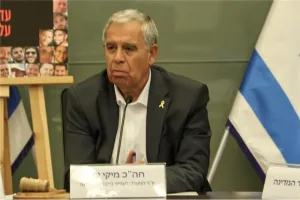
In its sitting on Monday, the Knesset Plenum held a debate with the participation of the Prime Minister, at the request of 40 Members of Knesset, on the topic of “An extreme Government that acts against the Zionist majority and harms national unity and the basic values of the State of Israel.”
During the debate, Leader of the Opposition MK Yair Lapid (Yesh Atid) said, “I ask Israel’s citizens—do you live better or worse than three years ago? What is the state of your bank account? Is your life more costly or less? What about your children’s education, is it better or worse?
“All that is before I have mentioned October 7, the most terrible event that has happened to this country, and it too happened over the past three years. And that is before I have mentioned the fact that while our heroic combatants are being killed and injured every day, your Government is advancing a disgraceful and shameful draft-dodging bill, which will also not pass. We are in an election year, so that is what we will go to elections over, what is happening in the life of real people.
“I remind you that things can be different. During [the term of] our Government, we lowered the percentage of violent crime dramatically, the protection racketeering, the murders, the sexual offenses, the violence. These are not opinions, these are facts. People felt safe to leave the house. We didn’t perform any miracles. We worked at it in a thorough, orderly and quiet manner. All the professional officials would come to me, to the Prime Minister’s Office, to report to me personally on their progress.
“The cost of living is causing the collapse of an entire generation of Israelis. They have understood that no one is really going to deal with this. Your Government continues to transfer NIS 60 billion every year to draft-dodgers, and continues to maintain ministries that are completely unnecessary. It continues to transfer coalition funds here at night as if there were no tomorrow.
“Something else happened while you weren’t here. Your Minister of Finance said that the President of the Supreme Court should be trampled. You got up here recently and said that you recognized the fact that [Justice] Isaac Amit was President of the Supreme Court. I appreciated that. How is it that we have not heard a word of condemnation from you? I stood here time after time and said that I was adamantly opposed to any incitement against the Prime Minister and his family. How are you keeping silent?
“The data from the Central Bureau of Statistics (CBS) has been released, and it has become apparent that for two years there has been a peak of negative migration from Israel; 69,300 Israeli citizens have left Israel this year. Over the past three years, 200,000 have left. Last year, 875 physicians left Israel, and 3,000 engineers left the country. According to the CBS, that is the profile of those who are leaving: Young people, educated, working, who pay taxes and serve in reserves. The backbone of this country. The people who keep it alive.
“They are leaving in hundreds of thousands, an entire emigration movement, because they feel they have been forsaken by a Government that hates them, does not appreciate their sacrifice, is indifferent to their difficulty, is contemptuous of their values. I think, of course, that they are wrong; I think that we must not give up.
“Israel is a cause that is worth fighting for. Not only do I love this country, I also believe in it. It has been and remains the best country in the world to raise children. That is the tragedy. They don’t hate the country, they have despaired. They looked at your Government, Mr. [Prime Minister], and stopped believing in the State of Israel’s future. Don’t you think that is a problem?
“Bereaved families are shattered when they see how an attempt is being made to give the Haredim an exemption from bereavement. Maya Ohana Moreno, widow of Israeli hero Emmanuel Moreno, came to the foreign affairs and Defense committee and told about her orphaned children, who insisted on becoming combat soldiers. The answer she got was when [MK Yitshak] Goldknop (United Torah Judaism) came to the meeting especially to say that telling the Haredim to enlist is like putting a yellow badge on them. My father had a yellow badge in the ghetto. Then he made Aliyah and enlisted in the Jewish army so that it would not happen again.
“Three years ago, I was Prime Minister. Life was better. I stood here and said to you, ‘I am handing over to you a country in excellent condition,’ because that’s what we were. A country in excellent condition. Strong, safe, Hamas knew that it could not cross the fence, the world was in favor of us, the economy was excellent. We managed this country much better than you. More quietly, many fewer dead and injured, much more efficiently. That is what we know how to do. Instead of whining about the deep state and the court, we know how to work and to manage a country for the benefit of its citizens.
“We will come and propose a new dawn for the State of Israel. We will propose the possibility that we will not define ourselves by the quarrels among us. We will propose the possibility that unity is not when everyone thinks the same; unity is mutual respect. That basic thing, when you are capable of listening to people who think differently from you.
“We know how to lower crime, to lower the cost of living, to lower the noise and the toxicity that surround our lives. We know how to take NIS 60 billion from the draft-dodgers and to transfer them to education, healthcare and policing. We know how to make the world go back to loving the State of Israel. Without having Palestinian flags greet our young people when they take their post-army trips.
“We know how to make a judicial reform. A judicial reform needs to be made, I have always thought so, but it must be done with moderation, cautiously, to repair and not to destroy. With us, the reform will end in a constitution, not a civil war. We know how to manage security. Security is managed when it can be taken for granted. When the citizens don’t think about it. They know that the Government will respond to any threat swiftly, with force and without hesitation. Unlike you, we know how to run a country, and we don’t think only about ourselves, but about all of Israel’s citizens,” said Leader of the Opposition MK Lapid.
Israel greenlights a historic $35 billion natural gas export agreement with Egypt, its largest energy deal ever, promising to bolster the Israeli economy and.
By Pesach Benson • December 17, 2025
Jerusalem, 17 December, 2025 (TPS-IL) — Prime Minister Benjamin Netanyahu announced on Wednesday that he has approved what he described as the largest energy deal in Israel’s history, a natural gas export agreement with Egypt valued at NIS 112 billion ($34.7 billion), a move he said would significantly bolster the Israeli economy and strengthen regional stability.
Speaking in a recorded statement alongside Energy Minister Eli Cohen, Netanyahu said NIS 58 billion ($18 billion) from the deal is expected to flow directly into state coffers over its lifetime. He outlined a gradual revenue curve, noting that during the first four years the state would receive roughly NIS 500 million ($155 million), as companies focus on infrastructure investments, with annual revenues rising to about NIS 6 billion ($1.9 billion) by 2033.
“This money will strengthen education, health, infrastructure, security, and the future of the coming generations,” Netanyahu said. He stressed that his approval followed months of delays and scrutiny, emphasizing that the agreement moved forward only after Israel’s security and economic interests were fully safeguarded.
Netanyahu argued that the agreement cements Israel’s role as a leading energy player in the Eastern Mediterranean. “The deal greatly strengthens Israel’s position as a regional energy superpower, and contributes to regional stability,” he said, adding that it is expected to encourage additional companies to invest in gas exploration in Israel’s economic waters.
Addressing domestic concerns, Netanyahu underscored that the companies involved are obligated to prioritize the local market. “First and foremost, this deal requires the companies to sell natural gas to Israeli citizens at a good price,” he said. Referencing earlier criticism of Israel’s gas development policy, he added that fears the industry would harm the economy had proven unfounded. “Today it is clear that taking the gas out of the water brought a huge blessing to the State of Israel,” he said.
Energy Minister Eli Cohen described the approval as a milestone on multiple levels. “This is a historic moment for the State of Israel,” Cohen said. “It is the largest export deal in the country’s history, and it establishes our status as a leading regional energy powerhouse that our neighbors rely on.” He noted that the agreement was finalized after “several months of intensive negotiations,” during which mechanisms were introduced to improve pricing terms for Israel’s domestic economy.
As part of the deal, gas reservoir owners are required to re-offer pricing alternatives for the local market, including a cap on the maximum price per unit of heat, as well as limits ensuring that short-term gas sales do not exceed the price of long-term contracts. The agreement also includes planned investments of NIS 15-16 billion in Israeli gas infrastructure, aimed at increasing output from the Leviathan reservoir and expanding pipeline capacity to meet growing domestic demand.
Chevron Mediterranean Limited welcomed the government’s decision, calling it a key step toward expanding production capabilities. “This significant milestone reflects the strong partnership between Chevron and the State of Israel,” the company said, adding that it underscores a shared commitment to advancing energy security for Israel and the broader region.
The approval follows a deal signed in August between the Leviathan field’s partners and Egypt, valued at approximately $35 billion, and comes after diplomatic and political pressure to finalize the agreement, which officials say could also pave the way for higher-level regional engagements in the coming weeks.
The U.S. is said to have put heavy pressure on Jerusalem to approve the deal. U.S. Energy Secretary Chris Wright canceled a visit to Israel in October after Cohen refused to approve the agreement.
Israeli exports are surging, forecast to reach nearly $160 billion in 2025, nearing pre-war peak levels. Economy Minister Nir Barkat highlights Israel's strong.
By Pesach Benson • December 16, 2025
Jerusalem, 16 December, 2025 (TPS-IL) — Two years after the war, Israeli exports are on a strong recovery, approaching pre-crisis peak levels. The Ministry of Economy forecasts total exports for 2025 at nearly $160 billion, a 3% increase from 2024 and close to the 2022 record of $165 billion.
Economy and Industry Minister Nir Barkat announced the figures on the second day of the Foreign Trade Administration’s annual annexes conference. “Upon taking office, I made increasing exports a top priority, and set a clear strategic goal—leading Israel to a trillion-dollar export within 20 years. Already during the war, we were preparing for the day after, and today we are beginning to see the results on the ground,” Barkat said.
“Expanding exports to new markets around the world is the key to Israel’s economic resilience. I thank the men and women of the Foreign Trade Administration and the Economic Attachés for their professional, determined, and daily work that brings real achievements to the Israeli economy,” he added.
Director General of the Ministry of Economy and Industry Moti Hagay said the forecast reflects Israel’s economic strength. “The expected data for 2025 show the economy’s ability to recover, grow and innovate, even after a complex security period. The rise in exports, especially in the services sector, is the result of consistent government work, investment in human capital, and opening new markets,” he said.
Services exports, which account for more than half of total exports, are expected to grow 9% to $101 billion, up from $92.7 billion in 2024. Growth is driven by high-tech services such as software, computing, and research and development, underscoring the sector’s importance to Israel’s economic stability.
Goods exports, which make up roughly 48% of total exports, are projected to fall about 5%, to $57 billion from $60.3 billion. The decline reflects weaker demand in key markets, including the European Union, the United States, and China. Exports to Asia, Africa, the Middle East, and Oceania are rising moderately, with Asia expected to grow around 3.5%.
Director of the Foreign Trade Division Roy Fisher said the recovery is the result of sustained, coordinated effort. “The trend in Israeli exports is not accidental. It reflects intensive activity by the economic attachés and assistance programs for exporters, working to open doors, create partnerships and bring Israeli companies to new opportunities worldwide,” Fisher said.
“The Foreign Trade Administration focuses on expanding activity, accompanying companies closely, and targeting markets with growth potential to strengthen Israeli industry, attract investment, and reinforce Israel’s position as a global economic player,” he added.
The Foreign Trade Administration manages Israel’s foreign trade policy, the Economic Attachés’ Network in over 55 trading capitals, exporter assistance programs, and free trade agreements. In 2025, the aid budget totaled roughly NIS 34 million ($10.5 million). In recent months, Israel hosted a high-level Indian business delegation, signed a free trade agreement with Costa Rica, and concluded an agricultural agreement with the United States as part of a broader tariff deal.
German business leaders visit Israel, building trade momentum. A 70-person delegation, led by DHL's Tobias Meyer, aims to deepen ties as Israeli exports surge.
By Pesach Benson • December 16, 2025
Jerusalem, 16 December, 2025 (TPS-IL) — A high-level German business delegation arrived in Israel this week, marking another milestone in the strengthening of economic ties between the two countries as they commemorate 60 years of diplomatic relations. The 70-person delegation includes industry leaders and senior officials from the German Ministry of Economics and is headed by Tobias Meyer, chairman of the global shipping group DHL.
The visit follows closely on the heels of a large Indian business delegation in November and comes amid what Israeli officials describe as growing momentum in Israel’s foreign trade relations. Israeli exports to Germany totaled $2.3 billion in the first nine months of 2025, a 25% increase compared to the same period last year. Imports from Germany reached $4.5 billion over the same period, remaining at a similar level year-on-year.
“The figures reflect a very positive trend and point to a real window of opportunity for deepening partnerships with Israel’s closest allies,” a senior official from the Foreign Trade Administration at the Ministry of Economy said. “Germany is one of Israel’s most important trading partners, and this delegation underscores the mutual interest in expanding cooperation.”
The German delegation includes dozens of CEOs and senior executives from major companies, including Rolls-Royce, Renk Group, OHB Systems and Quantum Systems. Many of the participants operate in defense-related industries, aviation, space technologies and drones, areas where Israeli innovation has drawn increasing attention from German industry.
Meyer said the visit highlights the strategic importance of Israel for German companies. “Israel is a global hub for advanced technologies and innovation,” he said. “For companies like DHL, collaboration with Israeli firms opens new possibilities in smart logistics, automation and resilience across global supply chains.”
Officials on both sides emphasized the complementary nature of the two economies. Germany is widely regarded as a leading industrial power, supported by its strong Mittelstand of small and medium-sized manufacturers alongside global corporations. Israel, by contrast, is dominated by technology-driven startups focused on deeptech fields such as cybersecurity, fintech, robotics and smart logistics.
“This combination works exceptionally well in practice,” an Israeli economy ministry official said, noting that companies such as SAP, Siemens, Bosch, Bayer, Volkswagen and Deutsche Telekom already operate research and development centers, investment arms and innovation hubs in Israel.
The visit also fits into a broader push by Israel to expand trade ties worldwide. In recent months, Israel hosted a major Indian delegation, signed a free trade agreement with Costa Rica, and concluded an agricultural agreement with the United States as part of a broader tariff deal.
The Foreign Trade Administration expects more than 100 Israeli business delegations to visit Germany next year, an unprecedented level of activity. “Our focus is on sectors where Israeli technology meets strong demand in German industry,” the official said. “The potential on both sides is far from exhausted.”
Israel approves a $31.8M boost for Negev cities, fueling housing, R&D, and airport plans. The investment drives economic growth and attracts population to the
By Pesach Benson • December 11, 2025
Jerusalem, 11 December, 2025 (TPS-IL) — Israel is set to invest $31.8 million in eastern Negev cities as part of a new plan to boost economic growth and population in the south, the prime minister’s Office and Finance Ministry announced Thursday. Cabinet approval is scheduled for a special session in Dimona on Sunday.
The 2026 budget targets key sectors including infrastructure, public safety, transportation, energy, environmental projects, and innovation. Among the initiatives, plans for the Mitzpe Ramon airport are moving forward, a hub for advanced energy technologies is being established, and Yeruham will expand R&D for unmanned aerial vehicles.
“In recent months, my government has advanced unprecedented national plans for Negev communities: government decisions for the ‘envelope of the envelope’ communities totaling NIS 3.2 billion [$1 billion],” Prime Minister Benjamin Netanyahu said. He highlighted efforts to develop Beer-Sheva into a “metropolitan center” and strengthen Dimona “as a leading city in the Negev’s development,” alongside thousands of new housing units.
Netanyahu described the upcoming budget as “a significant and essential step toward completing the vision and national policy of developing the Negev and attracting population to the south.”
Finance Minister Bezalel Smotrich praised the ministries’ work, saying, “The Negev’s development is a central national interest of the State of Israel. … This is practical Zionism, bringing real opportunities, quality employment, and a high quality of life to the periphery.”
The plan comes on the heels of the government’s November approval of an NIS 1 billion plan to develop Beer-Sheva and the wider Negev region. That initiative aims to expand the ecosystem connecting academia, industry, and the military while promoting innovation, cyber technologies, employment, tourism, and the revitalization of Beer-Sheva’s Old City as a hub for young residents and tourists.
Bank of Israel: Haredi enlistment is crucial to ease army and economic strain. Expanding enlistment saves Israel billions annually, cutting reservist costs. New
By Pesach Benson • December 11, 2025
Jerusalem, 11 December, 2025 (TPS-IL) — Increasing Orthodox Jewish (Haredi) enlistment in the Israel Defense Forces could save the economy billions of shekels, the Bank of Israel said on Thursday. A month of reservist service costs about NIS 38,000 ($11,700), while conscripting young Haredim is far cheaper and may even encourage them to join the workforce. Expanding enlistment by 7,500 Haredim annually — adding around 20,000 over time — could cut the economic burden of reservists by NIS 9–14 billion ($2.8-$4.3 billion) a year.
The report warns that the Security Service Law being considered by the Knesset sets low recruitment targets and weak incentives, meaning it may not meet army needs or reduce costs.
Israel and Costa Rica sign a historic Free Trade Deal, immediately eliminating over 90% of tariffs. This agreement strengthens exports and aims to lower the
By Pesach Benson • December 8, 2025
Jerusalem, 8 December, 2025 (TPS-IL) — Israel and Costa Rica signed a Free Trade Area (FTA) agreement on Monday, marking a significant milestone in economic cooperation between the two countries. The agreement, signed at the Ministry of Economy and Industry in Jerusalem, is expected to strengthen Israeli exports, expand bilateral trade, and contribute to lowering the cost of living in Israel.
“Costa Rica is a natural trade partner for Israel – an OECD country with a deep commitment to free and open trade,” said Minister of Economy and Industry Nir Barkat. “The Free Trade Agreement is expected to strengthen the trend of growth in israeli exports, deepen business collaborations, and help reduce the cost of living in Israel by lowering import prices. The agreement reflects the policy we are leading: opening new markets, diversifying trade destinations, and strengthening the growth engines of the Israeli economy.”
The deal will immediately eliminate over 90% of tariffs, opening the Costa Rican market to Israeli industrial and agricultural products. At the same time, Israel will reduce import costs on a wide range of products from Costa Rica, including tropical fruits, nuts, vegetables, and medical equipment. Officials said these reductions are likely to benefit both producers and consumers in Israel.
Minister of Foreign Trade of Costa Rica Manuel Tovar Rivera also emphasized the potential benefits of the agreement. “This agreement opens significant new avenues for both Costa Rica and Israel. It enhances access to high-quality Costa Rican goods and services while creating a mutually beneficial platform for collaboration in high-technology industries, premium agribusiness, and specialized services. We see this partnership as a catalyst for two-way investment, innovation, and expanded commercial opportunities that will strengthen the economic ties between our nations,” he said.
Under the agreement, Israeli exports to Costa Rica will benefit from zero tariffs on products including fertilizers, agricultural chemicals, plastic sheets, machinery, laboratory equipment, aluminum profiles, printing ink, olive oil, dates, grapefruit, citrus fruits, waffle cookies, and roasted grains. Conversely, Costa Rican exports to Israel, such as asparagus, nuts, mushrooms, cabbage, celery, dried pineapple, tropical fruits, coffee, cocoa, cane sugar, and medical and orthopedic equipment, will see tariffs eliminated or maintained under preferential conditions. Fresh pineapple, Costa Rica’s leading export to Israel, will continue to enjoy a general exemption from customs duties.
The FTA also includes modern trade provisions, such as using a Declaration of Origin instead of a Certificate of Origin, recognition of software as part of production, flexible cumulation rules, and measures adapted to global supply chains. It regulates trade in services for the first time between the two countries, allowing remote service provision, promoting secure digital trade, recognizing electronic signatures, and ensuring equal rights for Israeli suppliers.
Currently, annual Israeli exports to Costa Rica average around $32 million, but officials expect the new agreement to significantly expand trade across multiple sectors. Costa Rica already maintains trade agreements with 18 major trading partners, including the European Union, the United States, China, and South Korea, giving Israel a competitive position in line with these markets. Following the signing, a formal ratification process will begin before the agreement comes into force.
“The signing of the agreement is a significant achievement for Israeli industry. Upon its entry into force, Israeli exporters will enjoy preferential access to a market where customs rates are high – an advantage that strengthens their competitiveness. Israel and Costa Rica complement each other in the fields of agriculture, manufacturing, and technology – a combination that creates real opportunities for expanding trade and deepening cooperation,” said Roy Fisher, Director of the Ministry of Economy and Industry’s Foreign Trade Division.
13th Israel-Ukraine Joint Economic Commission meeting in Jerusalem underscores strong partnership and cooperation potential between the two countries.
The 13th meeting of the Joint Economic Commission between the Government of Ukraine and the Government of Israel was held on December 4, 2025, in jerusalem, chaired by Ukraine’s Deputy Prime Minister Taras Kachka and Minister Zeev Elkin.
Both sides emphasized the partnership between the countries and the significant potential for cooperation. The Ukrainian delegation included 10 deputy ministers and additional senior officials. As part of the commission’s work, professional discussions were held between Israeli and Ukrainian ministries in a wide range of fields, including trade, agriculture, energy, digital affairs, environment, and health.
Special emphasis was placed on the exchange of information in the fields of resilience and reconstruction—both in terms of physical infrastructure and in the aspect of support and rehabilitation for veterans.
The commission was held in full collaboration with the Ministry of Foreign Affairs, which accompanied the process and contributed to advancing the discussions and deepening intergovernmental ties.
At the conclusion of the meeting, the delegations expressed satisfaction with the commission’s achievements and stressed the importance of continuing the dialogue between the governments.
According to Minister Elkin:
“Resuming the activity of an intergovernmental commission between Israel and Ukraine after a four-year hiatus (due to the wars in Ukraine and the Middle East) is a clear sign of the strength of the ties between the two countries and a return to the path of expanding cooperation between them.
Israel and Ukraine are two Western states facing long and difficult wars.
The cooperation agreement on the exchange of experience and information in the field of reconstruction is a groundbreaking agreement that will help both countries deal with the challenge of rebuilding, on the one hand, and will open the door for Israeli companies to take part in major projects in Ukraine as part of the large-scale reconstruction activity expected to be carried out with international funding once the war ends.”
Israel and US sign landmark agricultural trade deal to cut prices and boost exports, strengthening ties and lowering food costs.
By Pesach Benson • December 3, 2025
Jerusalem, 3 december, 2025 (TPS-IL) — Israel and the United States signed a new agricultural trade agreement late Tuesday, setting what officials described as a long-term framework to boost competition, lower food prices and reinforce strategic ties between the two allies.
Minister of Economy and Industry Nir Barkat, who signed the agreement alongside U.S. Trade Commissioner Jameson Greer, said the deal reflects both economic necessity and strategic alignment.
“The new agreement is a significant step towards reducing the cost of living in Israel and strengthening strategic ties with the US – our most important economic and political partner,” said Barkat. “We have succeeded in creating a balanced framework that will increase competition, lower prices and give Israeli exports a renewed advantage in the American market. Alongside this, we are investing heavily in Israeli farmers, in order to maintain food security, strengthen settlement and protect the borders.”
The Agreement on Trade in Agricultural Products, or ATAP, replaces a temporary arrangement in place since 2004 and is intended to serve as the foundation for broader trade negotiations expected in the coming months.
Agriculture and Food Security Minister Avi Dichter said the agreement comes at a time when Israel faces growing challenges in global markets. “Increasing quality agricultural exports means higher quality and more available local produce,” he said. “In the anti-Israeli reality in countries that were once friendly and have become hostile, the US is an important anchor for Israeli food security. At the same time, we must identify the opportunities to realize the government’s decision to increase agricultural production by a third in the coming decade.” Dichter added that the agreement ensures “full shelves here, alongside significant support for Blue and White agriculture and food security.”
According to the ministries, the breakthrough came after extensive coordination between Israel’s Foreign Trade Administration and the Ministry of Agriculture’s Center for International Trade and Cooperation, resulting in understandings with the Trump administration on a permanent agricultural framework. Officials said the new pact ensures gradual changes to protect local producers and maintain stability in sensitive markets, especially the dairy sector, by avoiding abrupt tariff shifts that could “destroy agricultural sectors.”
Under the deal, Israel will grant duty exemptions to about 300 American food and agricultural products. Some exemptions will take effect immediately, while others will be phased in over the next decade. The list includes beef, poultry, lamb, dairy products, eggs, oils, juices, and a wide range of fresh and frozen produce. The changes are expected to increase imports, heighten competition and help ease consumer prices.
Negotiations are ongoing to secure expanded American concessions for Israeli exports, which Israeli officials say is key to restoring competitiveness in the U.S. market. About 70% of Israeli goods exports to the United States currently face new tariffs, and Jerusalem hopes to reverse that trend in the next stage of talks.
To help local producers adjust, the government is working on a national support plan built around technological innovation, including artificial intelligence and advanced agricultural tools aimed at improving efficiency and resilience.
The United States remains Israel’s largest trading partner. In 2024, Israel exported $17.3 billion in goods and $16.7 billion in services to the U.S., while importing $9.3 billion in goods and $4.8 billion in services.
The new agreement is scheduled to take effect on January 1, 2026.
Leket Israel and BDO Decade Report reveals staggering 211 billion ₪ in food waste over the past decade in Israel, impacting economy, environment, and health.
The Decade Report of Leket Israel and BDO (Hebrew), in collaboration with the ministry of Environmental Protection and the Ministry of Health, is being released today, indicating that over the past decade, the Israeli economy has lost food with a cumulative value of 211 billion ₪.
Although the Israeli consumer wastes less food, registering a 13.3% decrease in per capita loss, from 300 to 260 kg per year, the rise in the cost of living and population growth ensure that the overall volume of loss remains exceptionally high.
In 2024 alone, 2.6 million tons of food were discarded in Israel, valued at 26.2 billion ₪. This quantity represents 39% of all food produced in Israel – equivalent to 1.3% of the Gross Domestic Product (GDP). In the household consumption segment alone, this constitutes a loss of 10 billion ₪, an annual cost of 10,785 ₪ per household. This occurs while approximately 1.5 million residents in Israel, representing some 485,000 households, live in conditions of food insecurity and are uncertain whether they will be able to afford proper and healthy food until the end of the month.
The scope of food loss in Israel is not only economic; it exacts a heavy environmental and health price. According to the report, the environmental cost of food loss is estimated at approximately 4.2 billion ₪ annually, which includes wasted water and land resources, pollutant emissions, and waste treatment.
Concurrently, the health cost resulting from food insecurity stands at 5.8 billion ₪ per year, approximately 4% of national health expenditures, posing increasing challenges to the healthcare system.
Since the publication of the State Comptroller’s Report in 2015, which pointed to the absence of a comprehensive policy on the matter, the Leket Israel organization has led a fundamental change in policy and public awareness. Over the past decade, the Law for the Encouragement and Rescue of Food was amended, food rescue and food security issues were integrated into the National Food Security Program, and food rescue was included in the Ministry of Welfare’s support criteria, establishing principles for inter-ministerial measurement and action.
In 2025, a governmental program for the reduction of food loss and waste was published for the first time, led by the Ministry of Environmental Protection and in collaboration with the Ministry of Agriculture. The program presents clear channels of action for addressing the challenge and, for the first time, also includes national targets for reducing loss and rescuing food. The totality of these actions is designed to stop the loss of billions of shekels and benefit the public in the middle and lower socio-economic strata who bear a very heavy financial burden.
Idit Silman, Minister of Environmental Protection: “The food loss report presents a bleak picture that must now be changed. The Ministry of Environmental Protection, in cooperation with the Ministry of Agriculture, recently published a National Program for the Reduction of Food Loss and Waste in Israel. The program outlines the path for confronting food loss in Israel and provides an environmental, socio-economic response to one of the greatest challenges facing Israel’s food systems. Food rescue is a fundamental step in building a sustainable food economy, one that will reduce the burden on households, narrow social gaps, and minimize Israel’s environmental footprint. The Ministry will continue to work toward implementing the program through budgetary anchoring and inter-ministerial and multi-sectoral cooperation for the benefit of Israel’s citizens”.
Gidi Kroch, CEO of Leket Israel: “211 billion ₪ worth of food was discarded in one decade. This is a national failure with no moral, environmental, social, or economic justification. After a decade of awareness, the time has come for action. We must stop throwing food away and start rescuing it. Leket Israel, the national food rescue organization, has proven for years that the solution exists – it is possible to rescue viable food, turn waste into a resource, and connect abundance with scarcity. For 22 years, the organization has been working with thousands of farmers, producers, retail chains, and volunteers to rescue high-quality, viable food, which is distributed to hundreds of thousands of families in Israel. According to the report’s data, every shekel invested in food rescue yields a value of 10.7 ₪ to the national economy – a cost-effective, immediate, and sustainable solution. The State must act to provide adequate funding in order to achieve the single, clear national goal: Israel without food loss”.
Dr. Moran Blaychfeld Magnazi, Director of the Nutrition Division at the Ministry of Health: “The Ministry of Health views the reduction of food loss and food rescue as highly important for confronting food insecurity and promoting healthy and sustainable nutrition. Increasing the consumption of fruits and vegetables among these populations can lead to a significant improvement in their health, and in addition to improving quality of life, also save the economy considerable costs. The Ministry is a partner in formulating the National Food Security Program and in drafting the National Outline for Food Security, and it works to reduce food waste by integrating the issue into public procurement and educational programs within local government and educational settings”.
Chen Herzog, Chief Economist at BDO and Editor of the Report: “Food loss amounting to 26 billion ₪ in the last year constitutes severe damage to food security, the cost of living, and the quality of the environment. During the war period, the Israeli economy paid a price due to the growth in the scope of food loss, primarily in the agricultural segment. The cost of food loss is ultimately passed on to the consumer, and it is one of the factors behind the approximately 15% rise in fruit and vegetable prices since the start of the war. The confrontation-line areas in the Gaza Envelope and the North are responsible for approximately 30% of agricultural output, and the economic plans for the rehabilitation of the North and South and the return of the economy to growth following the war must include an operative national policy for reducing food loss and increasing the scope of rescue.
“Since the publication of the first Food Loss Report by Leket Israel and BDO 10 years ago, the annual cost of food loss to the economy has grown by 45%, from 18 billion ₪ in 2015, to 26 billion ₪ this year. The absence of national policy and budgets for the reduction of food loss is an ongoing failure. The State Budget for 2026 must be updated to include funding for the implementation of a national food rescue program this year”.