






















By Pesach Benson • December 25, 2025
Jerusalem, 25 December, 2025 (TPS-IL) — Israel’s aviation sector soared in 2025, signaling a recovery after years of disruption caused by war in Gaza and Lebanon. New figures from the Israel Airports Authority (IAA), released on Wednesday, showed a sharp increase in both passenger numbers and flight operations.
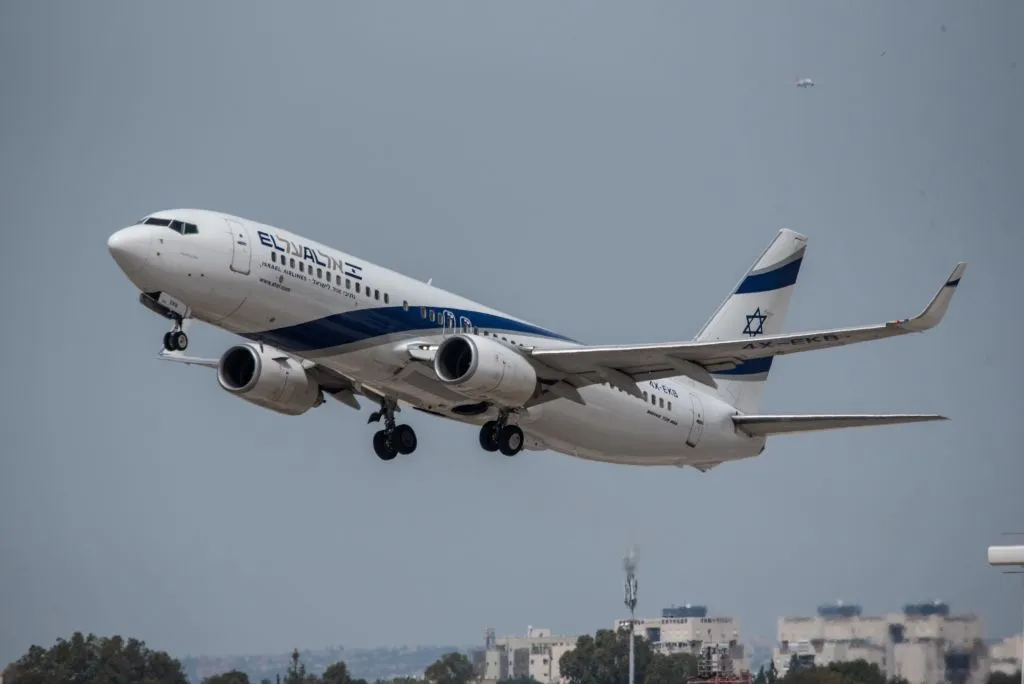
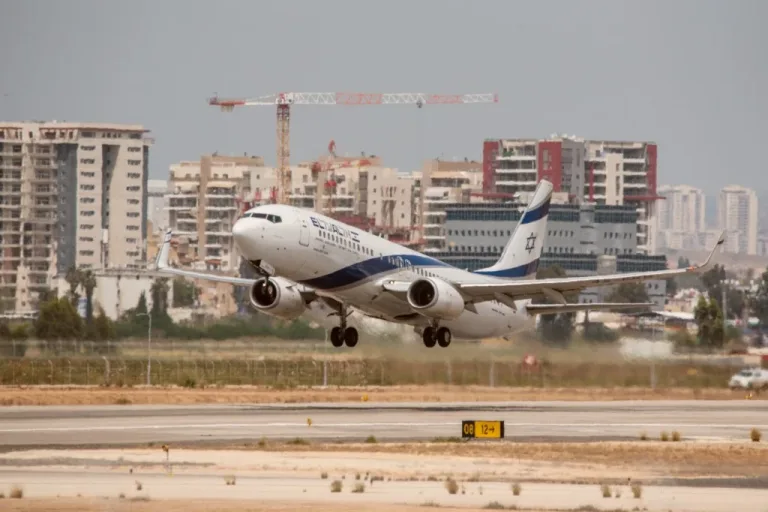
ben gurion Airport, Israel’s main hub, led the resurgence. In 2025, nearly 18.4 million passengers traveled on international flights through Tel Aviv, a 33 percent jump from 2024. The airport recorded roughly 134,000 takeoffs and landings, up 32 percent from the previous year.
“The growth in passenger traffic and the return of airlines to Israel testify to the resilience of our aviation system,” said Moshe Ben Zakai, director general of the Ministry of Transport. “We are preparing for sustained growth in the years ahead.”
Domestic carriers still dominate Tel Aviv, with El Al, Israir, and Arkia together handling 58 percent of all flights. El Al, Israel’s largest airline, saw its share drop to 38 percent as foreign carriers resumed operations. Greece remained the most popular international destination, welcoming 2.2 million Israeli travelers, followed by the United States with 1.6 million, and the United Arab Emirates with 1.5 million. Italy and Cyprus each drew around 1.2 million passengers, reflecting a mix of long-standing and emerging travel patterns.
Other airports in Israel also experienced strong gains. Haifa International Airport recorded 280,757 passengers, of whom 198,000 traveled internationally, buoyed by Air Haifa’s full return to service. Ramon Airport near Eilat grew by 13 percent, handling 750,000 passengers, almost entirely on domestic flights.
“The 2025 data shows Israeli aviation firmly returning to the center of the international map,” said Sharon Kadmi, CEO of the Airports Authority. “Even under complex conditions, we maintained high operational continuity and safety while preparing for sustained expansion at airports and border crossings.”
The Airports Authority is moving quickly to meet rising demand. It has submitted a development plan worth 7.9 billion shekels ($2.48 billion) to the government to upgrade and expand airports and border infrastructure. “2025 proves that Israeli aviation can grow even in challenging times,” said Minister of Transport Brig. Gen. (Res.) Miri Regev. “Investments in airports, passenger services, and safety are part of a strategic approach to ensure advanced, accessible aviation now and in the future.”
In early December, the Israel Planning Administration approved a construction permit for a new terminal featuring modern baggage-handling systems, check-in counters, offices, and unloading zones to handle growing passenger demand. The airport expects traffic to reach 22 million in 2026.
Land border crossings managed by the IAA also showed an upward trend, with 5.25 million people crossing in 2025. The Yitzhak Rabin Crossing, linking Eilat with Jordan’s Aqaba, saw nearly 1.93 million travelers, up 19 percent. The Begin-Taba Crossing to Egypt surged 56 percent to 960,000. Meanwhile, the Allenby Crossing connecting Judea and Samaria with Jordan recorded 1.87 million travelers despite temporary closures earlier in the year, and the Jordan River Crossing grew by 24 percent to 495,000.
Related Topics