













By Pesach Benson • January 15, 2026
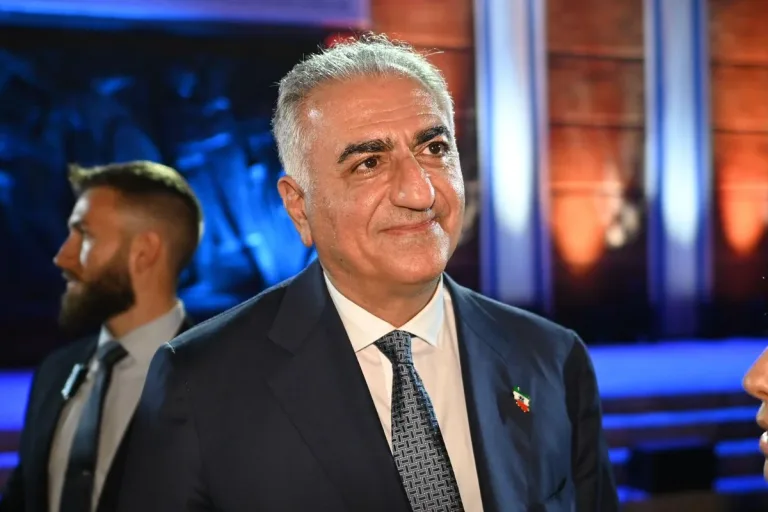
Jerusalem, 15 January, 2026 (TPS-IL) — Exiled Iranian Crown Prince Reza Pahlavi on Thursday outlined a sweeping foreign policy and economic vision for a post-Islamic Republic Iran, pledging immediate recognition of Israel, normalized relations with the United States, and an end to Tehran’s military nuclear program if the current regime collapses.
In a video statement shared on X and addressed to “all of our friends around the world,” Pahlavi said a future, free Iran would quickly reverse decades of isolation and confrontation. He argued that the country has been wrongly defined abroad by the policies of its clerical rulers.
“Under the yoke of the Islamic Republic, Iran is identified in your minds with terrorism, extremism, and poverty,” he said. “The real Iran is a different Iran. A beautiful, peace-loving, and flourishing Iran.”
Pahlavi, 65, the son of Iran’s last shah, has lived in exile since the 1979 Islamic Revolution and has emerged as a prominent opposition figure as protests inside Iran stretch into their third week. Demonstrations have been met with violent crackdowns by security forces. US-based rights group HRANA has confirmed at least 2,615 deaths, while some estimates place the toll significantly higher. Anti-government protests began on December 28 with the collapse of the Iranian rial and rising prices.
Laying out his diplomatic priorities, Pahlavi said Israel would be recognized “immediately” and that Iran would seek to expand the US-brokered Abraham Accords into what he called the “Cyrus Accords.”
“The State of Israel will be recognized immediately,” he said. “We will pursue the expansion of the Abraham Accords into the Cyrus Accords, bringing together a free Iran, Israel, and the Arab world.”
On relations with Washington, Pahlavi pledged a reset after decades of hostility. “Relations with the United States will be normalized, and our friendship with America and her people will be restored,” he said.
Security commitments featured prominently in his remarks. Pahlavi vowed that a new government would dismantle Iran’s nuclear military capabilities and cut off support for armed groups across the region.
“Iran’s nuclear military program will end. Support for terrorist groups will cease immediately,” he said, adding that Iran would work with international partners to combat terrorism, organized crime, drug trafficking, and extremist Islamism. “Iran will act as a friend and a stabilizing force in the region. And it will be a responsible partner in global security.”
Economically, Pahlavi described Iran as “one of the world’s last great untapped markets,” citing an educated population and a global diaspora. He promised transparent governance, adherence to international standards, and a crackdown on corruption.
“Money laundering will be confronted. Organized corruption will be dismantled. Public institutions will answer to the people,” he said. He also said Iran’s oil and gas reserves would be managed responsibly, making the country a predictable and reliable global energy supplier.
“This is not an abstract vision. It is a practical one,” Pahlavi concluded. “The fall of the Islamic Republic and the establishment of a secular, democratic government in Iran will not only restore dignity to my people, it will benefit the region and the world.”
In 2023, Pahlavi made a landmark visit to Israel, where he visited the Western Wall, joined Holocaust Remembrance Day commemorations, and met with Rabbi Leo Dee, whose wife and daughters were murdered in a Palestinian terror attack.
Israel launched preemptive strikes against Iranian nuclear sites on June 13, citing intelligence that Tehran had reached “a point of no return” in its pursuit of nuclear weapons. Israeli intelligence also exposed a covert program to complete all components of a nuclear device. During 12 days of fighting, Iranian missile strikes killed 28 Israelis and injured more than 3,000.
Related Topics