








By Pesach Benson • January 13, 2026
Jerusalem, 13 January, 2026 (TPS-IL) — Israel’s State Comptroller uncovered significant financial irregularities and campaign violations in the February 2024 municipal elections, which were postponed from their original October 2023 date due to the war.
The comprehensive audit report, released by State Comptroller Matanyahu Englman on Tuesday, examined the campaign finances of 1,379 local political factions and 102 candidates for regional council positions, as well as 15 national political parties that fielded local candidates. The State Comptroller regularly reviews Israel’s preparedness and the effectiveness of government policies.
The findings reveal that more than a quarter of local factions failed to receive positive audit reports, with widespread violations of campaign finance laws.
“The State Comptroller found that 303 factions and 11 candidates did not manage their accounts in accordance with the State Comptroller’s guidelines,” the report states. Common violations included incomplete expense and income records, cash payments exceeding legal limits, missing documentation, and failure to maintain designated bank accounts for campaign funds.
These changes included a seventeen percent increase in state funding, raising the calculation unit from NIS 63 ($19) to NIS 74 ($23). The calculation unit is a fixed shekel value used by law to determine public campaign funding and spending limits. Raising this value increased the amount of money parties were allowed to receive and spend in the municipal elections.
Other changes included temporarily doubling the maximum allowed donation from NIS 5,000 ($1,500) to NIS 10,000 ($3,100).
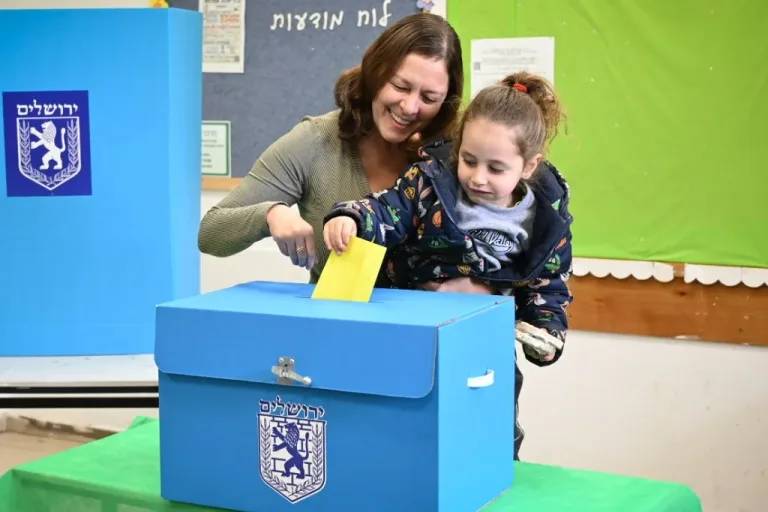
The elections took place under extraordinary circumstances, with the government enacting temporary provisions to address the financial strain on campaigns caused by the war and multiple postponements. Originally scheduled for October 31, voting took place in 233 cities, regional councils and local councils throughout the country on Feb. 27, 2024. Displaced families from communities near the Gaza and Lebanon borders cast absentee ballots from where they were staying.
Despite the increased funding, 515 local factions ended their campaigns with deficits totaling approximately NIS 37.2 million ($11.7 million), though this represented an improvement from the 2018 elections. The State Comptroller withheld approximately NIS 3.7 million ($1.1 million) in funding from 297 factions and 13 candidates due to violations, and an additional NIS 13.8 million ($4.3 million) must be returned to the state treasury from factions whose expenses fell below their allocated funding.
Among the national political parties, only the Likud party received a non-positive audit report, with NIS 180,000 ($57,000) in funding withheld. The report cited “improper use of public assets for election propaganda in violation of the Election Methods Law,” along with salary supplements to employees without proper documentation and failure to include subsidiary faction income in financial reports.
The report establishes several new prohibitions aimed at preventing future violations. Most significantly, the Comptroller ruled that political factions are now completely barred from employing their own candidates on salary, whether directly or indirectly. “The state funding granted to factions to cover election expenses is intended to support the election process, not to be transferred directly to the factions’ own candidates,” the report stressed.
The audit also revealed problematic coordination among 26 local factions that participated in joint branding under the name “New Contract” through a commercial corporation. The Comptroller determined this arrangement violated accounting requirements because it made it impossible to verify each faction’s actual expenses using standard audit methods, potentially enabling prohibited mutual contributions between supposedly independent factions.
A particularly concerning finding involves the misuse of advances provided to national parties. Twelve of fifteen national parties received advances exceeding their actual entitlements by approximately NIS 60 million ($19 million), which they are now repaying through monthly deductions from their regular state funding. The Comptroller warns this creates an improper financing mechanism that prevents parties from using their regular funding for its intended purpose of maintaining ongoing public engagement between elections.
Englman called on the Knesset to implement several reforms, including banning cash donations for municipal elections, establishing mechanisms to recover advances if parties dissolve, and requiring national parties to return surplus funding to the state treasury, as local factions must do.
Related Topics