



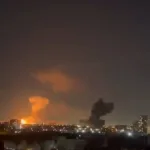










Jerusalem, 8 March, 2026 (TPS-IL) — Israel said Sunday that its Air Force carried out a new wave of strikes in Tehran, targeting facilities linked to Iran’s Islamic Revolutionary Guard Corps and other security forces.
According to the Israel Defense Forces, the operation struck the headquarters of the IRGC Space Force along with dozens of additional military and security sites across the Iranian capital. The strikes were directed by Israeli military intelligence and carried out by Israeli Air Force aircraft.
Among the primary targets was the IRGC Space Force headquarters, which the IDF described as a reception, transmission, and research center connected to the Iranian Space Agency. Israeli officials said the facility also contained command-and-control systems linked to the Khayyam satellite, launched in 2022.
“The site included research facilities as well as a command-and-control structure for the Khayyam satellite, which was used by the IRGC to advance terrorist activities and monitor the State of Israel and its residents,” the IDF said.
The IDF said the strikes also hit about 50 ammunition bunkers located in an internal security base, as well as a Basij base, an internal security command center, and a compound belonging to the IRGC’s ground forces.
The Basij militia and other internal security forces play a key role in enforcing the regime’s control inside the country.
“These forces are responsible for dispersing demonstrations, carrying out arrests, seizing transportation routes, and suppressing Iran’s civilian population,” the IDF said.
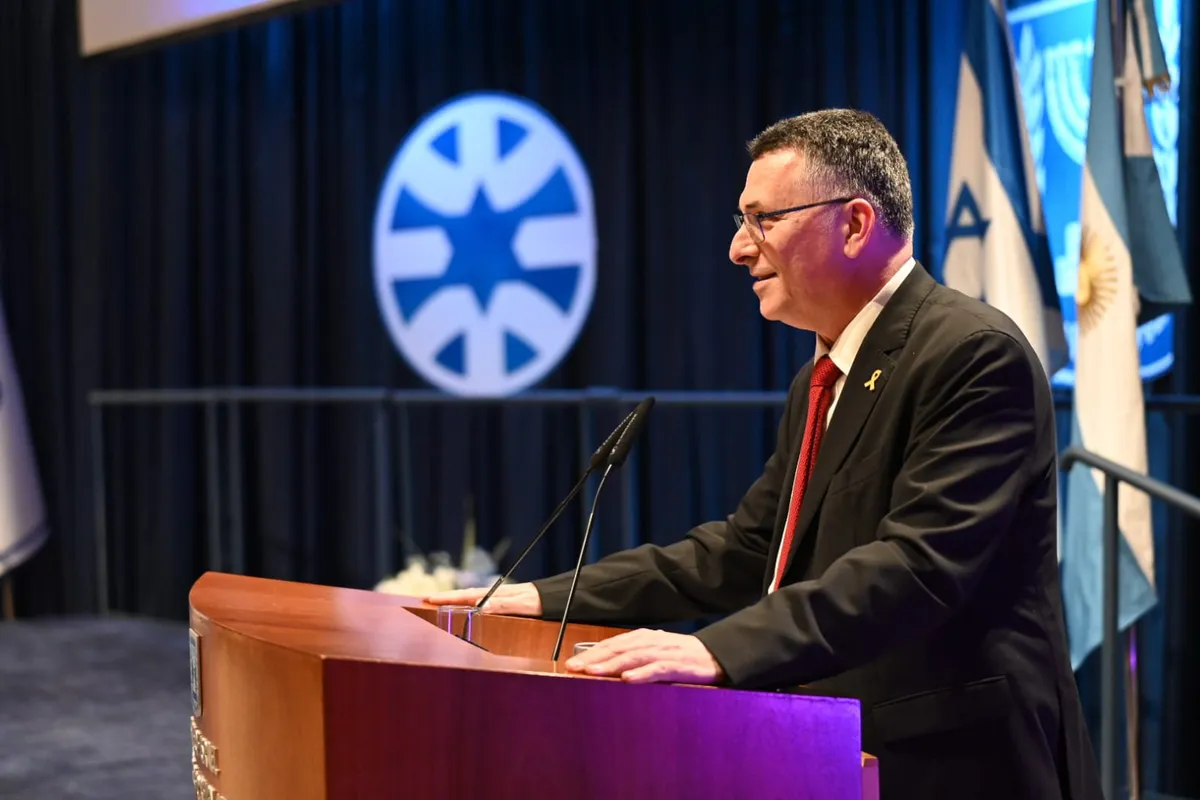
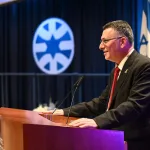
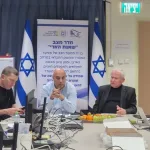
Earlier on Sunday, Foreign Minister Gideon Sa’ar said Israel is watching signs of instability within the Iranian regime and stressed that regime change will require both internal action and international support.
“The internal cracks and divisions in the Iranian regime are becoming visible,” Saar told about 700 members of the Jewish community in Australia during a Zoom briefing hosted by the Zionist Federation. “It will not be possible to achieve regime change without action by the Iranian people. But it is equally fair to say that without outside assistance, the Iranian people will not be able to regain their freedom, in light of the regime’s brutal repression, as we have seen recently.”
Sa’ar pointed to inconsistencies among Iran’s leadership as evidence of growing divisions. He contrasted Iranian President Masoud Pazakhian’s recent apology for attacks on neighboring countries with statements by Parliament Speaker Mohammad-Baqer Qalibaf, who vowed that such attacks would continue.
“The cracks and internal divisions in the Iranian regime are increasing, and some of them have already become apparent,” said Sa’ar.
Related Topics