





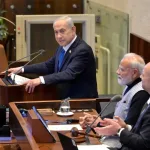








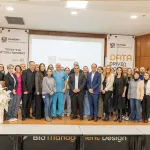


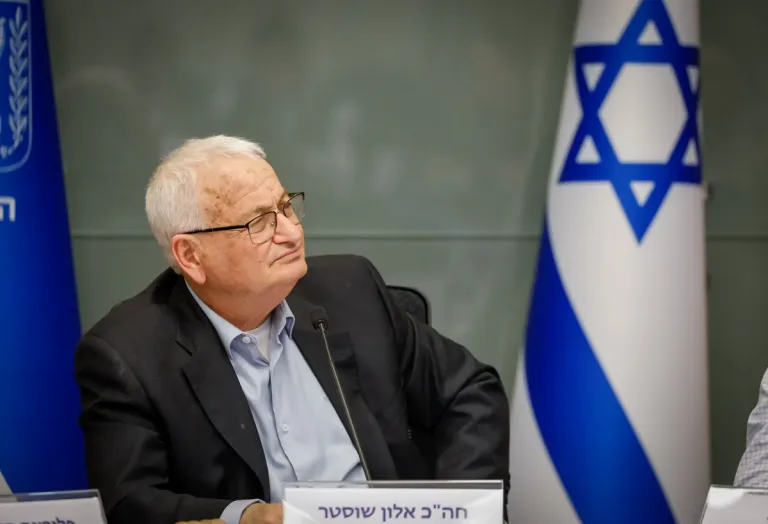
The committee, chaired by MK Alon Schuster, held a follow-up discussion on the national preparedness in the field of artificial intelligence, focusing on the integration of the technology in the education system. The discussion was attended by the head of the National AI Directorate, representatives from the ministry of Education, the Israel Innovation Authority, the Digital Israel Directorate, the State Comptroller, the Council for Higher Education, academia, and industry.
Committee Chairman, MK Alon Schuster: “We are privileged to be at the cusp of civilizations. Just as we knew how to be the start-up and cyber nation. The big question is where we stand in the era of artificial intelligence. There is a connection of responsibility on this issue between the generation sitting here and future generations.”
Brig. Gen. (Res.) Erez Eshel, Head of the National AI Directorate: “I am taking the Prime Minister’s statement to be one of the three leading countries in the field. Israel can strengthen its national security from all that this implies. The world measures power by this story. Artificial intelligence is different – it requires infrastructure that only a state can establish. A start-up cannot bring this. I called on the heads of the Council for Higher Education and the universities to open a bachelor’s degree in artificial intelligence, and they immediately responded. This is a dramatic move. The intention is to choose 50 real-life problems: learning mathematics, traffic problems, a patient meeting a doctor – and through them, to deal with regulation. Before anyone agrees to introduce artificial intelligence into a classroom or an operating room, it must be safe. I am optimistic. The revolution has not yet definitively impacted the world. I plan for there to be a national program for the current government.”
Meirav Zerbib, Deputy Director General and Director of the Innovation and Technology Administration, Ministry of Education: “We identified as early as 2017 that artificial intelligence would impact education. Therefore, the Institute for Artificial Intelligence is located today within the Ministry of Education because knowledge needs to be close to decision-makers. In our vision, artificial intelligence is a means, not an end. Using AI tools does not necessarily mean knowledge. We need to integrate it into the curriculum to achieve a leap forward in creative thinking. According to a survey we conducted, 85% of middle school teachers are already using artificial intelligence to promote learning. We are among the top ten in the world.” During the discussion, a video was presented summarizing an international artificial intelligence conference initiated by the Ministry of Education, with the participation of delegations from 26 countries worldwide.
Dr. Maya Gordin, Department Head, Technological Education Administration, Ministry of Education: “Changes in the curriculum are made with the necessary caution, taking risks into account. We are leaving the existing tracks of software engineering and cyber and doing so in conjunction with industry.”
Daniel Milbauer, Strategy and CHE: “Students who wish to pursue artificial intelligence as a major will be able to do so already at the bachelor’s level – approximately 780 students in the upcoming academic year, from Ben-Gurion University in the south to Tel-Hai in the north.”
Related Topics