


























Jerusalem, 15 March, 2026 (TPS-IL) — A sarcastic message hurled at an approaching enemy more than 2,000 years ago has resurfaced near the Sea of Galilee.
Archaeologists announced Sunday that they uncovered a rare lead slingstone from the Hellenistic period near the ancient city of Susita, bearing a one-word inscription in Greek: “Learn.” Researchers say the projectile was likely fired by defenders of the city during a siege, delivering both a physical blow and a taunting message to attackers.
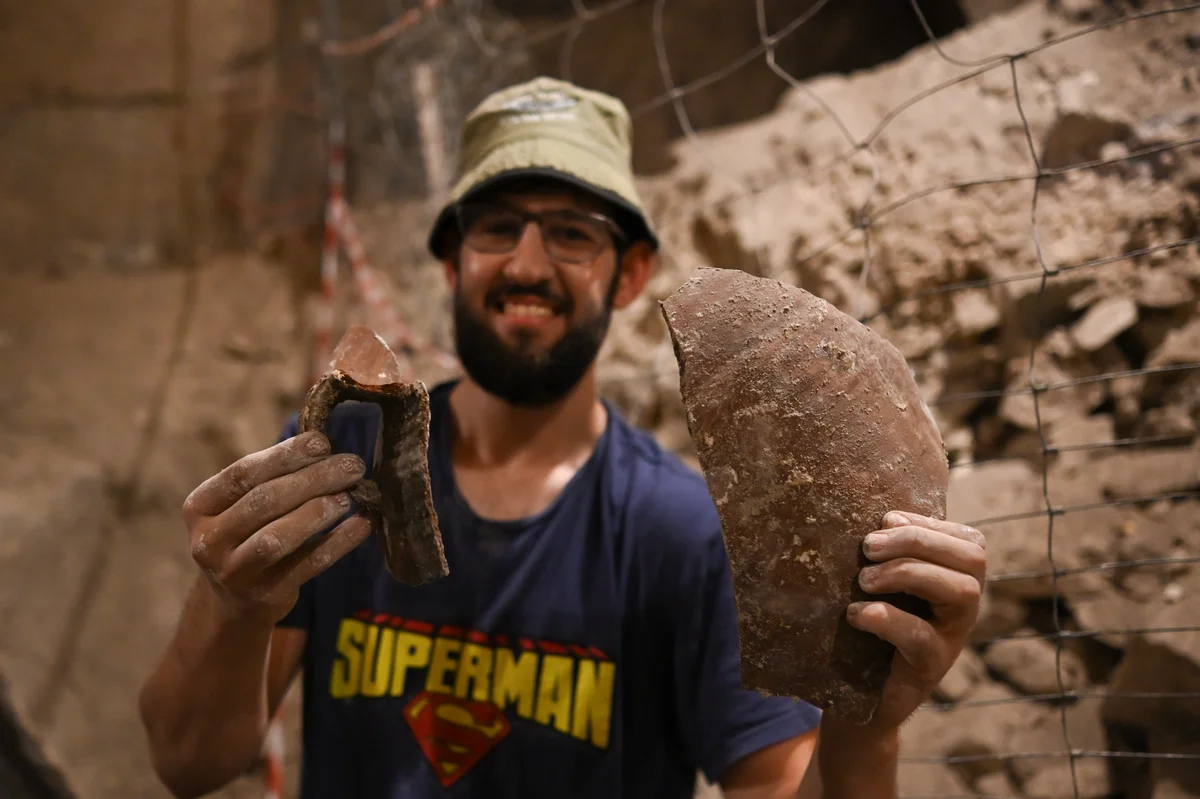
The slingstone was discovered during excavations conducted by researchers from the University of Haifa within the Susita Nature Reserve, which is managed by the Israel Nature and Parks Authority.
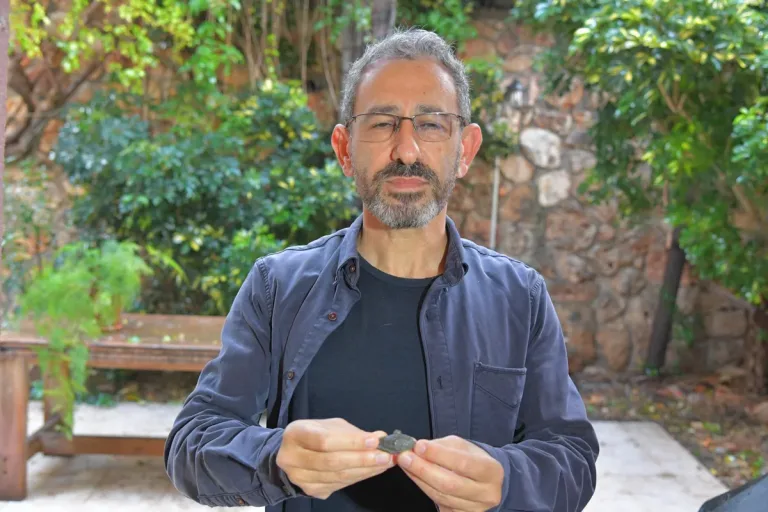
“It tells us they used the same sarcasm as their mates during combat. The idea itself is well-known, Dr. Michael Eisenberg of the University of Haifa’s Zinmann Institute of Archaeology told The Press Service of Israel. Eisenberg led the study with Dr. Arleta Koblewska, also of Haifa University.
“It tells us something about the sense of humor of the guy sitting on the mountain above the Sea of Galilee being attacked, most probably by the Hellenistic army –- or perhaps the Hasmonean army, who knows? It’s interesting, it’s unique, and the use of the imperative voice is very strange as well,” Eisenberg added.
Susita, known in Greek as Hippos, was a fortified city overlooking the eastern shore of the Sea of Galilee. Founded during the Hellenistic period, it later became part of the Decapolis, a group of cities in the eastern Roman Empire with strong Greek cultural influence. Its elevated position on a steep hill made it a strategic stronghold controlling routes around the lake.
The newly discovered projectile measures 3.2 by 1.95 centimeters and weighs 38 grams, though researchers estimate it originally weighed about 45 grams before being damaged by impact. It was found about 260 meters south of the city wall, near an ancient road and close to the cemetery area. Archaeologists believe its location suggests it was fired at enemy forces advancing toward the city.
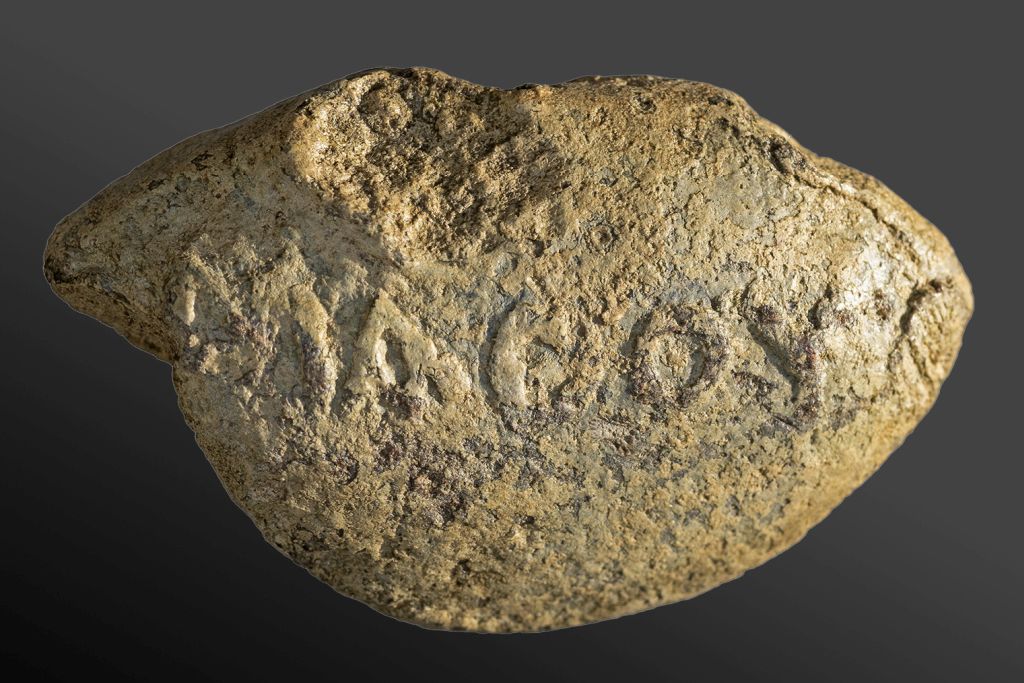
A 2,000-year-old slingstone bearing the word “learn” discovered by Israeli archaeologists in the Golan Heights. Photo by Dr. Michael Eisenberg/TPS-IL
Lead sling bullets were among the most common forms of ammunition in ancient warfare. They were produced by pouring molten lead into simple stone molds, a process that could be carried out quickly, even during military campaigns.
He told TPS-IL these weapons used throughout the world during the Greek period were “just smooth, almond-shaped with nothing added to it.” Sometimes, they would bear the name of a city or a commanders, or symbols associated with Greek gods.
“In Susita alone, 69 projectiles have been discovered so far, but this is the first in the world on which the inscription ‘Learn’ appears,” Eisenberg said.
The word “learn,” he said, “is local sarcastic humor by the city’s defenders who wanted to teach their enemies a lesson, combined with a clear wink: ‘learned a lesson,’” Eisenberg added.
Despite their small size, the projectiles were highly effective. A skilled slinger could strike targets from more than 300 meters away.
“The inscription found here is not known from any other site so far,” Eisenberg said.
The study describing the discovery was published in the peer-reviewed Palestine Exploration Quarterly.
Related Topics